
Close Menu
    Facebook X (Twitter) Instagram Pinterest YouTube LinkedIn TikTok
    TopBuzzMagazine.com
    Facebook X (Twitter) Instagram Pinterest YouTube LinkedIn TikTok
    • Home
    • Movies
    • Television
    • Music
    • Fashion
    • Books
    • Science
    • Technology
    • Cover Story
    • Contact
      • About
      • Amazon Disclaimer
      • Terms and Conditions
      • Privacy Policy
      • DMCA / Copyrights Disclaimer
    TopBuzzMagazine.com
    Home»Science»Strange ‘hobbit’ species walked more like us than like ‘Lucy,’ hip bones reveal
    Science

    Strange ‘hobbit’ species walked more like us than like ‘Lucy,’ hip bones reveal

    By AdminAugust 29, 2026
    Facebook Twitter Pinterest LinkedIn Tumblr Email
    Strange ‘hobbit’ species walked more like us than like ‘Lucy,’ hip bones reveal


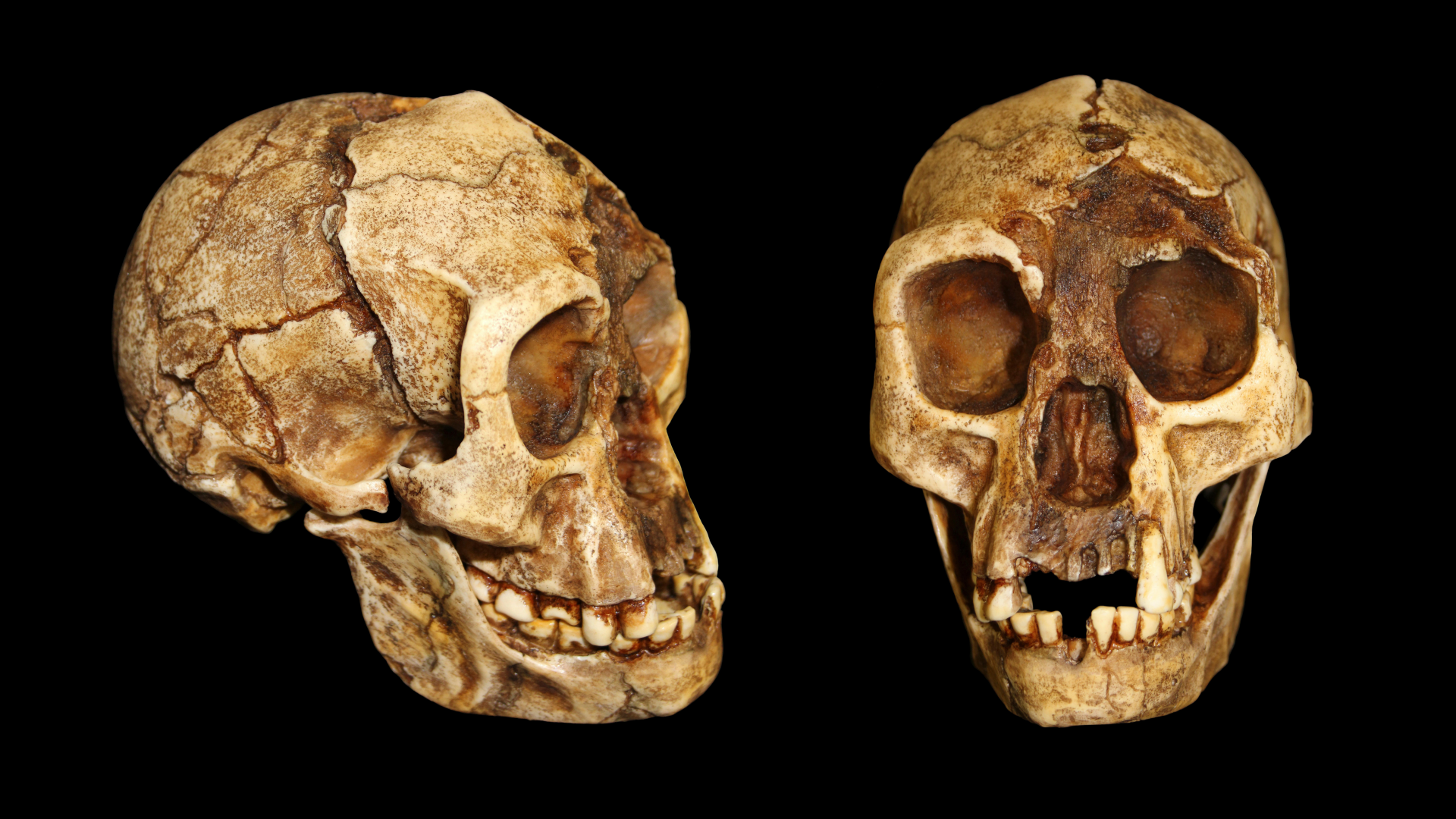
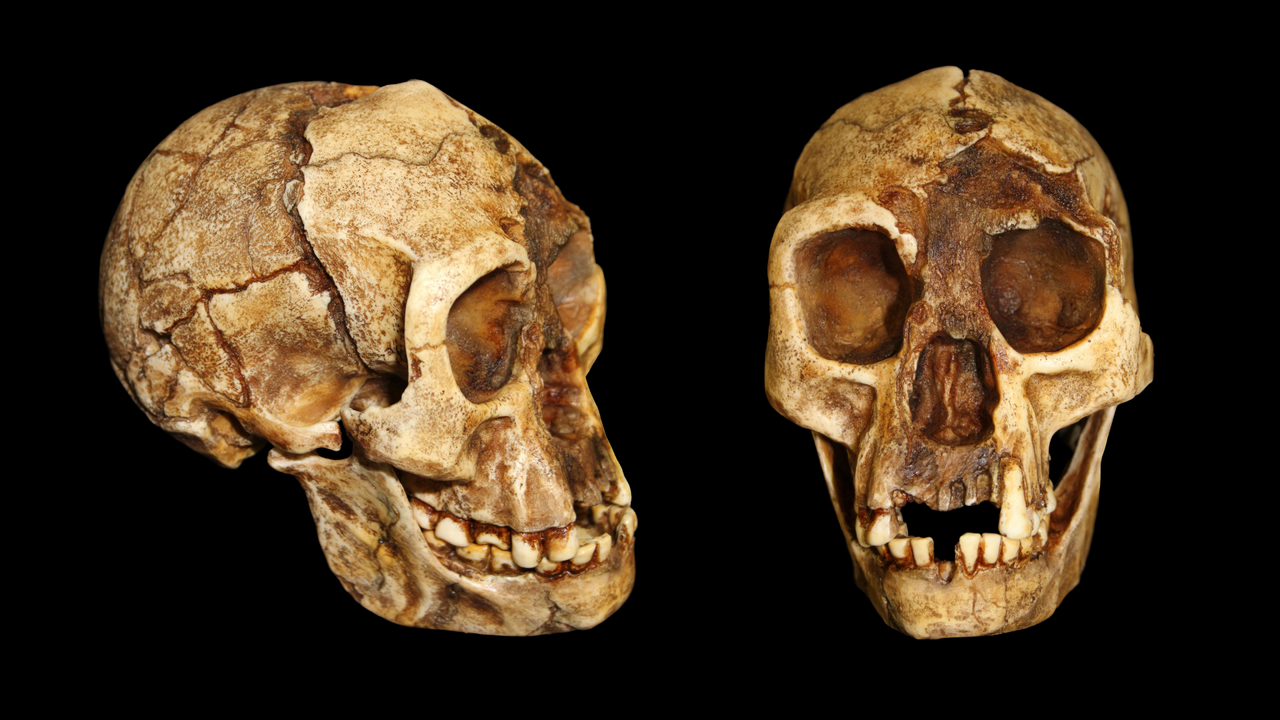
    The tiny, now-extinct human relative known as a hobbit had an even more human-like body than previously thought, and probably walked upright somewhat slowly, anthropologists have discovered by studying their hip bones.

    But with a more primitive walking style than modern humans and lack of hunting and cooking, the species still differs significantly from Homo sapiens — so with the new findings, the mystery of the hobbits’ origins has only deepened.

    “Based on just the hip bones, Homo floresiensis looks generally like humans and other genus Homo species and probably could have moved a lot like humans,” Kristi Lewton, a biological anthropologist at the University of Southern California, told Live Science. But H. floresiensis “was not a particularly fast biped and was not traveling long distances,” she said.

    Latest Videos FromLive Science

    Lewton and colleagues closely studied the pelvic bones of LB 1, an adult female hobbit who was about 3.5 feet (1 meter) tall when she died between 100,000 and 60,000 years ago on the Indonesian island of Flores. They looked for clues as to whether members of H. floresiensis were more similar to other Pleistocene human species or to earlier australopithecine species, such as the iconic “Lucy”. Their study was published Aug. 25 in the American Journal of Biological Anthropology.

    Ever since H. floresiensis was discovered in 2003, researchers have tried to figure out why members of this species were so small and which species they evolved from. The hobbits’ skeletons have a unique mixture of human-like and australopithecine-like traits, making assessment of their evolutionary ancestry challenging. For instance, the hobbits’ hand bones are more similar to those found in australopithecines, but their shoulders and upper arms are more human-like.


    You may like

    One physical characteristic that experts have identified in H. floresiensis is known as iliac flare, or the degree to which the hip bones are flared out from the center of the trunk. A large degree of iliac flare has been linked to australopithecine anatomy and, functionally, to less efficient bipedal walking than is seen in humans. But a problem that Lewton and colleagues encountered was that different methods used to quantify the “iliac flare” of humans’ relatives often produced contradictory results.

    In their new study, the researchers compared hip bones from chimpanzees, gorillas, australopithecines, and both living and extinct human species. By creating a quantifiable measure of iliac flare and adding other measurements of the pelvises of these species, the researchers found that the pelvis of LB 1 was statistically similar to other Pleistocene human species, such as Homo erectus, and different from australopithecines and apes.

    Get the world’s most fascinating discoveries delivered straight to your inbox.

    “These results suggest that H. floresiensis likely used a form of bipedal walking that would have been markedly similar to those of humans,” the researchers wrote in the study.

    But the similarity of the hobbit pelvis to other human groups does not mean that their form of bipedalism was exactly the same as ours. Rather, their bones suggest the hobbits were a species “that was not traveling long distances or at fast speeds and that may have incorporated some arboreal behaviors,” the researchers wrote in the study.

    Caley Orr, a paleoanthropologist at the University of Colorado Denver who was not involved in the study, said “their results are consistent with a more limited quantitative comparison among fossil pelvises that my team published last year.” In that work, the LB 1 pelvis also popped out as being mostly human-like, Orr told Live Science.


    What to read next

    The new results suggest that there is considerable variability in the size and shape of the skeletons of early human groups, he added, but “what this means for the origins of the ‘hobbits’ remains ambiguous.”

    Although Lewton and colleagues focused closely on just one part of the hobbit skeleton, they noted that their results support the two main theories of how these mysterious humans evolved.

    “Most evidence points to one of the two following hypotheses,” Lewton said. “Either H. floresiensis evolved from a population of H. erectus that arrived on the island of Flores and experienced insular dwarfism, or H. floresiensis derived from a small-bodied, earlier radiation of a different species of Pleistocene Homo.” In other words, they may have been H. erectus that shrank over time because they lived on an island, or may have evolved from a smaller, unknown Homo species.

    Genetic analyses, including studies of ancient proteins, could potentially help experts resolve the question of where hobbits came from, Lewton said. “But this question is probably not going to be resolved any time soon.”

    Lewton, K.L., Hammond, A.S., Alamsyah, N., Noerwidi, S., Sutikna, T., Skinner, M.M., Tocheri, M.W. (2026). Comparative morphometric analysis of the pelvis of LB 1 (Homo floresiensis). American Journal of Biological Anthropology. https://doi.org/10.1002/ajpa.70339


    See how much you know about early humans with our human evolution quiz!

    View Original Source Here

    Share. Facebook Twitter Pinterest LinkedIn Tumblr Email

    Related Posts

    Scientists invent a gel that creates neurons from other cells, which could help treat Alzheimer’s

    August 28, 2026

    Ancient shark ‘graveyard’ uncovered in Egyptian desert

    August 28, 2026

    ‘Unlike anything seen before’: Archaeologists unearth a unique, 11,000-year-old statue of a person riding a leopard from one of the world’s earliest settlements

    August 27, 2026

    How worried are you about extreme heat?

    August 27, 2026

    2 people die of measles in Pennsylvania as vaccination rates drop across the nation

    August 26, 2026

    HPV-driven throat and mouth cancers are rising in men. Why?

    August 25, 2026
    popular posts

    ‘The Crowded Room’ Star Sasha Lane on Ariana’s Actions Catching

    Trump Memecoin Holders Set to Dine With US President, Tron Founder Justin Sun Confirms Attendance 

    Can the AirPods Pro 2 Really Replace Hearing Aids? We Asked a Grandmother

    Elon Musk’s SpaceX to Commission Two ESA Launches to Fill

    Japan Pushes Citizens to Sign Up for Digital IDs Amid

    SpaceX’s Starlink dodged 300,000 satellite collisions in 2025

    Global Rock Band Sick Puppies collaborate with ESPN to cover Paul Oakenfold’s ‘Ready Steady Go’

    Categories
    • Books (4,069)
    • Cover Story (21)
    • Events (28)
    • Fashion (2,878)
    • Interviews (63)
    • Movies (3,365)
    • Music (3,662)
    • News (184)
    • Politics (17)
    • Science (5,181)
    • Technology (3,362)
    • Television (4,096)
    • Uncategorized (932)
    Archives
    Facebook X (Twitter) Instagram Pinterest YouTube Reddit TikTok
    © 2026 Top Buzz Magazine. All rights reserved. All articles, images, product names, logos, and brands are property of their respective owners. All company, product and service names used in this website are for identification purposes only. Use of these names, logos, and brands does not imply endorsement unless specified. By using this site, you agree to the Terms of Use and Privacy Policy.

    Type above and press Enter to search. Press Esc to cancel.

    We use cookies on our website to give you the most relevant experience by remembering your preferences and repeat visits. By clicking “Accept”, you consent to the use of ALL the cookies.
    Do not sell my personal information.
    Cookie SettingsAccept
    Manage consent

    Privacy Overview

    This website uses cookies to improve your experience while you navigate through the website. Out of these, the cookies that are categorized as necessary are stored on your browser as they are essential for the working of basic functionalities of the website. We also use third-party cookies that help us analyze and understand how you use this website. These cookies will be stored in your browser only with your consent. You also have the option to opt-out of these cookies. But opting out of some of these cookies may affect your browsing experience.
    Necessary
    Always Enabled
    Necessary cookies are absolutely essential for the website to function properly. These cookies ensure basic functionalities and security features of the website, anonymously.
    CookieDurationDescription
    cookielawinfo-checkbox-analytics11 monthsThis cookie is set by GDPR Cookie Consent plugin. The cookie is used to store the user consent for the cookies in the category "Analytics".
    cookielawinfo-checkbox-functional11 monthsThe cookie is set by GDPR cookie consent to record the user consent for the cookies in the category "Functional".
    cookielawinfo-checkbox-necessary11 monthsThis cookie is set by GDPR Cookie Consent plugin. The cookies is used to store the user consent for the cookies in the category "Necessary".
    cookielawinfo-checkbox-others11 monthsThis cookie is set by GDPR Cookie Consent plugin. The cookie is used to store the user consent for the cookies in the category "Other.
    cookielawinfo-checkbox-performance11 monthsThis cookie is set by GDPR Cookie Consent plugin. The cookie is used to store the user consent for the cookies in the category "Performance".
    viewed_cookie_policy11 monthsThe cookie is set by the GDPR Cookie Consent plugin and is used to store whether or not user has consented to the use of cookies. It does not store any personal data.
    Functional
    Functional cookies help to perform certain functionalities like sharing the content of the website on social media platforms, collect feedbacks, and other third-party features.
    Performance
    Performance cookies are used to understand and analyze the key performance indexes of the website which helps in delivering a better user experience for the visitors.
    Analytics
    Analytical cookies are used to understand how visitors interact with the website. These cookies help provide information on metrics the number of visitors, bounce rate, traffic source, etc.
    Advertisement
    Advertisement cookies are used to provide visitors with relevant ads and marketing campaigns. These cookies track visitors across websites and collect information to provide customized ads.
    Others
    Other uncategorized cookies are those that are being analyzed and have not been classified into a category as yet.
    SAVE & ACCEPT