
Close Menu
    Facebook X (Twitter) Instagram Pinterest YouTube LinkedIn TikTok
    TopBuzzMagazine.com
    Facebook X (Twitter) Instagram Pinterest YouTube LinkedIn TikTok
    • Home
    • Movies
    • Television
    • Music
    • Fashion
    • Books
    • Science
    • Technology
    • Cover Story
    • Contact
      • About
      • Amazon Disclaimer
      • Terms and Conditions
      • Privacy Policy
      • DMCA / Copyrights Disclaimer
    TopBuzzMagazine.com
    Home»Science»‘Predatory behavior’: Elite mathematicians clash over OpenAI’s ‘solution’ to million-dollar math problem
    Science

    ‘Predatory behavior’: Elite mathematicians clash over OpenAI’s ‘solution’ to million-dollar math problem

    By AdminSeptember 17, 2026
    Facebook Twitter Pinterest LinkedIn Tumblr Email
    ‘Predatory behavior’: Elite mathematicians clash over OpenAI’s ‘solution’ to million-dollar math problem


    HEIDELBERG, Germany — Often considered the slowest, most methodical and most abstract of the sciences, mathematics usually advances so incrementally and esoterically that it rarely troubles the mainstream media.

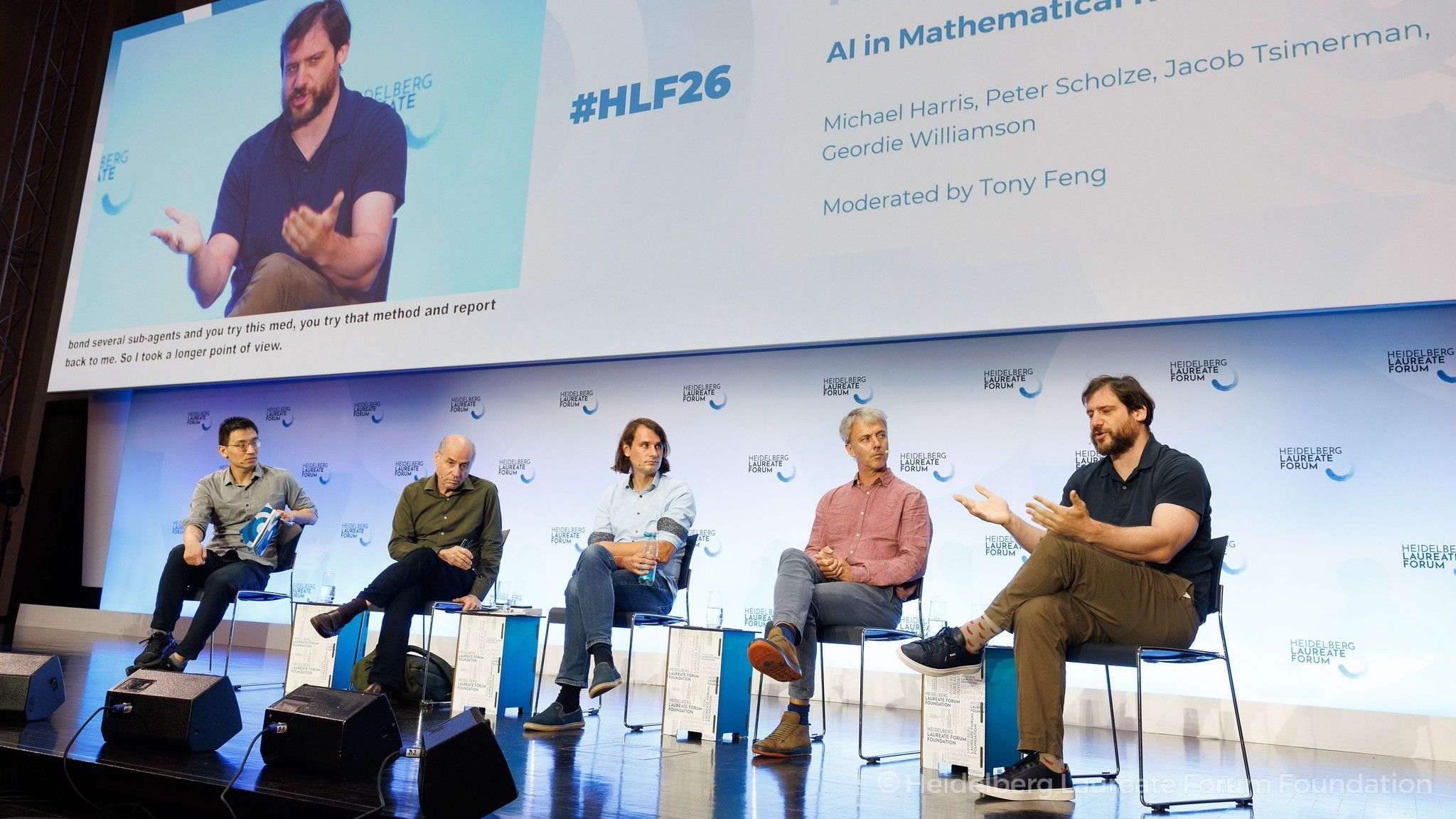
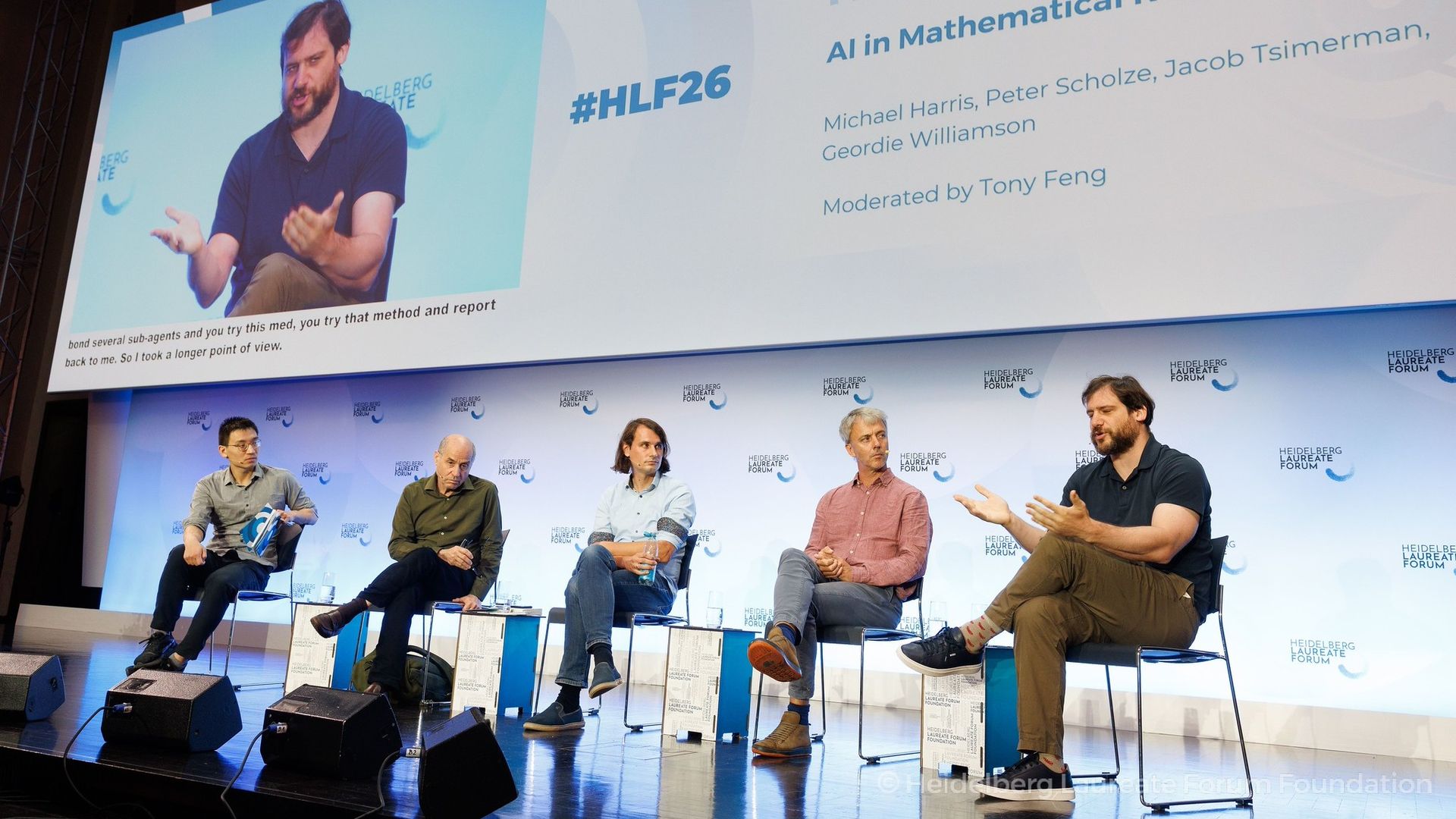
    It was therefore with some discomfort that a panel of elite mathematicians took to the stage Sept. 15 here at the Heidelberg Laureate Forum, a conference that unites young researchers with award-winning mathematicians and computer scientists. The focus of the panel: to confront the rapid rise of AI, whose threat to their quiet discipline has thrust them into the limelight.

    In the past year alone, AI systems have made substantial contributions to the solutions of dozens of problems posed by prolific Hungarian mathematician Paul Erdős, conducted publishable doctoral-level research, formally verified two proofs that had previously won their authors the Fields Medal (an award considered equivalent to a Nobel Prize in mathematics) and made progress on 10 other long-standing tough open problems.

    Then, on Sept. 8, OpenAI made the bombshell claim that it had deployed 10,000 AI agents to solve the Navier-Stokes existence-and-smoothness problem, one of seven fiendishly difficult Millennium Prize Problems posed by the Clay Mathematics Institute in the year 2000 (of which only one, the Poincaré conjecture, has been solved to the institute’s satisfaction until now). The prize for solving any of these problems is $1 million.

    Crucially, mathematicians Tristan Buckmaster and Levent Alpöge had been working on the Navier-Stokes problem for roughly a year when they alleged that OpenAI found out about their work and raced to scoop them, claiming that an OpenAI representative threatened them not to go public.


    You may like

    It is in the bow wave of this news that the Heidelberg Laureate Forum panelists debated the controversy surrounding what the rise of AI means for the future of their discipline. Addressing the OpenAI announcement head-on from the outset was Michael Harris, a professor of mathematics at Columbia University.

    “There’s no legal obstacle to the kind of predatory behavior that we’ve seen particularly over the last month, in the same way there was no legal obstacle in the 19th century to … the violent acquisition of territory by colonial powers,” he said.

    Get the world’s most fascinating discoveries delivered straight to your inbox.

    Harris broke the OpenAI Navier-Stokes story on his Substack newsletter Silicon Reckoner, largely to reveal what he views as an important controversy relating to how OpenAI may have used Buckmaster and Alpöge’s research.

    Harris, who describes the big tech companies developing AI as “gangsters,” would like to see a regulatory framework implemented to protect mathematics and mathematicians from similar actions in future. In the meantime, “those who act in a way that’s destructive of the community should not be considered members of good standing,” he suggested.

    Though this sentiment was shared by fellow panellist Geordie Williamson of the University of Sydney, 2026 Fields Medalist Jacob Tsimerman, a professor of mathematics at the University of Toronto who in July joined OpenAI as an AI safety researcher, was keen to highlight the magnitude of the achievement by the company’s internal AI model.


    What to read next

    “I do think the top line is getting buried a little bit,” he said. “AI has solved a Millennium [Prize] Problem, and I don’t think it’s had the kind of effect of at least informing people of AI’s capabilities that it’s meant to have had.”

    Tsimerman is highly focused on AI safety at OpenAI and his newly formed independent nonprofit, the Mathematical AI Safety Institute. He believes OpenAI’s Navier-Stokes announcement represents a watershed moment in how mathematics is conducted, and by whom.

    “If we put our value in human beings doing research in mathematics at the frontier level, developing expertise and slowly making progress, then I think that’s coming to an end,” he said during a separate news conference held at the forum. “If we put our value in new mathematics being created, and it both serving society and giving mathematicians something to study, then that seems like a golden age.”

    Peter Scholze, co-director of the Max Planck Institute for Mathematics in Germany and a 2018 Fields Medalist, had a completely different perspective. Dismissing the OpenAI Navier-Stokes news as “some kind of PR,” he stated that the point of the Millennium Prize Problems is not just to solve one math problem but to bring a fresh perspective to a host of related open questions in a way that builds human understanding ‪—‬ something that a long, machine-produced proof is unlikely to deliver.

    Moreover, Scholze — who confessed to never having prompted a large language model and proudly showed off his “dumb phone” to the audience — said AI largely just accelerates mathematical progress, which is in his opinion of little value when it is already impossible to acquire a genuine understanding of all the progress that has been made.

    So where does all of this leave mathematics and mathematicians? A number of initiatives ‪—‬ such as Proofs and Prompts, Mathematical Discourse, and the Association for Human Mathematics ‪—‬ aim to preserve a kernel of human mathematics so the field can continue to be a home for human culture and understanding.

    But for all the panelists, the speed of change and advancement in AI means they cannot offer clear predictions of the impacts of these initiatives or what the field might look like in the future.

    “To be honest, whenever anyone talks about 10 years from now, or even five years from now … it just seems unfathomably far away,” Tsimerman said. “The world in two years is going to look so incredibly different than it does now.”

    View Original Source Here

    Share. Facebook Twitter Pinterest LinkedIn Tumblr Email

    Related Posts

    ‘Of course I am worried’: Live Science readers react to US weapons in space

    September 18, 2026

    A space shark, ‘royal’ auroras and a ‘Venusian pearl’: See the winners of the 2026 ZWO Astronomy Photographer of the Year contest

    September 18, 2026

    1,700-year-old fragment of the ‘Odyssey’ discovered between pages of Dutch library book

    September 17, 2026

    Was there a ‘before’ the Big Bang? Jim Al-Khalili on the mind-bogglingness of time

    September 16, 2026

    Chariklo, a strange ringed object beyond Saturn, looks even stranger in new James Webb telescope study

    September 16, 2026

    Did ‘all roads lead to Rome’? New study finds other cities in the empire were better connected.

    September 15, 2026
    popular posts

    Go See ‘The Clock,’ The 24-Hour Movie That Never Ends

    The Best Outfits From “The Summer I Turned Pretty” Season 3

    Devin Farney Releases New Music

    U.S. Senators to Investigate Ticketmaster’s Dominance Over Concert Ticket Sales

    Lara Mead Shares the Staples She Wears in Paris, NYC, and London

    A tale of two mysteries: ghostly neutrinos and the proton

    6 New Fall Fantasy Finds

    Categories
    • Books (4,110)
    • Cover Story (23)
    • Events (29)
    • Fashion (2,901)
    • Interviews (63)
    • Movies (3,407)
    • Music (3,704)
    • News (184)
    • Politics (17)
    • Science (5,222)
    • Technology (3,403)
    • Television (4,137)
    • Uncategorized (932)
    Archives
    Facebook X (Twitter) Instagram Pinterest YouTube Reddit TikTok
    © 2026 Top Buzz Magazine. All rights reserved. All articles, images, product names, logos, and brands are property of their respective owners. All company, product and service names used in this website are for identification purposes only. Use of these names, logos, and brands does not imply endorsement unless specified. By using this site, you agree to the Terms of Use and Privacy Policy.

    Type above and press Enter to search. Press Esc to cancel.

    We use cookies on our website to give you the most relevant experience by remembering your preferences and repeat visits. By clicking “Accept”, you consent to the use of ALL the cookies.
    Do not sell my personal information.
    Cookie SettingsAccept
    Manage consent

    Privacy Overview

    This website uses cookies to improve your experience while you navigate through the website. Out of these, the cookies that are categorized as necessary are stored on your browser as they are essential for the working of basic functionalities of the website. We also use third-party cookies that help us analyze and understand how you use this website. These cookies will be stored in your browser only with your consent. You also have the option to opt-out of these cookies. But opting out of some of these cookies may affect your browsing experience.
    Necessary
    Always Enabled
    Necessary cookies are absolutely essential for the website to function properly. These cookies ensure basic functionalities and security features of the website, anonymously.
    CookieDurationDescription
    cookielawinfo-checkbox-analytics11 monthsThis cookie is set by GDPR Cookie Consent plugin. The cookie is used to store the user consent for the cookies in the category "Analytics".
    cookielawinfo-checkbox-functional11 monthsThe cookie is set by GDPR cookie consent to record the user consent for the cookies in the category "Functional".
    cookielawinfo-checkbox-necessary11 monthsThis cookie is set by GDPR Cookie Consent plugin. The cookies is used to store the user consent for the cookies in the category "Necessary".
    cookielawinfo-checkbox-others11 monthsThis cookie is set by GDPR Cookie Consent plugin. The cookie is used to store the user consent for the cookies in the category "Other.
    cookielawinfo-checkbox-performance11 monthsThis cookie is set by GDPR Cookie Consent plugin. The cookie is used to store the user consent for the cookies in the category "Performance".
    viewed_cookie_policy11 monthsThe cookie is set by the GDPR Cookie Consent plugin and is used to store whether or not user has consented to the use of cookies. It does not store any personal data.
    Functional
    Functional cookies help to perform certain functionalities like sharing the content of the website on social media platforms, collect feedbacks, and other third-party features.
    Performance
    Performance cookies are used to understand and analyze the key performance indexes of the website which helps in delivering a better user experience for the visitors.
    Analytics
    Analytical cookies are used to understand how visitors interact with the website. These cookies help provide information on metrics the number of visitors, bounce rate, traffic source, etc.
    Advertisement
    Advertisement cookies are used to provide visitors with relevant ads and marketing campaigns. These cookies track visitors across websites and collect information to provide customized ads.
    Others
    Other uncategorized cookies are those that are being analyzed and have not been classified into a category as yet.
    SAVE & ACCEPT