

Research suggests we are on the brink of crossing several ecological “tipping points” that could derail ecosystems like the Amazon rainforest and permafrost-covered tundras. But just as humans can cause these negative tipping points, we can also trigger positive ones that restore ecosystems, says Tim Lenton, a professor of climate change and Earth system science at the University of Exeter in the U.K.
In a new perspective article, Lenton argues that positive tipping points are key to hitting targets enshrined in various biodiversity and ecological restoration frameworks, including the United Nations Decade on Ecosystem Restoration 2021-2030. Examples of these targets include restoring 30% of all degraded ecosystems and conserving 30% of land and water by 2030.

Tim Lenton
Tim Lenton is a professor of climate change and Earth system science at the University of Exeter in the U.K. He is also the founding director of the Global Systems Institute at the same university. Tim is the author of several books, including “Positive Tipping Points: How to Fix the Climate Crisis” (Oxford University Press, 2025).
Sascha Pare: We often hear scientists talking about tipping points that unleash undesirable ecosystem changes that harm biodiversity. But what is a positive tipping point, as opposed to a negative one?
Tim Lenton: A tipping point, in general, is where a small change makes a big difference to a system, because you pass a threshold where some amplifying feedback, typically within that system, gets strong enough to support a self-propelling change from one state of the system to another. That sort of change tends to be self-accelerating, initially; it tends to be abrupt; it tends to be hard to reverse. And that applies whether the change is a good one or a bad one.
I’ve spent a lot of time working on what we might call negative tipping points in the climate and the biosphere. But a positive tipping point is one that we’re going to normatively decide is good. I’ve written extensively about positive tipping points to get us to zero greenhouse gas emissions, but this particular paper is focusing on what tipping points are positive for nature. We’re still net destroying nature at the moment, but various governments have signed up to the idea that we need to be regenerating nature. So, in this case, I try to define a positive tipping point for nature as something that ecologists would agree was a shift in the state of an ecosystem or even a big biome that was nature-positive.
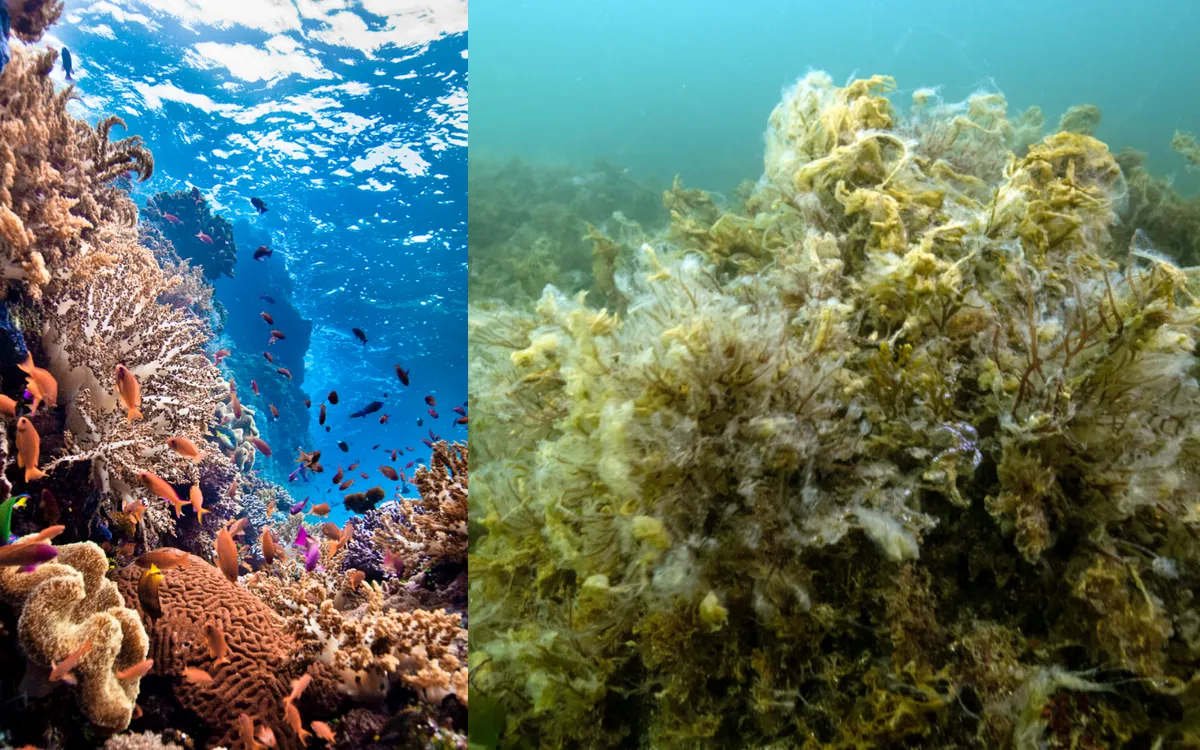
If we take a canonical case like the dieback of coral reefs and their replacement with a macroalgal or seaweed goo, generally ecologists and people who fish in the surrounding area would all agree that it’s a positive if you could tip back to the thriving, flourishing coral reef. With the Amazon case, if we’ve destroyed the Amazon for cattle ranching, then from a nature point of view, the positive tipping would be back to a healthy, fire-suppressing, rainfall-recycling forest.
SP: Can you give some examples of positive tipping points where we can see that the ecosystem has undergone positive change?
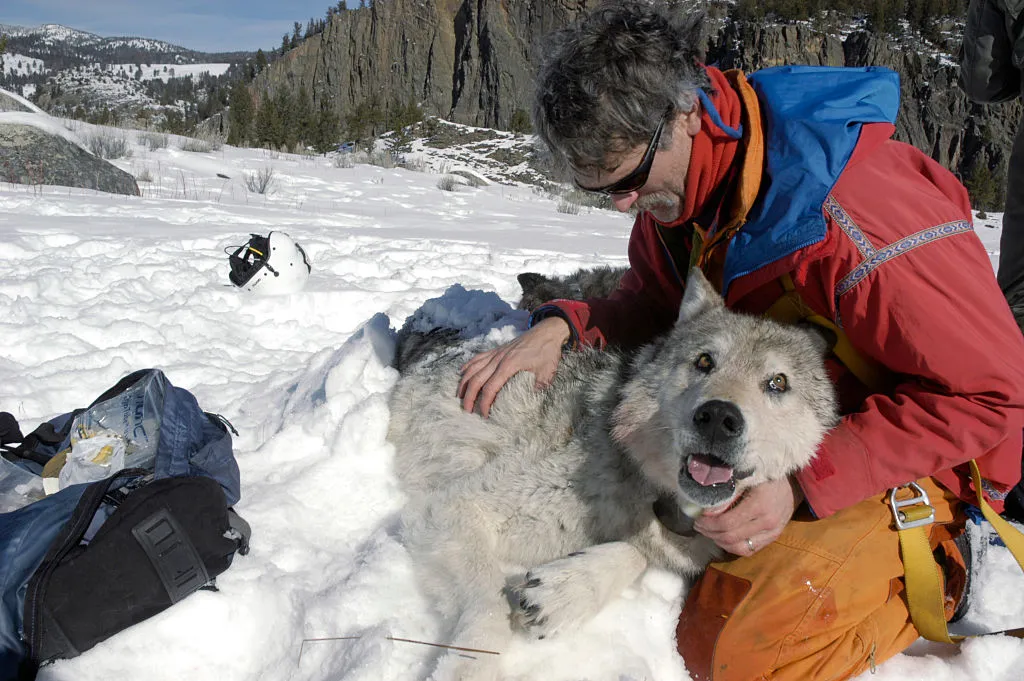
TL: A classic case is the reintroduction of wolves to Yellowstone National Park. When the last wolf was hunted to local extinction [around 1926], it then unleashed the population of elk and other grazers to go wild and eat down the saplings of many tree species. So then, you had a lot less wooded or forested [areas in] Yellowstone Park. But when the wolves were reintroduced [in 1995 to 1996], it triggered what’s called a trophic cascade, where you saw record-breaking recovery, especially of the riparian vegetation — the vegetation around water courses and shallow bits of the landscape.
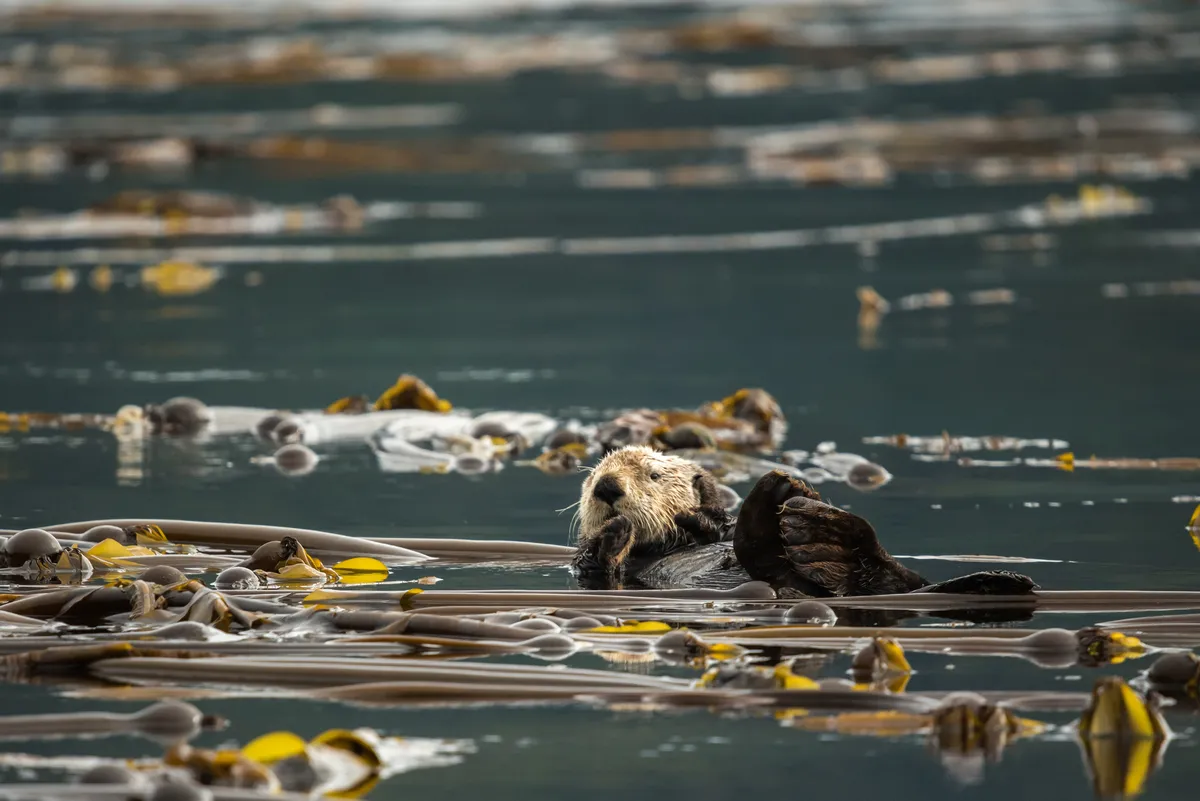
Another famous one is sea otters off the Pacific West Coast of North America. They were hunted to local extermination [in the 18th and 19th centuries]. What you saw when you lost the otters is that urchins that the otters loved to eat went crazy and ate down all the kelp and destroyed this wonderful kelp forest, which changed the whole ecosystem. As the population has begun to recover through less hunting and deliberate reintroductions in the Alaskan region, otters come back, eat urchins; kelp bounces back; and the whole ecosystem is reinstated.
I touch on a bunch of other ones [in the article], too. There was the eutrophication of the Norfolk Broads [in England] and other shallow lakes. [Eutrophication is an excessive enrichment of water with nutrients.] It was a long journey, but by controlling the nutrient inputs — the runoff — into those waterways, we eventually managed to, in some cases, tip recovery of clear waters and flourishing, more complex ecosystems. Those are all tipping points in nature.
I also talk about cases of positive tipping for nature, but the tipping might be in society. We see the positive tipping of the spread of, say, marine protected areas, or some [other] nature-conserving or regenerating activity.
And then I get into the territory of, could we positively tip the drivers of nature destruction? The simple one is that people eat too much meat, especially red meat. Is there the potential to positively tip change? There’s trends in the right direction in the U.K. and several other rich nations, with people eating less red meat. And then there’s India — a country where, for cultural reasons, there’s way less meat consumption. That shows that an alternative stable state of diet is possible.
SP: In your recent book, “Positive Tipping Points: How to Fix the Climate Crisis” (Oxford University Press, 2025), you write about positive tipping points that could accelerate the energy transition away from fossil fuels. What are some of those tipping points?
TL: There are a lot of important amplifying feedbacks in society that have been enabling a spread of clean, zero-emission technologies, whether it’s electric vehicles or the adoption of solar panels. These amplifying feedbacks include things like the fact that the more people who adopt the clean, green alternative, the more they can influence other people to adopt it.
We tend to learn from each other. But actually, the beauty of those technologies is that the more solar panels or electric vehicle batteries we make, the better and cheaper they tend to get. There’s something we call the increasing returns: The more who adopt [something], the more attractive it becomes for the next person to adopt, because the thing is more affordable, more attractive in its performance, and more accessible, usually, as well. Those feedbacks really help to create a self-propelling change.
SP: What do you hope people will take away from knowing there are these positive tipping points and not just negative ones?
TL: I want people to take away a sense of empowerment or agency. There are demonstrated cases — loads of them that I touch on in the paper — where, at different scales, individuals, households, communities have come together and worked with the feedbacks that are in nature to positively tip to a better state.
SP: You write in the article that it took more otters to bring back the kelp forests on the West Coast than there were to begin with. With that in mind, how difficult is it to reverse a negative tipping point?
TL: If you want to tip back [to a nature-positive state], you’ve got to get to the point where you destabilize the undesirable state or give the system a big shove. It’s that idea of alternative stable states [such as a thriving coral reef or a seaweed-choked one] that always tends to bring with it this quality that you have to work harder to positively tip recovery, in terms of the drivers, than to get the bad state. And that was true, for example, for the nutrient loading of shallow lakes in the Norfolk Broads. If you dial the phosphorus runoff back down again to the level at which you tipped the creation of this horrible eutrophic stew, I’m afraid you wouldn’t get the system back; you have to dial it a lot further.
Mathematically, we talk about these alternative stable states having attraction; they maintain themselves, so you have to break the feedbacks that are self-maintaining for the bad state, just like the ones for the good state eventually got broken. But then, when you have tipped recovery, the good thing to know about is that that has its own irreversibility. It cuts both ways.
SP: Which negative tipping points are you most concerned about?
TL: The collapse of the great Atlantic Meridional Overturning Circulation, or AMOC for short, is my greatest source of concern because of the carnage that would cause for societies all over the world, but not least in the U.K., where I live. In the biosphere, I would say that our report [showing] that we may already have passed a tipping point for widespread coral reef dieback is pretty concerning. I guess I might be even more concerned if I felt we were reaching the tipping point to lose the Amazon rainforest or large parts of it. The coral reefs one is pretty bad, when you think about it from both the biodiversity point of view (it’s at least a quarter of marine biodiversity) and the human point of view. Estimates differ, but there are always hundreds of millions of people who depend on these reefs for their livelihoods, so that’s a huge issue.
SP: Do you think geoengineering could help us reach some of these positive tipping points?
TL: I think we should keep researching the global geoengineering possibilities to know what they’re capable of and what their limitations and side effects are. But before we consider that, we should do everything in our power to do the things we know will work to accelerate the change to zero emissions to stop the underlying problem.
In the space of nature, there is no magical geoengineering solution for stopping the fundamental driver of people, on average, eating more meat, which is leading to the net destruction of nature. So again, let’s focus on what it takes to change the crucial drivers, because the geoengineering only really matches up against things that are threatened by the rising temperature.
SP: What can individual people do to help trigger positive tipping points?
TL: Anyone can ask themselves about their dietary choices. I’m not saying everybody needs to go vegetarian or vegan, but just by reducing particularly our red meat consumption, we can [create] a disproportionate benefit for nature. We might all be inspired to be part of some nature-regenerating activity or initiative in our locale. Maybe we’re part of a community garden movement; maybe we get a bit involved with wildlife trusts or something in replanting or regenerating the ecosystem. If those initiatives think about the amplifying feedbacks that they can activate to help the initiative spread, then being part of those could be the seeds of wider change. And loads of people already are part of those initiatives, which is great to see.
Editor’s note: This interview has been condensed and lightly edited for clarity.