
Close Menu
    Facebook X (Twitter) Instagram Pinterest YouTube LinkedIn TikTok
    TopBuzzMagazine.com
    Facebook X (Twitter) Instagram Pinterest YouTube LinkedIn TikTok
    • Home
    • Movies
    • Television
    • Music
    • Fashion
    • Books
    • Science
    • Technology
    • Cover Story
    • Contact
      • About
      • Amazon Disclaimer
      • Terms and Conditions
      • Privacy Policy
      • DMCA / Copyrights Disclaimer
    TopBuzzMagazine.com
    Home»Science»Scientists invent a gel that creates neurons from other cells, which could help treat Alzheimer’s
    Science

    Scientists invent a gel that creates neurons from other cells, which could help treat Alzheimer’s

    By AdminAugust 28, 2026
    Facebook Twitter Pinterest LinkedIn Tumblr Email
    Scientists invent a gel that creates neurons from other cells, which could help treat Alzheimer’s


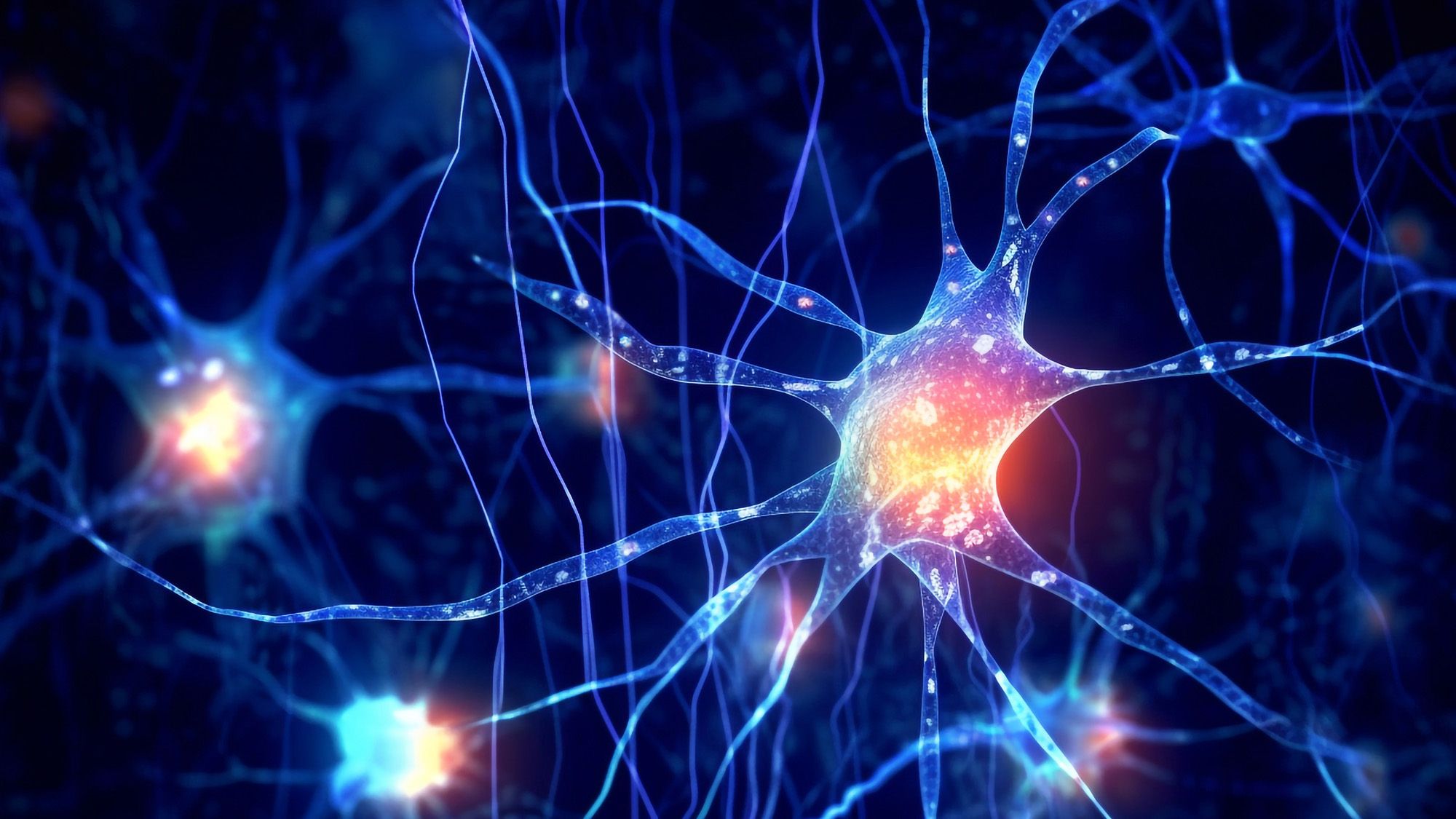
    Scientists may have found a way to regenerate the neurons that are lost due to conditions like Alzheimer’s disease, a new laboratory study hints.

    The research, published Aug. 26 in the journal Cell Biomaterials, suggests that reducing levels of a key protein in another type of cell in the brain, called astrocytes, may convert those cells into neurons. The adult brain has a limited capacity to produce new neurons, at baseline, and an even more limited ability to replace neurons lost to disease.

    If successfully developed into a treatment for humans, this new approach could replenish lost neurons and thus restore brain function, the study authors say.

    Latest Videos FromLive Science

    Astrocytes are abundant, star-shaped cells in the brain that protect and support the functions of neurons. A crucial protein for astrocyte development is called PTBP1, and previously, scientists suggested that eliminating this protein in astrocytes may convert them into neurons. In that study, researchers reported converting astrocytes in the mouse brain into neurons by eliminating the gene that coded for PTBP1.

    However, later experiments contradicted these results, suggesting that newly formed neurons could not be traced back to the astrocytes. So Peisheng Xu, a co-author of the new study and a pharmaceutical scientist at the University of South Carolina, set out to investigate that contradiction.


    You may like

    “We felt it’s strange [that] two groups of people got different conclusions,” he told Live Science.

    He used a technique called Nano-Eraser, developed earlier in his lab, to delete PTBP1 from astrocytes without editing any of their genes. The team accomplished this by packaging an antibody that targets PTBP1 into a polymer gel. That gel helped sneak the antibody across the blood-brain barrier, a gatekeeper that prevents certain substances in the bloodstream from entering the brain.

    Get the world’s most fascinating discoveries delivered straight to your inbox.

    Once it reaches astrocytes in the brain, the antibody binds to PTBP1 and drives the cell’s internal machinery to destroy the protein.

    “I think it’s quite interesting, intriguing and an innovative approach,” said Dr. Christiane Wrann, a neuroscientist at Harvard Medical School, who was not involved in the study. “They show that [the gel] can cross the blood-brain barrier,” which is important for developing therapies for the brain, she told Live Science.

    A diagram showing the experimental process, with astronauts being injected into a mouse.

    The team applied a tool called Nano-Eraser to inhibit the protein PTBP1 in astrocytes. This changed them into neurons, they report.

    (Image credit: Created with BioRender.com)

    The team first tested the gel in human astrocytes grown in lab dishes. Over the course of days, astrocytes exposed to the gel lost their characteristic star shape and started to form axons — the wires from which neurons send messages. Proteins typically found in neurons also became more abundant in the astrocytes.


    What to read next

    The cells later showed electrical activity that further confirmed that they were functioning similarly to neurons and could fire synchronously. The gel also showed similar results in miniature models of the brain, called organoids, which had been grown from human stem cells.

    The researchers then tested the gel in mouse models of Alzheimer’s disease. These lab mice had lost neurons and had developed some characteristic features of Alzheimer’s disease, such as inflammation, loss of cognitive function, and sticky clumps of a protein in the brain.

    The team gave these mice two intravenous doses of the gel, eight days apart. Over the next four weeks, behavioral tests suggested that the treated mice’s memories improved and they were able to build better nests than untreated mice; that’s an indication of improved behavioral function. Later, the researchers examined the brains of the treated mice, finding that the density of their neurons had increased while their levels of inflammatory molecules decreased.

    However, while the lab-dish experiments indicated that astrocytes converted into neurons, that finding has not been confirmed in live mice, Xu said.

    “We observed that neuron density increased in treated mice compared to untreated ones,” he said, “but we cannot yet eliminate the possibility that some other neural stem cells might have also converted into neurons.”

    Wrann agrees that additional experiments would have been required to see whether a particular astrocyte in the mouse brain changed into a neuron. While the results are “intriguing,” a lot more research is needed to see the long-term effects of such a treatment on different types of brain cells, she said.

    Xu and his team now plan to probe further into astrocyte conversion in live mice. Before they can move to clinical trials with people, he said, the safety and effectiveness of the treatment would need to be tested in nonhuman primates.

    Notably, astrocytes themselves serve important functions in the brain. So there’s a question about what having “chronically reduced PTBP1 could do to the brain,” Wrann noted. She agreed that careful studies would be needed for this to translate to humans.

    “That’s something that needs to be tested step by step,” she said.

    Wang, M., VanderVeen, B., Xu, Z. A., Xu, Y., Mintzer, J., Murphy, A., Zhang, Q., & Xu, P. (2026). Reverse the progression of Alzheimer’s disease through Nano-ERASER-based adult neuroregeneration. Cell Biomaterials, 100575. https://doi.org/10.1016/j.celbio.2026.100575


    See how much you know about the most complex organ in the human body with our brain quiz!

    View Original Source Here

    Share. Facebook Twitter Pinterest LinkedIn Tumblr Email

    Related Posts

    Ancient shark ‘graveyard’ uncovered in Egyptian desert

    August 28, 2026

    ‘Unlike anything seen before’: Archaeologists unearth a unique, 11,000-year-old statue of a person riding a leopard from one of the world’s earliest settlements

    August 27, 2026

    How worried are you about extreme heat?

    August 27, 2026

    2 people die of measles in Pennsylvania as vaccination rates drop across the nation

    August 26, 2026

    HPV-driven throat and mouth cancers are rising in men. Why?

    August 25, 2026

    Why is AI going on a hacking spree?

    August 24, 2026
    popular posts

    Abercrombie Sloane Tailored Pants Review With Photos

    ‘Percy Jackson’ Casts Glynn Turman, Megan Mullally, Jason Mantzoukas &

    Despite ideals, people don’t really like reducing inequality, study finds

    Solving the strength-toughness dilemma in superhard ceramics with a chemically

    Deep reading can boost your critical thinking and help you resist misinformation—here's how to build the skill

    Best Dyson Deals for Prime Day: Vacuums, Hair Tools, and More

    An energy-demanding loop: Study estimates how warming climate drives demand

    Categories
    • Books (4,068)
    • Cover Story (21)
    • Events (28)
    • Fashion (2,877)
    • Interviews (63)
    • Movies (3,364)
    • Music (3,661)
    • News (183)
    • Politics (16)
    • Science (5,180)
    • Technology (3,361)
    • Television (4,095)
    • Uncategorized (932)
    Archives
    Facebook X (Twitter) Instagram Pinterest YouTube Reddit TikTok
    © 2026 Top Buzz Magazine. All rights reserved. All articles, images, product names, logos, and brands are property of their respective owners. All company, product and service names used in this website are for identification purposes only. Use of these names, logos, and brands does not imply endorsement unless specified. By using this site, you agree to the Terms of Use and Privacy Policy.

    Type above and press Enter to search. Press Esc to cancel.

    We use cookies on our website to give you the most relevant experience by remembering your preferences and repeat visits. By clicking “Accept”, you consent to the use of ALL the cookies.
    Do not sell my personal information.
    Cookie SettingsAccept
    Manage consent

    Privacy Overview

    This website uses cookies to improve your experience while you navigate through the website. Out of these, the cookies that are categorized as necessary are stored on your browser as they are essential for the working of basic functionalities of the website. We also use third-party cookies that help us analyze and understand how you use this website. These cookies will be stored in your browser only with your consent. You also have the option to opt-out of these cookies. But opting out of some of these cookies may affect your browsing experience.
    Necessary
    Always Enabled
    Necessary cookies are absolutely essential for the website to function properly. These cookies ensure basic functionalities and security features of the website, anonymously.
    CookieDurationDescription
    cookielawinfo-checkbox-analytics11 monthsThis cookie is set by GDPR Cookie Consent plugin. The cookie is used to store the user consent for the cookies in the category "Analytics".
    cookielawinfo-checkbox-functional11 monthsThe cookie is set by GDPR cookie consent to record the user consent for the cookies in the category "Functional".
    cookielawinfo-checkbox-necessary11 monthsThis cookie is set by GDPR Cookie Consent plugin. The cookies is used to store the user consent for the cookies in the category "Necessary".
    cookielawinfo-checkbox-others11 monthsThis cookie is set by GDPR Cookie Consent plugin. The cookie is used to store the user consent for the cookies in the category "Other.
    cookielawinfo-checkbox-performance11 monthsThis cookie is set by GDPR Cookie Consent plugin. The cookie is used to store the user consent for the cookies in the category "Performance".
    viewed_cookie_policy11 monthsThe cookie is set by the GDPR Cookie Consent plugin and is used to store whether or not user has consented to the use of cookies. It does not store any personal data.
    Functional
    Functional cookies help to perform certain functionalities like sharing the content of the website on social media platforms, collect feedbacks, and other third-party features.
    Performance
    Performance cookies are used to understand and analyze the key performance indexes of the website which helps in delivering a better user experience for the visitors.
    Analytics
    Analytical cookies are used to understand how visitors interact with the website. These cookies help provide information on metrics the number of visitors, bounce rate, traffic source, etc.
    Advertisement
    Advertisement cookies are used to provide visitors with relevant ads and marketing campaigns. These cookies track visitors across websites and collect information to provide customized ads.
    Others
    Other uncategorized cookies are those that are being analyzed and have not been classified into a category as yet.
    SAVE & ACCEPT