

Close Menu
    Facebook X (Twitter) Instagram Pinterest YouTube LinkedIn TikTok
    TopBuzzMagazine.com
    Facebook X (Twitter) Instagram Pinterest YouTube LinkedIn TikTok
    • Home
    • Movies
    • Television
    • Music
    • Fashion
    • Books
    • Science
    • Technology
    • Cover Story
    • Contact
      • About
      • Amazon Disclaimer
      • Terms and Conditions
      • Privacy Policy
      • DMCA / Copyrights Disclaimer
    TopBuzzMagazine.com
    Home»Science»US government overhauls the childhood vaccine schedule in unprecedented move
    Science

    US government overhauls the childhood vaccine schedule in unprecedented move

    By AdminJanuary 5, 2026
    Facebook Twitter Pinterest LinkedIn Tumblr Email
    US government overhauls the childhood vaccine schedule in unprecedented move


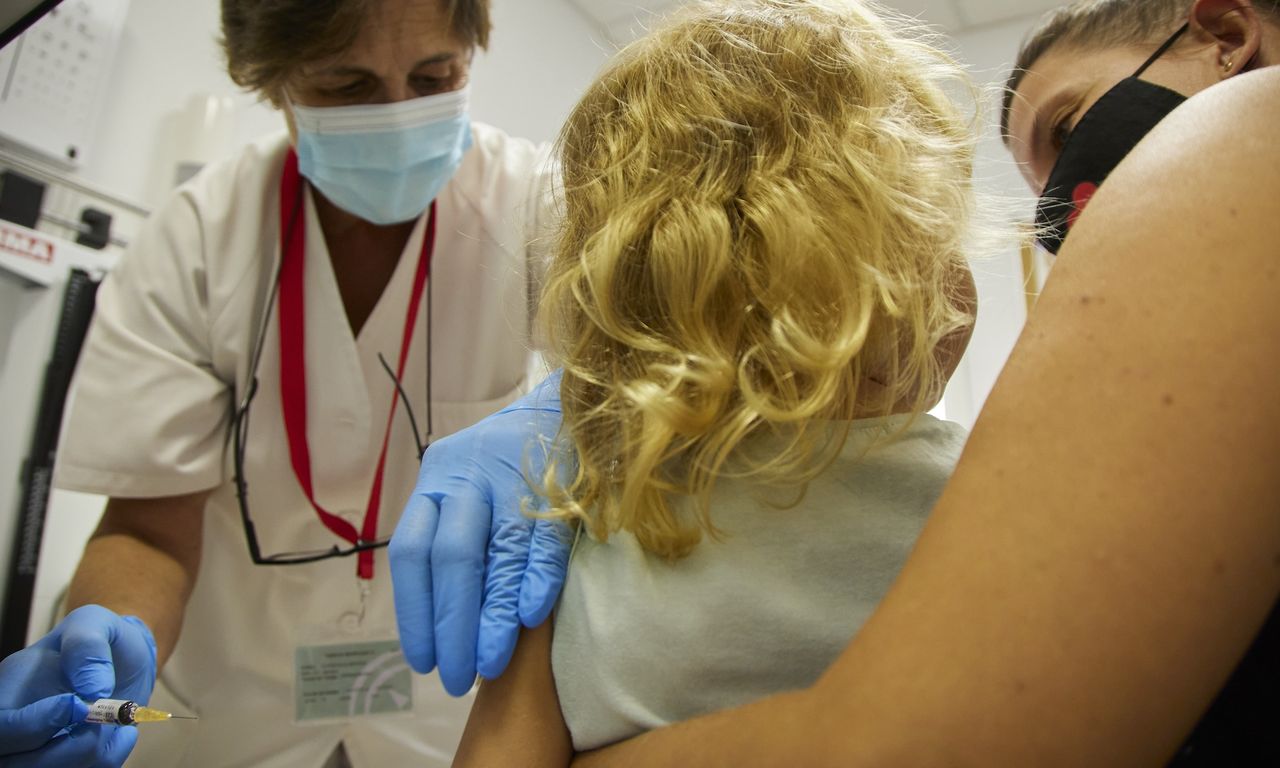
    The U.S. federal government has rewritten its childhood vaccine schedule, reducing the number of shots universally recommended to kids 18 and under from around 17 to 11.

    This policy change effectively downgrades the recommendations for several shots, such as those against rotavirus, the flu and hepatitis A. Rather than being recommended to all children by default, those vaccines will now be recommended to only certain “high-risk” groups or will be accessible through “shared clinical decision-making” between parents and providers.

    The concept of shared clinical decision-making emphasizes that, if a child’s caregivers wish to give them a routine vaccine, they should first consult with a medical provider. While that idea may sound benign, it could sow confusion around which vaccines are considered effective and medically necessary, Dr. Daniel Jernigan, former director of the Centers for Disease Control and Prevention’s (CDC) National Center for Emerging and Zoonotic Infectious Diseases, told STAT. And it could introduce logistical hurdles to accessing vaccines.


    You may like

    “By making these vaccines a shared clinical decision making, it introduces one more barrier that prevents a child from getting a life-saving vaccine,” Jernigan said.

    The new recommendations

    The new recommendations group vaccines and immunizations into three categories:

    • Those recommended for all children
    • Those recommended for certain high-risk groups
    • Those that can be given based on “shared clinical decision-making”

    Federal guidance still recommends that all children receive shots against 11 diseases: measles, mumps, rubella, polio, pertussis, tetanus, diphtheria, Haemophilus influenzae type B (Hib), pneumococcal disease, varicella (chickenpox), and human papillomavirus (HPV). However, HHS is recommending only one dose of HPV vaccine instead of the usual two, STAT reported.

    Certain “high-risk” populations are recommended to be immunized for RSV, hepatitis A, hepatitis B, dengue, and two types of meningococcal disease. (Note that immunizations against respiratory syncytial virus, or RSV, include a prenatal vaccine given to mothers and antibody drugs given to kids. There is no RSV vaccine available for children.)

    Get the world’s most fascinating discoveries delivered straight to your inbox.

    Vaccines against meningococcal disease and hepatitis A and B are also listed under the “shared decision-making” category, as are shots against rotavirus, COVID-19 and the flu.

    “Abandoning recommendations for vaccines that prevent influenza, hepatitis and rotavirus, and changing the recommendation for HPV without a public process to weigh the risks and benefits, will lead to more hospitalizations and preventable deaths among American children,” Michael Osterholm of the University of Minnesota’s Center for Infectious Disease Research and Policy, told The Associated Press.

    ‘Dangerous and unnecessary’ changes

    Stakeholders had been bracing for this policy change for several weeks by the time it was announced Monday (Jan. 5).


    You may like

    In early December, President Donald Trump called on federal officials to compare the U.S. childhood vaccine schedule to that of “peer nations,” implying that other countries have superior policies. In mid-December, Politico reported that Robert F. Kennedy Jr., the head of the Department of Health and Human Services (HHS), had intended to make the U.S. vaccine schedule more like that of Denmark — which recommends shots against only 11 diseases in its schedule.

    Comparable countries often recommend vaccines and immunizations against about 12 to 15 pathogens, while Austria and the U.S. have historically sat on the high end at around 17.

    Experts have emphasized that the United States’ vaccine schedule has been rigorously tested and that the decision to change it was not made using new data on its safety or effectiveness. They also noted that the policies of Denmark — a small country of roughly 6 million people with universal health care and a fairly homogenous population — may not serve the U.S. population, given that it’s much larger and contends with a splintered health care system and greater health inequities. (The U.S. population is roughly 340 million.)

    “The truth is that while vaccine guidance is largely similar across developed countries, it may differ by country due to different disease threats, population demographics, health systems, costs, government structures, vaccine availability, and programs for vaccine delivery,” the American Academy of Pediatrics (AAP) noted.

    These location-specific factors weigh upon which vaccines health officials recommend to a given country’s children. But despite the differences between America and Denmark, federal officials are now claiming that Denmark’s approach is the superior one regardless of context.

    Officials had already been shifting away from giving full-throated recommendations of routine vaccines. For example, HHS previously recommended “shared clinical-decision making” for giving COVID-19 vaccines to kids and providing hepatitis B vaccines to infants of mothers who test negative for the virus.

    Various stakeholders are expected to break with the CDC’s new recommendations. For instance, medical societies, city and state health departments, and regional health alliances have rejected the CDC’s other vaccine policy changes, and the AAP has sued HHS for allegedly violating established rules around vaccine regulatory changes when the agency tweaked its COVID-19 vaccine guidance.

    “Today’s announcement by federal health officials to arbitrarily stop recommending numerous routine childhood immunizations is dangerous and unnecessary,” AAP president Dr. Andrew Racine, said in a statement, according to the clinical news source Contemporary Pediatrics.

    “The longstanding, evidence-based approach that has guided the U.S. immunization review and recommendation process remains the best way to keep children healthy,” Racine said, “and protect against health complications and hospitalizations.”

    This article is for informational purposes only and is not meant to offer medical advice.

    View Original Source Here

    Share. Facebook Twitter Pinterest LinkedIn Tumblr Email

    Related Posts

    Think of a card, any card – but make it science

    January 29, 2026

    New fear unlocked: Runaway black holes

    January 29, 2026

    Renpho Lynx smart ring review: Too expensive for what it has to offer

    January 28, 2026

    Amazon is getting drier as deforestation shuts down atmospheric rivers

    January 28, 2026

    After switch from ULA, SpaceX set for speedy national security launch

    January 27, 2026

    1,400-year-old Zapotec tomb discovered in Mexico features enormous owl sculpture symbolizing death

    January 27, 2026
    popular posts

    Neil Turner on Writing a Series Versus a Standalone Novel

    NASA’s Moon-Bound Megarocket Will Send a Spacecraft to an Asteroid,

    People Shopping for ‘Meaning’ Buy Cheaper Goods

    The Beauty Hacks I’ve Learned on TikTok This Month

    Carly Pearce Plays Fishing for Answers

    Asus Gaming V16 Review: Strong Battery, Mid-Range Performance

    Fire and Ash Box Office Projections Fall Short of Franchise Goal

    Categories
    • Books (3,684)
    • Cover Story (10)
    • Events (21)
    • Fashion (2,671)
    • Interviews (55)
    • Movies (2,983)
    • Music (3,271)
    • News (168)
    • Politics (7)
    • Science (4,836)
    • Technology (2,978)
    • Television (3,708)
    • Uncategorized (932)
    Archives
    Facebook X (Twitter) Instagram Pinterest YouTube Reddit TikTok
    © 2026 Top Buzz Magazine. All rights reserved. All articles, images, product names, logos, and brands are property of their respective owners. All company, product and service names used in this website are for identification purposes only. Use of these names, logos, and brands does not imply endorsement unless specified. By using this site, you agree to the Terms of Use and Privacy Policy.

    Type above and press Enter to search. Press Esc to cancel.

    We use cookies on our website to give you the most relevant experience by remembering your preferences and repeat visits. By clicking “Accept”, you consent to the use of ALL the cookies.
    Do not sell my personal information.
    Cookie SettingsAccept
    Manage consent

    Privacy Overview

    This website uses cookies to improve your experience while you navigate through the website. Out of these, the cookies that are categorized as necessary are stored on your browser as they are essential for the working of basic functionalities of the website. We also use third-party cookies that help us analyze and understand how you use this website. These cookies will be stored in your browser only with your consent. You also have the option to opt-out of these cookies. But opting out of some of these cookies may affect your browsing experience.
    Necessary
    Always Enabled
    Necessary cookies are absolutely essential for the website to function properly. These cookies ensure basic functionalities and security features of the website, anonymously.
    CookieDurationDescription
    cookielawinfo-checkbox-analytics11 monthsThis cookie is set by GDPR Cookie Consent plugin. The cookie is used to store the user consent for the cookies in the category "Analytics".
    cookielawinfo-checkbox-functional11 monthsThe cookie is set by GDPR cookie consent to record the user consent for the cookies in the category "Functional".
    cookielawinfo-checkbox-necessary11 monthsThis cookie is set by GDPR Cookie Consent plugin. The cookies is used to store the user consent for the cookies in the category "Necessary".
    cookielawinfo-checkbox-others11 monthsThis cookie is set by GDPR Cookie Consent plugin. The cookie is used to store the user consent for the cookies in the category "Other.
    cookielawinfo-checkbox-performance11 monthsThis cookie is set by GDPR Cookie Consent plugin. The cookie is used to store the user consent for the cookies in the category "Performance".
    viewed_cookie_policy11 monthsThe cookie is set by the GDPR Cookie Consent plugin and is used to store whether or not user has consented to the use of cookies. It does not store any personal data.
    Functional
    Functional cookies help to perform certain functionalities like sharing the content of the website on social media platforms, collect feedbacks, and other third-party features.
    Performance
    Performance cookies are used to understand and analyze the key performance indexes of the website which helps in delivering a better user experience for the visitors.
    Analytics
    Analytical cookies are used to understand how visitors interact with the website. These cookies help provide information on metrics the number of visitors, bounce rate, traffic source, etc.
    Advertisement
    Advertisement cookies are used to provide visitors with relevant ads and marketing campaigns. These cookies track visitors across websites and collect information to provide customized ads.
    Others
    Other uncategorized cookies are those that are being analyzed and have not been classified into a category as yet.
    SAVE & ACCEPT