
Close Menu
    Facebook X (Twitter) Instagram Pinterest YouTube LinkedIn TikTok
    TopBuzzMagazine.com
    Facebook X (Twitter) Instagram Pinterest YouTube LinkedIn TikTok
    • Home
    • Movies
    • Television
    • Music
    • Fashion
    • Books
    • Science
    • Technology
    • Cover Story
    • Contact
      • About
      • Amazon Disclaimer
      • Terms and Conditions
      • Privacy Policy
      • DMCA / Copyrights Disclaimer
    TopBuzzMagazine.com
    Home»Science»Tourists help scientists reveal microplastic pollution on remote Arctic beaches
    Science

    Tourists help scientists reveal microplastic pollution on remote Arctic beaches

    By AdminJuly 27, 2023
    Facebook Twitter Pinterest LinkedIn Tumblr Email
    Tourists help scientists reveal microplastic pollution on remote Arctic beaches

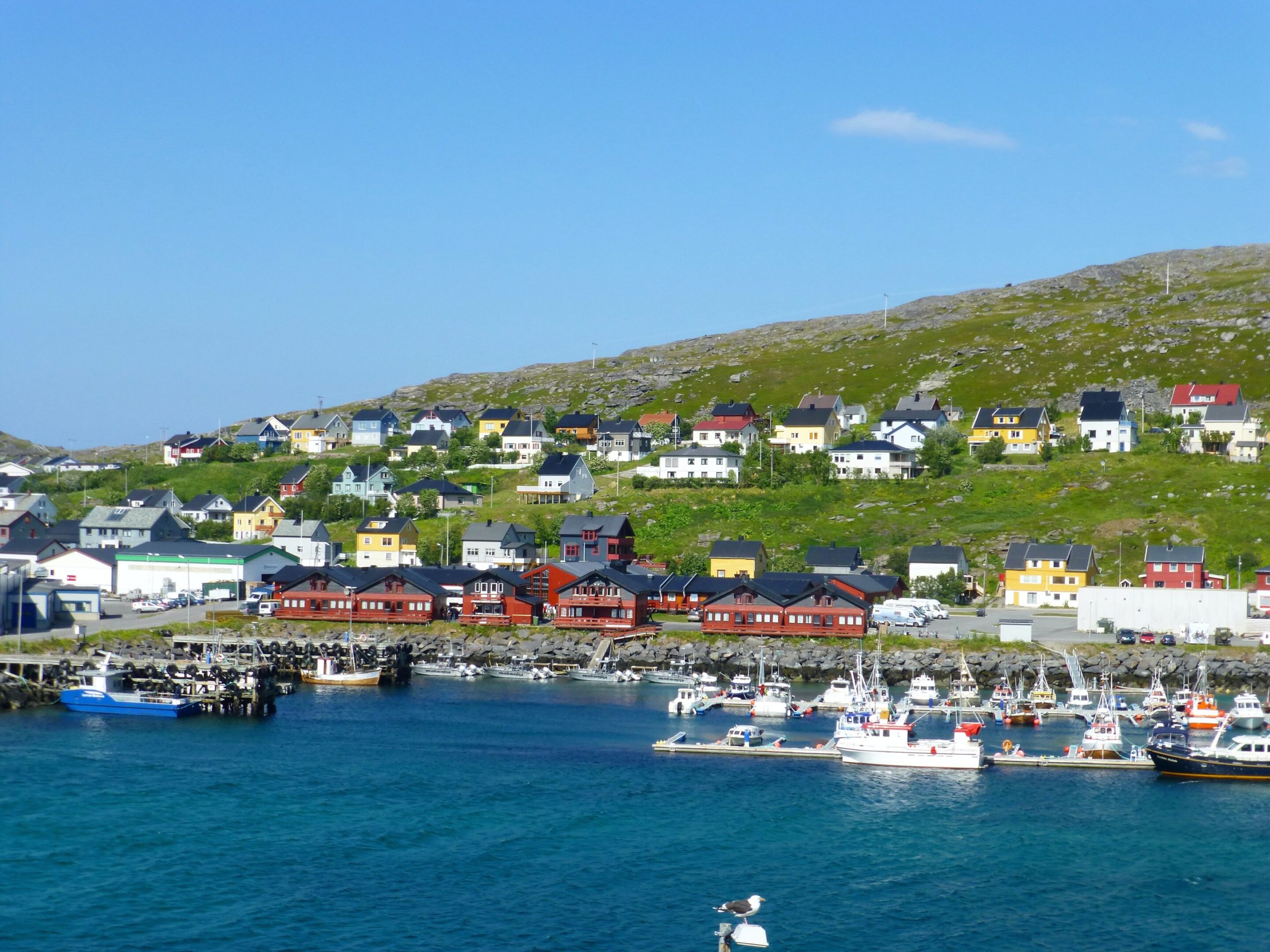
    Svalbard. Credit: Unsplash/CC0 Public Domain

    Tourists acting as citizen scientists have helped a research team detect microplastics on remote Arctic beaches. The global scale of plastic production means that these tiny fragments of plastic are now ubiquitous, and scientists fear that ocean currents will cause plastic to accumulate in the Arctic, damaging ecosystems. But our knowledge of the scale and type of plastic pollution in the Arctic is incomplete. Researchers recruited holidaymakers to carry out sample collection during cruises, hoping to fill in some of the gaps in their knowledge.

    “Plastic pollution is now ubiquitous. It is found on land and in soil and most rivers of the world,” said Dr. Bruno Walther of the Alfred Wegener Institute, Helmholtz Center for Polar and Marine Research, author of the study published in Frontiers in Environmental Science. “It is even found in the polar oceans and the deepest ocean trenches.”

    Plastic gets everywhere

    The Svalbard archipelago is Europe’s northernmost landmass—beautiful, remote, and at risk from microplastics transported by ocean currents. Four tourist cruises visiting Svalbard in 2016, 2017, 2021 and 2022 collected sediment samples: all cruises except 2022 also surveyed macroplastic debris (between 2.5 and 10cm in size) for a different study. Initially, single samples were taken from beaches using simple metal tools and sent to the scientists with metadata and photographs to record sampling locations. Later this was expanded to cover whole beaches with sampling grids.

    “Citizen science is possible even in remote Arctic beaches,” said Walther. “This helps to cut down on traveling time, CO2 emissions and costs for scientists, and it helps to engage citizens in a global environmental issue.”

    These samples were dried out, weighed, and measured. Each sample was filtered to capture particles 1mm or larger in size. This boundary was selected on the basis that smaller particles don’t easily become airborne, an assumption that the scientists tested by keeping a bowl of purified water next to their worksurface and filtering it to search for microplastics after their analysis was complete: no microplastics had drifted from the laboratory’s air into the water.

    To avoid plastic contamination, the scientists ran an air purifier, wore cotton lab coats, avoided synthetic clothing, and covered samples with aluminum lids. Identified plastic particles were examined under a microscope and then analyzed using spectroscopy.

    Warning signs

    The scientists found that microplastics of the size they were searching for were not widespread but were very concentrated: the estimated overall level of plastic pollution was comparable to areas formerly believed to be much more polluted than Arctic beaches. Two specific sources of plastic pollution were identified in their samples: polypropylene fibers that likely formed part of a fishing net, and polyester-epoxide particles that probably came from a ship’s color coating or equipment.

    “Plastic debris from fisheries is the most direct point of entry to the marine realm, and is often particularly important in remote areas,” said author Dr. Melanie Bergmann of the Alfred Wegener Institute. “There is an active fishing fleet operating in the waters surrounding Svalbard but also in the North Sea and north Atlantic. Some of the waste that they emit drifts to the beaches of Svalbard.”

    The netting appeared to have fragmented very quickly due to the conditions on the beach: repeated freeze cycles, high humidity from fog, and up to 24 hours of sunlight a day in summer. If this rapid fragmentation occurs at other locations, it could introduce tiny, elusive microplastics into the environment very quickly.

    “We still need more sampling in the Arctic, in more places and in more regular time intervals to monitor the situation,” said Walther.

    “It should be noted that we only analyzed microplastics particles larger than 1mm,” cautioned Bergmann. “This was because of the citizen science approach and to avoid potential airborne contamination by small particles. But our previous studies on Arctic water, ice, and sediment samples have shown that more than 80% of the particles were much smaller. So, we probably would have found more particles, if we had looked for smaller particles, too.”

    More information: Citizen scientists reveal small but concentrated amounts of fragmented microplastic on Arctic beaches, Frontiers in Environmental Science (2023). DOI: 10.3389/fenvs.2023.1210019

    Citation: Tourists help scientists reveal microplastic pollution on remote Arctic beaches (2023, July 21) retrieved 27 July 2023 from https://phys.org/news/2023-07-tourists-scientists-reveal-microplastic-pollution.html

    This document is subject to copyright. Apart from any fair dealing for the purpose of private study or research, no part may be reproduced without the written permission. The content is provided for information purposes only.

    Read The Full Article Here

    Share. Facebook Twitter Pinterest LinkedIn Tumblr Email

    Related Posts

    Listening to 'ringing' black holes unlocks future gravitational-wave astronomy

    July 16, 2026

    Orange-lipped monkey that roars and snorts deep in Congo rainforest is new species to science

    July 16, 2026

    GRS 0917+75 is a giant radio galaxy, observations find

    July 15, 2026

    Scientists show that DNA can last for up to 50,000 years in Africa ‪—‬ much longer than previously thought

    July 15, 2026

    Statistical test helps judge the value of personalization

    July 14, 2026

    ‘Extremely rare’ iron shackles discovered at 2,300-year-old settlement in France may have been used on enslaved women or children

    July 14, 2026
    popular posts

    Scene Stealer: Lacretta as ‘Night Court’s Bold Bailiff Gurgs

    New Christmas Movies to Watch in 2025

    Jane Clementi Guests On TriVersity Talk! With Host Wendy Stuart 7 PM ET Wednesday, December 10th, 2025

    Every ‘Black Mirror’ Episode, From Worst to Best

    New Fantasy Novels to Read After Onyx Storm

    Snap Founder Slams the Metaverse, Says People Prefer Augmented Reality

    Book Riot’s Deals of the Day for December 11, 2022

    Categories
    • Books (3,982)
    • Cover Story (16)
    • Events (24)
    • Fashion (2,834)
    • Interviews (60)
    • Movies (3,279)
    • Music (3,574)
    • News (180)
    • Politics (13)
    • Science (5,133)
    • Technology (3,275)
    • Television (4,004)
    • Uncategorized (932)
    Archives
    Facebook X (Twitter) Instagram Pinterest YouTube Reddit TikTok
    © 2026 Top Buzz Magazine. All rights reserved. All articles, images, product names, logos, and brands are property of their respective owners. All company, product and service names used in this website are for identification purposes only. Use of these names, logos, and brands does not imply endorsement unless specified. By using this site, you agree to the Terms of Use and Privacy Policy.

    Type above and press Enter to search. Press Esc to cancel.

    We use cookies on our website to give you the most relevant experience by remembering your preferences and repeat visits. By clicking “Accept”, you consent to the use of ALL the cookies.
    Do not sell my personal information.
    Cookie SettingsAccept
    Manage consent

    Privacy Overview

    This website uses cookies to improve your experience while you navigate through the website. Out of these, the cookies that are categorized as necessary are stored on your browser as they are essential for the working of basic functionalities of the website. We also use third-party cookies that help us analyze and understand how you use this website. These cookies will be stored in your browser only with your consent. You also have the option to opt-out of these cookies. But opting out of some of these cookies may affect your browsing experience.
    Necessary
    Always Enabled
    Necessary cookies are absolutely essential for the website to function properly. These cookies ensure basic functionalities and security features of the website, anonymously.
    CookieDurationDescription
    cookielawinfo-checkbox-analytics11 monthsThis cookie is set by GDPR Cookie Consent plugin. The cookie is used to store the user consent for the cookies in the category "Analytics".
    cookielawinfo-checkbox-functional11 monthsThe cookie is set by GDPR cookie consent to record the user consent for the cookies in the category "Functional".
    cookielawinfo-checkbox-necessary11 monthsThis cookie is set by GDPR Cookie Consent plugin. The cookies is used to store the user consent for the cookies in the category "Necessary".
    cookielawinfo-checkbox-others11 monthsThis cookie is set by GDPR Cookie Consent plugin. The cookie is used to store the user consent for the cookies in the category "Other.
    cookielawinfo-checkbox-performance11 monthsThis cookie is set by GDPR Cookie Consent plugin. The cookie is used to store the user consent for the cookies in the category "Performance".
    viewed_cookie_policy11 monthsThe cookie is set by the GDPR Cookie Consent plugin and is used to store whether or not user has consented to the use of cookies. It does not store any personal data.
    Functional
    Functional cookies help to perform certain functionalities like sharing the content of the website on social media platforms, collect feedbacks, and other third-party features.
    Performance
    Performance cookies are used to understand and analyze the key performance indexes of the website which helps in delivering a better user experience for the visitors.
    Analytics
    Analytical cookies are used to understand how visitors interact with the website. These cookies help provide information on metrics the number of visitors, bounce rate, traffic source, etc.
    Advertisement
    Advertisement cookies are used to provide visitors with relevant ads and marketing campaigns. These cookies track visitors across websites and collect information to provide customized ads.
    Others
    Other uncategorized cookies are those that are being analyzed and have not been classified into a category as yet.
    SAVE & ACCEPT