
Close Menu
    Facebook X (Twitter) Instagram Pinterest YouTube LinkedIn TikTok
    TopBuzzMagazine.com
    Facebook X (Twitter) Instagram Pinterest YouTube LinkedIn TikTok
    • Home
    • Movies
    • Television
    • Music
    • Fashion
    • Books
    • Science
    • Technology
    • Cover Story
    • Contact
      • About
      • Amazon Disclaimer
      • Terms and Conditions
      • Privacy Policy
      • DMCA / Copyrights Disclaimer
    TopBuzzMagazine.com
    Home»Science»People, not glaciers, transported rocks to Stonehenge, study confirms
    Science

    People, not glaciers, transported rocks to Stonehenge, study confirms

    By AdminJanuary 24, 2026
    Facebook Twitter Pinterest LinkedIn Tumblr Email
    People, not glaciers, transported rocks to Stonehenge, study confirms


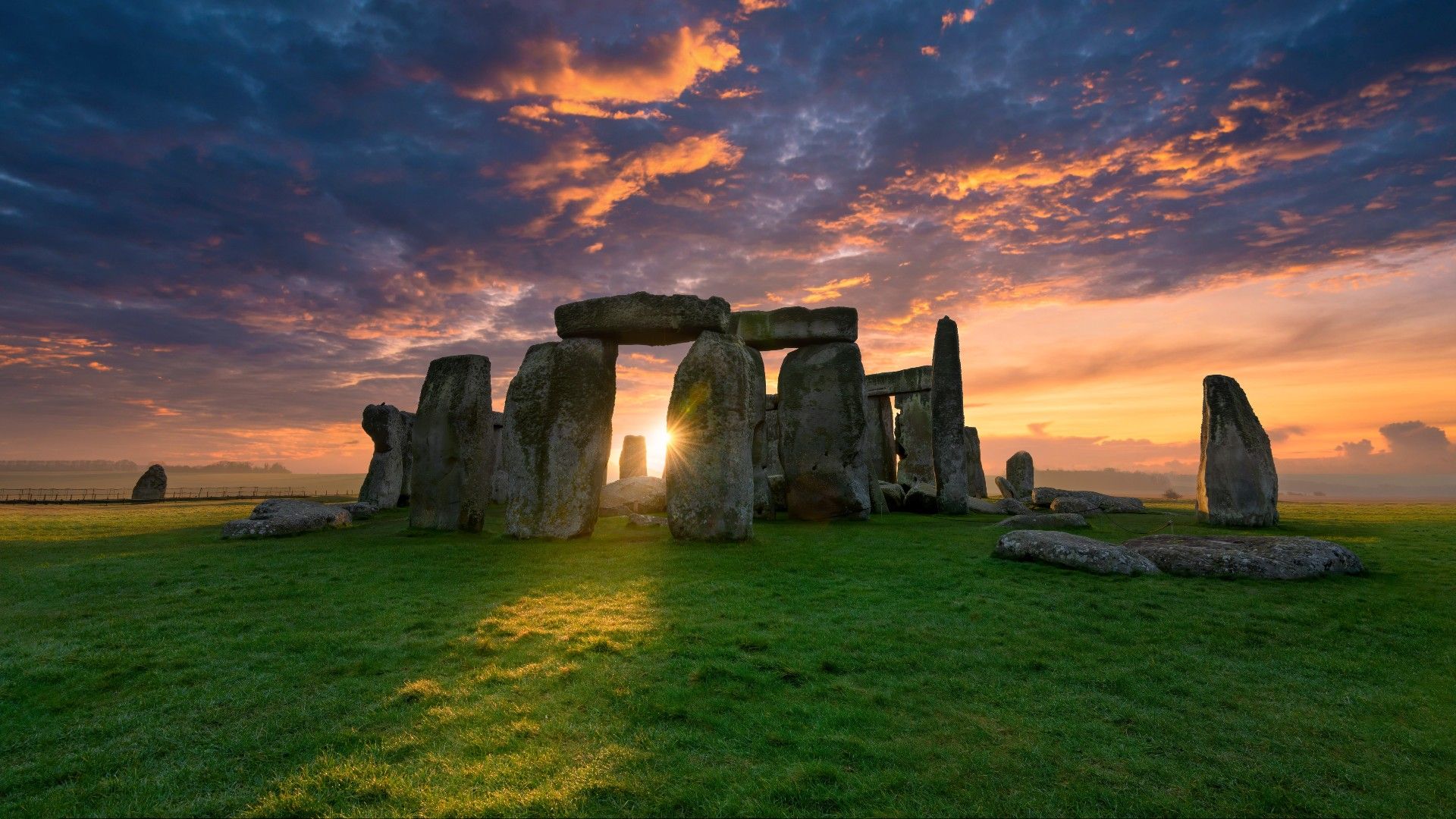
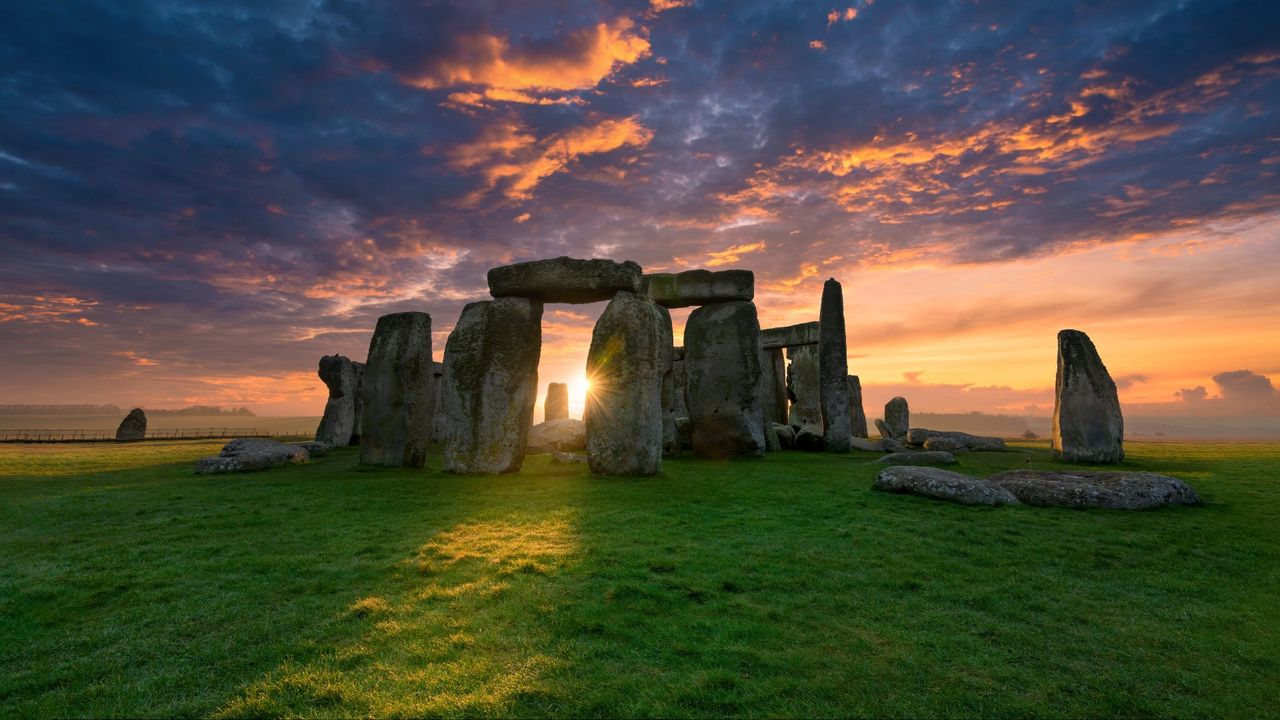
    Humans — not glaciers — transported Stonehenge’s megaliths across Great Britain to their current location in southern England, a new study confirms.

    Scientists have believed for decades that the 5,000-year-old monument’s iconic stones came from what is now Wales and even as far as Scotland, but there is still debate as to how the stones arrived at Salisbury Plain in southern England.

    Now, an analysis of microscopic mineral grains from rivers around Stonehenge has revealed that glaciers didn’t reach into the region during the last ice age (2.6 million to 11,700 years ago), refuting an idea known as the “glacial transport theory” that suggests Stonehenge’s bluestones and 6.6-ton (6 metric tons) Altar Stone were delivered by ice sheets to Salisbury Plain. The new study was published Jan. 21 in the journal Communications Earth and Environment.


    You may like

    “While previous research had cast doubt on the glacial transport theory, our study goes further and applies cutting-edge mineral fingerprinting to trace the stones’ true origins,” study authors Anthony Clarke, a research geologist at Curtin University in Australia, and Christopher Kirkland, a professor of geology also at Curtin University, wrote in The Conversation.

    Stonehenge’s bluestones, so called because they acquire a bluish tinge when wet or freshly broken, are from the Preseli Hills in western Wales, meaning people likely dragged them 140 miles (225 kilometers) to the site of the prehistoric monument. More remarkable still, researchers think the Altar Stone inside Stonehenge’s middle circle came from northern England or Scotland, which is much farther away — at least 300 miles (500 km) — from Salisbury Plain and may have required boats.

    The glacial transport theory is a counterproposal to the idea that people moved the stones from elsewhere in the U.K. to build the monument on Salisbury Plain, instead using stones that had already been transported there by natural means. However, as Stonehenge’s rocks show no signs of glacial transport, and the southern extent of Great Britain’s former ice sheets remain unclear, archaeologists have disputed the idea.

    To investigate further, the researchers behind the new study used known radioactive decay rates to date tiny specks of zircon and apatite minerals left over from ancient rocks in river sediments around Stonehenge. The age of these specks reveals the age of rocks that once existed in the region, which, in turn, can provide information about where these rocks came from.

    Get the world’s most fascinating discoveries delivered straight to your inbox.

    Different rock formations have different ages, so if the rocks that became parts of Stonehenge were dragged across the land by glaciers, they would have left these tiny traces around Salisbury Plain that could then be matched with rocks in their original locations.

    The researchers analyzed more than 700 zircon and apatite grains but found no significant match for rocks in either western Wales or Scotland. Instead, most of the zircon grains studied showed dates between 1.7 billion and 1.1 billion years ago, coinciding with a time when much of what is now southern England was covered in compacted sand, the researchers wrote in The Conversation. On the other hand, the ages of apatite grains converged around 60 million years ago, when southern England was a shallow, subtropical sea. This means the minerals in rivers around Stonehenge are the remnants of rocks from the local area, and hadn’t been swept in from other places.

    The results suggest glaciers didn’t extend as far south as Salisbury Plain during the last ice age, excluding the possibility that ice sheets dropped off the megaliths of Stonehenge for ancient builders to subsequently use.

    “This gives us further evidence the monument’s most exotic stones did not arrive by chance but were instead deliberately selected and transported,” the researchers wrote.

    Clarke, A. J. I., & Kirkland, C. L. (2026). Detrital zircon–apatite fingerprinting challenges glacial transport of Stonehenge’s megaliths. Communications Earth & Environment, 7(1). https://doi.org/10.1038/s43247-025-03105


    Stonehenge quiz: What do you know about the ancient monument?

    View Original Source Here

    Share. Facebook Twitter Pinterest LinkedIn Tumblr Email

    Related Posts

    SpaceX’s Starlink dodged 300,000 satellite collisions in 2025

    January 23, 2026

    NASA head Isaacman tempers Artemis praise with ideas on the program's future

    January 23, 2026

    6 science-backed tips to kickstart your exercise routine and actually stick to it

    January 22, 2026

    Piercing crocodile close-up wins ecology photo competition

    January 22, 2026

    Olympic visitors to Milan get a rare chance to glimpse restoration of a long-hidden Leonardo gem

    January 21, 2026

    Why gut pain may be more severe in women than in men, according to a preclinical study

    January 21, 2026
    popular posts

    Waluigi, Carl Jung, and the Case for Moral AI

    Books To Read If You Like L

    Bestselling Author Shares Inspiration for New Thriller That Will Test

    The Petkit Eversweet Max 2 Is $23 Off Right Now

    Dear Reader: A Brief History of Book Dedications

    The Ledger: A Music Band Created From NFTs? Oddly, It

    Watch Vanderpump Rules Online: Season 10 Episode 15

    Categories
    • Books (3,673)
    • Cover Story (10)
    • Events (21)
    • Fashion (2,665)
    • Interviews (55)
    • Movies (2,972)
    • Music (3,260)
    • News (168)
    • Politics (7)
    • Science (4,825)
    • Technology (2,967)
    • Television (3,697)
    • Uncategorized (932)
    Archives
    Facebook X (Twitter) Instagram Pinterest YouTube Reddit TikTok
    © 2026 Top Buzz Magazine. All rights reserved. All articles, images, product names, logos, and brands are property of their respective owners. All company, product and service names used in this website are for identification purposes only. Use of these names, logos, and brands does not imply endorsement unless specified. By using this site, you agree to the Terms of Use and Privacy Policy.

    Type above and press Enter to search. Press Esc to cancel.

    We use cookies on our website to give you the most relevant experience by remembering your preferences and repeat visits. By clicking “Accept”, you consent to the use of ALL the cookies.
    Do not sell my personal information.
    Cookie SettingsAccept
    Manage consent

    Privacy Overview

    This website uses cookies to improve your experience while you navigate through the website. Out of these, the cookies that are categorized as necessary are stored on your browser as they are essential for the working of basic functionalities of the website. We also use third-party cookies that help us analyze and understand how you use this website. These cookies will be stored in your browser only with your consent. You also have the option to opt-out of these cookies. But opting out of some of these cookies may affect your browsing experience.
    Necessary
    Always Enabled
    Necessary cookies are absolutely essential for the website to function properly. These cookies ensure basic functionalities and security features of the website, anonymously.
    CookieDurationDescription
    cookielawinfo-checkbox-analytics11 monthsThis cookie is set by GDPR Cookie Consent plugin. The cookie is used to store the user consent for the cookies in the category "Analytics".
    cookielawinfo-checkbox-functional11 monthsThe cookie is set by GDPR cookie consent to record the user consent for the cookies in the category "Functional".
    cookielawinfo-checkbox-necessary11 monthsThis cookie is set by GDPR Cookie Consent plugin. The cookies is used to store the user consent for the cookies in the category "Necessary".
    cookielawinfo-checkbox-others11 monthsThis cookie is set by GDPR Cookie Consent plugin. The cookie is used to store the user consent for the cookies in the category "Other.
    cookielawinfo-checkbox-performance11 monthsThis cookie is set by GDPR Cookie Consent plugin. The cookie is used to store the user consent for the cookies in the category "Performance".
    viewed_cookie_policy11 monthsThe cookie is set by the GDPR Cookie Consent plugin and is used to store whether or not user has consented to the use of cookies. It does not store any personal data.
    Functional
    Functional cookies help to perform certain functionalities like sharing the content of the website on social media platforms, collect feedbacks, and other third-party features.
    Performance
    Performance cookies are used to understand and analyze the key performance indexes of the website which helps in delivering a better user experience for the visitors.
    Analytics
    Analytical cookies are used to understand how visitors interact with the website. These cookies help provide information on metrics the number of visitors, bounce rate, traffic source, etc.
    Advertisement
    Advertisement cookies are used to provide visitors with relevant ads and marketing campaigns. These cookies track visitors across websites and collect information to provide customized ads.
    Others
    Other uncategorized cookies are those that are being analyzed and have not been classified into a category as yet.
    SAVE & ACCEPT