
Close Menu
    Facebook X (Twitter) Instagram Pinterest YouTube LinkedIn TikTok
    TopBuzzMagazine.com
    Facebook X (Twitter) Instagram Pinterest YouTube LinkedIn TikTok
    • Home
    • Movies
    • Television
    • Music
    • Fashion
    • Books
    • Science
    • Technology
    • Cover Story
    • Contact
      • About
      • Amazon Disclaimer
      • Terms and Conditions
      • Privacy Policy
      • DMCA / Copyrights Disclaimer
    TopBuzzMagazine.com
    Home»Science»Did Neanderthals have religious beliefs?
    Science

    Did Neanderthals have religious beliefs?

    By AdminNovember 23, 2025
    Facebook Twitter Pinterest LinkedIn Tumblr Email
    Did Neanderthals have religious beliefs?


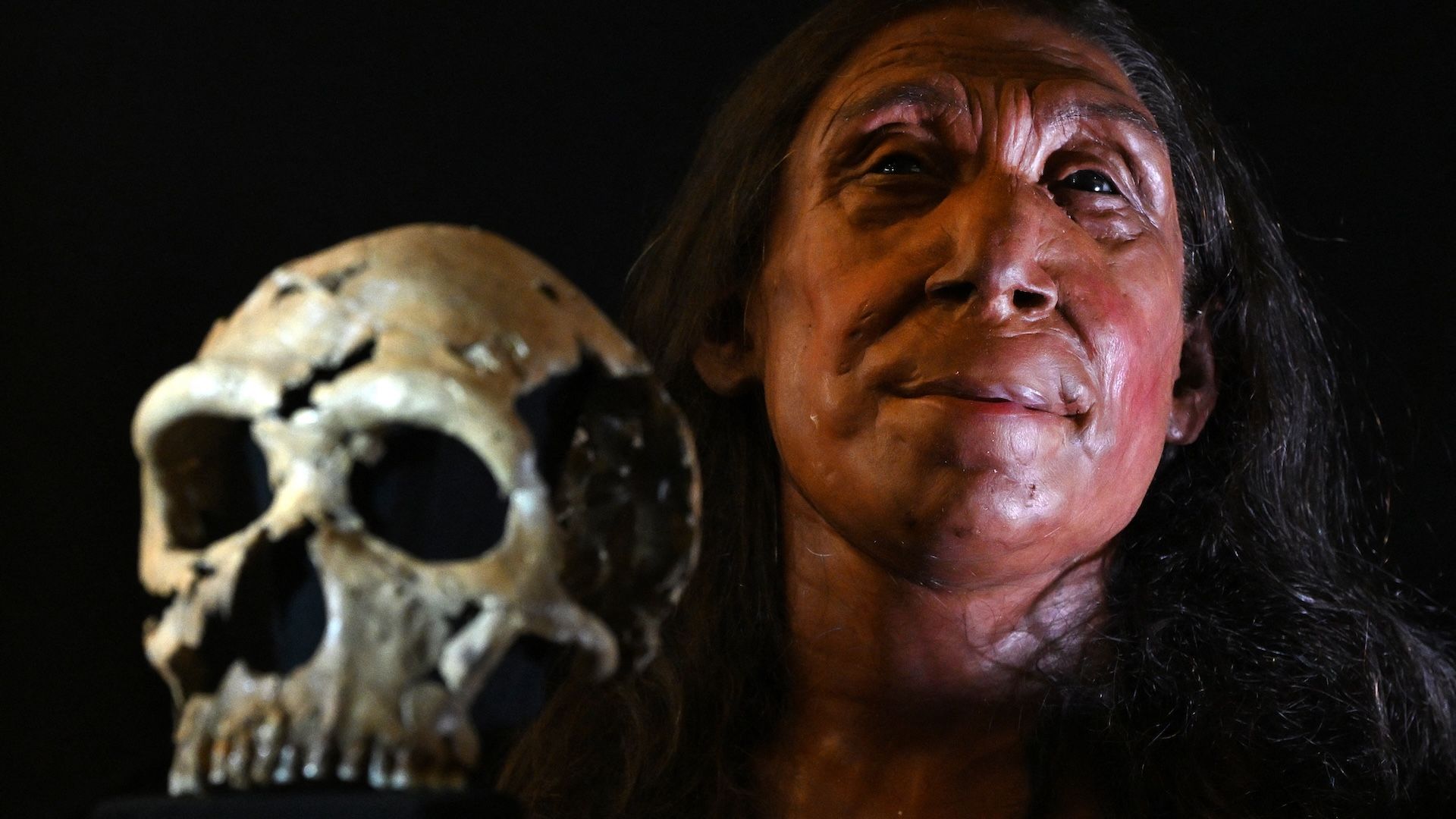
    Neanderthals left behind various clues about their enigmatic lives. But less is known about their spiritual sides. Some archaeologists and anthropologists believe these early humans, who disappeared more than 30,000 years ago, may have engaged in what could be deemed ritualistic or sacred activities.

    For instance, we know that Neanderthals buried their dead, accumulated animal skulls in caves for seemingly symbolic purposes, created rock art and etched symbolic drawings on bear bones. They also removed feathers from birds, possibly for use as adornments, and likely made use of eagle talons as pendants. At times, they engaged in cannibalism, leading to speculation among scholars as to whether it was done for ritual reasons.

    All this and more hints that Neanderthals engaged in ritualistic practices. And it brings about the question: Did Neanderthals have religious beliefs?


    You may like

    Experts have a mix of different opinions, Live Science learned. Part of that depends on how “religion” is defined.

    Definitions of “religion” vary, but often include beliefs in supernatural beings, such as deities, and organized practices done to interact with them. But were Neanderthals capable of this?

    “If by ‘religion’ we mean ritual behaviors directed at supernatural agents then yes I believe Neanderthals were religious,” Patrick McNamara, a neurology professor at Boston University’s School of Medicine who has conducted extensive research into the evolution of the human brain and the neuroscience of religion, told Live Science in an email. “Their religious beliefs and behaviors were very likely close to what we call ‘shamanism’ — a visionary form of religious experience.”

    There is now “very good evidence that they practiced ritual cannibalism and that they buried their dead and that made a ritual practice — like Shamans do — of traversing deep cave environments and constructing ritual ‘altars’ of circular or arranged skulls,” McNamara said.

    The altar-like formation of arranged skulls is particularly compelling, he noted.

    “I also believe that the Neanderthals practiced what we call ‘Bear ceremonialism’ and worshiped the Bear as a divinity,” he said, noting that “there are several Neanderthal-related archaeological sites with Bear skulls arranged in ritual altars in caves etc.”

    Other scholars said that while Neanderthals may have had religious experiences of some kind, these would have been different from those that Homo sapiens have today. Robin Dunbar, a professor emeritus of evolutionary psychology at the University of Oxford, told Live Science in an email that “I don’t think they had religious beliefs in the sense we do.”


    You may like

    Dunbar doesn’t believe that their ability to mentalize — understand the emotional state of yourself and others — would have been sophisticated enough to develop a religion in the same way that people do today, with different sets of belief systems that have their own theologies.

    However, Neanderthals likely had religious experiences on some level, possibly in “experiences of mystery and magic, and a deep sense of engagement,” Dunbar said. “You don’t need a theology for this, but the experience is very real.”

    a close-up of a Neanderthal skull on display in a museum

    Neanderthals lived from about 400,000 to 34,000 years ago. (Image credit: Mike Kemp via Getty Images)

    Margaret Boone Rappaport, an anthropologist who co-wrote the book “The Emergence of Religion in Human Evolution” (Routledge, 2020), told Live Science in an email that while Neanderthals “may have engaged in some forms of ritual, they likely did not possess the specific advanced neurocognitive capacity for a complex, modern human-like religion or ‘theological thinking.'”

    One section of the human brain that is important for religion is the precuneus. It’s an area of the brain associated with memory retrieval and how one sees and perceives the outside world, a 2006 paper published in the journal Brain noted. Religious belief also registers a larger signal in the precuneus, among other brain regions, in religious people compared with nonreligious people, a 2019 review noted.

    Neanderthal brain architecture was different from that of modern-day Homo sapiens, and “the lack of expansion in the precuneus, suggests that Neanderthals did not have the cognitive abilities for the ‘imagined spaces and beings’ essential to human theologies,” Rappaport said.

    Karel Kuipers, an archaeologist and doctoral candidate at Leiden University in the Netherlands whose research focuses on Neanderthals and how we research them, said we don’t know if Neanderthals had religious beliefs.

    “It’s very difficult to see how they viewed the world,” Kuipers told Live Science. We have to be careful about assigning a spiritual context to Neanderthal behavior, he said. For instance, while people today might associate the burial of the dead with a funeral and religion, it’s possible that for Neanderthals it might have just been a practical way of disposing of a decomposing body.


    Neanderthal quiz: How much do you know about our closest relatives?

    View Original Source Here

    Share. Facebook Twitter Pinterest LinkedIn Tumblr Email

    Related Posts

    Inequality alone doesn't cause civil unrest—but internet access adds the crucial spark

    December 20, 2025

    What’s the fastest a human can grow?

    December 20, 2025

    Putting data centres in space isn’t going to happen any time soon

    December 19, 2025

    Populism as a departure from neoliberalism in Hungary and Israel

    December 19, 2025

    Comet 3I/ATLAS reaches its closest point to Earth tonight: How to see it in the sky and online

    December 18, 2025

    Strange lemon-shaped exoplanet defies the rules of planet formation

    December 18, 2025
    popular posts

    2023 Critics Choice Awards Sets Chelsea Handler as Host

    Jack Russell, Great White’s Founding Singer, Dead at 63

    Sydney Sweeney’s See-Through Dress Reveals Purple Iridescent Lingerie

    Cobra Kai Season 6 Teaser Trailer Previews Final Season of

    12 Thrilling YA Heist Novels

    Best Rock + Metal Cover Songs of 2023 (So Far)

    And Then I Woke Up: A Look at the “It

    Categories
    • Books (3,604)
    • Cover Story (8)
    • Events (20)
    • Fashion (2,631)
    • Interviews (52)
    • Movies (2,904)
    • Music (3,191)
    • News (166)
    • Politics (6)
    • Science (4,757)
    • Technology (2,899)
    • Television (3,629)
    • Uncategorized (932)
    Archives
    Facebook X (Twitter) Instagram Pinterest YouTube Reddit TikTok
    © 2025 Top Buzz Magazine. All rights reserved. All articles, images, product names, logos, and brands are property of their respective owners. All company, product and service names used in this website are for identification purposes only. Use of these names, logos, and brands does not imply endorsement unless specified. By using this site, you agree to the Terms of Use and Privacy Policy.

    Type above and press Enter to search. Press Esc to cancel.

    We use cookies on our website to give you the most relevant experience by remembering your preferences and repeat visits. By clicking “Accept”, you consent to the use of ALL the cookies.
    Do not sell my personal information.
    Cookie SettingsAccept
    Manage consent

    Privacy Overview

    This website uses cookies to improve your experience while you navigate through the website. Out of these, the cookies that are categorized as necessary are stored on your browser as they are essential for the working of basic functionalities of the website. We also use third-party cookies that help us analyze and understand how you use this website. These cookies will be stored in your browser only with your consent. You also have the option to opt-out of these cookies. But opting out of some of these cookies may affect your browsing experience.
    Necessary
    Always Enabled
    Necessary cookies are absolutely essential for the website to function properly. These cookies ensure basic functionalities and security features of the website, anonymously.
    CookieDurationDescription
    cookielawinfo-checkbox-analytics11 monthsThis cookie is set by GDPR Cookie Consent plugin. The cookie is used to store the user consent for the cookies in the category "Analytics".
    cookielawinfo-checkbox-functional11 monthsThe cookie is set by GDPR cookie consent to record the user consent for the cookies in the category "Functional".
    cookielawinfo-checkbox-necessary11 monthsThis cookie is set by GDPR Cookie Consent plugin. The cookies is used to store the user consent for the cookies in the category "Necessary".
    cookielawinfo-checkbox-others11 monthsThis cookie is set by GDPR Cookie Consent plugin. The cookie is used to store the user consent for the cookies in the category "Other.
    cookielawinfo-checkbox-performance11 monthsThis cookie is set by GDPR Cookie Consent plugin. The cookie is used to store the user consent for the cookies in the category "Performance".
    viewed_cookie_policy11 monthsThe cookie is set by the GDPR Cookie Consent plugin and is used to store whether or not user has consented to the use of cookies. It does not store any personal data.
    Functional
    Functional cookies help to perform certain functionalities like sharing the content of the website on social media platforms, collect feedbacks, and other third-party features.
    Performance
    Performance cookies are used to understand and analyze the key performance indexes of the website which helps in delivering a better user experience for the visitors.
    Analytics
    Analytical cookies are used to understand how visitors interact with the website. These cookies help provide information on metrics the number of visitors, bounce rate, traffic source, etc.
    Advertisement
    Advertisement cookies are used to provide visitors with relevant ads and marketing campaigns. These cookies track visitors across websites and collect information to provide customized ads.
    Others
    Other uncategorized cookies are those that are being analyzed and have not been classified into a category as yet.
    SAVE & ACCEPT