
Close Menu
    Facebook X (Twitter) Instagram Pinterest YouTube LinkedIn TikTok
    TopBuzzMagazine.com
    Facebook X (Twitter) Instagram Pinterest YouTube LinkedIn TikTok
    • Home
    • Movies
    • Television
    • Music
    • Fashion
    • Books
    • Science
    • Technology
    • Cover Story
    • Contact
      • About
      • Amazon Disclaimer
      • Terms and Conditions
      • Privacy Policy
      • DMCA / Copyrights Disclaimer
    TopBuzzMagazine.com
    Home»Science»Black Death had dramatic effect on species diversity as humans abandoned farmland, study finds
    Science

    Black Death had dramatic effect on species diversity as humans abandoned farmland, study finds

    By AdminOctober 19, 2026
    Facebook Twitter Pinterest LinkedIn Tumblr Email


    When millions of people died in Europe during the Black Death, biodiversity suffered too, new research suggests. The findings suggest that human activities once promoted biodiversity in the landscape — and experts say we could use these findings to boost biodiversity in our modern agricultural landscapes.

    The 14th century was a tumultuous time for the people of Europe. Persistent cold, wet weather at the beginning of the century led to widespread agricultural failures and unprecedented levels of starvation in what became known as the Great Famine from 1315 to 1317.

    This was followed by the Black Death, an epidemic of bubonic plague caused by the bacterium Yersinia pestis that killed more than a third of Europe’s population. As a result of the widespread deaths and resultant social upheaval, large swaths of agricultural land were abandoned. Population levels didn’t begin to recover until the 16th century.

    Latest Videos FromLive Science

    The Black Death era is the perfect opportunity to look at the effects of humans on biodiversity over a longer period, Jonathan Gordon, a paleoecologist at the Leverhulme Centre for Anthropocene Biodiversity at the University of York and first author of the paper, told Live Science.

    In the study, which was published March 4 in the journal Ecology Letters, the researchers compared more than 100 European pollen records that included about 4,600 samples. The records came from sites ranging from the lowlands of France and uplands of the southwest United Kingdom to the Swiss Alps.


    You may like

    The pollen records “give us information on the past diversity of the plant records,” Gordon said.

    For example, cereal grains ‪—‬ such as wheat, barley and rye ‪—‬ were a fundamental part of medieval agriculture. The representation of pollen from these types of crops in the pollen record points to historic land use.

    Get the world’s most fascinating discoveries delivered straight to your inbox.

    The researchers divided the pollen data into three categories based on the presence of cereal pollen: places where agricultural production went up, places where it went down, and places where there was no evidence of cereal cultivation.

    “We found a decline in biodiversity overall, but the decline overall was driven by those landscapes that declined in agricultural production,” Gordon said.

    “In those landscapes where agricultural production went down, there was a reduction in biodiversity of around 40%. Then, after about 150 years, as populations started recovering and landscape disturbances started increasing again, biodiversity went up to slightly above the level it was before.”


    What to read next

    Mosaic landscapes

    Many people think there was a “stable and pristine world in which the entry of people has only one result: net loss of species and homogenization,” Erle Ellis, an agroecologist at the University of Maryland, Baltimore County who was not involved in the research, told Live Science in an email. “The paleoecologists have always known the story is far more complicated.”

    There is a growing body of evidence showing that people’s long-term cultural shaping of their landscapes often creates more diverse habitats, known as “mosaics,” that can sustain more species than simple homogenous landscapes can, he said.

    Whereas modern agriculture focuses on single crops on plots of land, in previous centuries, “you had all these different types of agriculture operating within the same landscape,” Gordon said.

    “In that landscape, you had lots of natural features that remained from the Middle or Early Holocene (which began after the last Ice Age about 12,000 years ago),” he added. “You had old bits of woodland, you had heaths, you had ponds, and bits of secondary forest. It was all interlaced with these agricultural mosaics, and that led to raised biodiversity because there were more habitats for different plant species to exploit.”
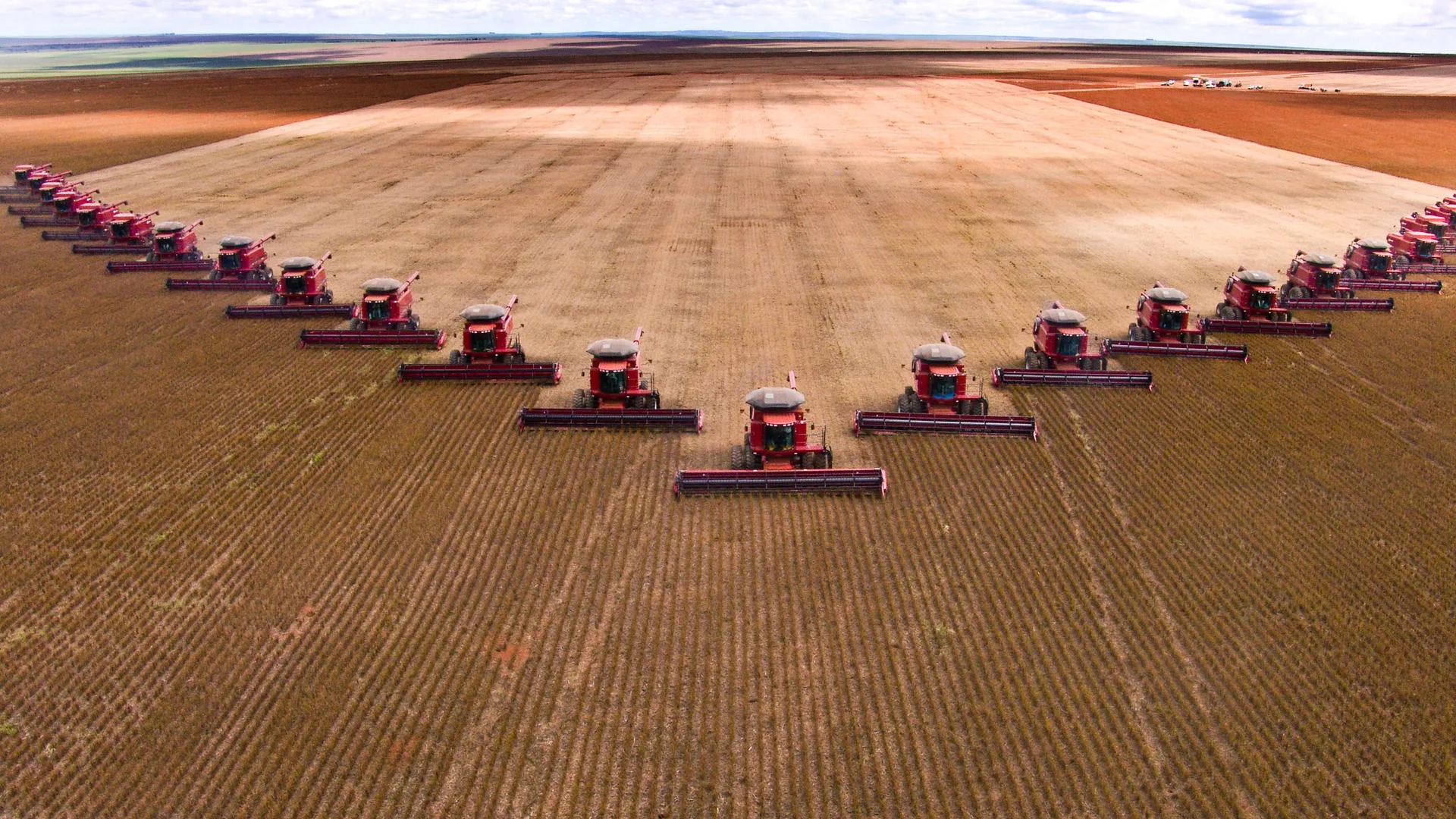
    A row of tractors ride through dirt fields

    Modern farming often uses monoculture, where one crop species is grown over a large area. This lowers biodiversity in the area.

    (Image credit: alffoto via Getty Images)

    The findings highlight the differences between medieval and modern land use practices — and their consequences for biodiversity. Research suggests that during the 20th century, global biodiversity declined by up to as much as 11% and human activities‬, such as land-use changes, pollution, and climate change‬, are the major culprits. In agriculture, the practice of monoculture — where a single crop species is grown over a large area — reduces biodiversity.

    “What this work contributes to showing is that, until relatively recently, even in Europe, very different forms of land management and interaction were practiced than exist today,” Patrick Roberts, director of Department of Coevolution of Land Use and Urbanisation at the Max Planck Institute of Geoanthropology, told Live Science in an email.

    “Rather than the monoculture, plantations, or uniform changes to landscapes we see in the 20th and 21st centuries, emphasis was placed on maintaining ‘mosaics,'” said Roberts, who was not involved in the new research.

    In the study, “we can see how relationships between people and biodiversity have changed through time and how people can actively use landscapes while maintaining biodiversity and mixed ecosystem functions,” he said.

    There is still more to understand about how humans’ disappearance from landscapes in the Black Death era affected the natural world, Gordon said. “There are a lot of other types of diversity ‪—‬ not just the number of types, but what the different types present actually do.” There may be a hundred types of plants in a landscape, but if they do the same thing, “you have low functional diversity,” he said.

    Functional diversity “is super important for how ecosystems adapt to changes in climate and how resilient they are, which is something we need for future-proofing our agricultural system,” Gordon said.

    Gordon, J. D., Fagan, B., Finch, J., Gillson, L., Milner, N., & Thomas, C. D. (2026). Black death land abandonment drove European diversity losses. Ecology Letters, 29(3), e70325. https://doi.org/10.1111/ele.70325

    View Original Source Here

    Share. Facebook Twitter Pinterest LinkedIn Tumblr Email

    Related Posts

    ‘A uniquely direct route that might cause damage’: Scientists uncover link between air pollution and eye diseases like glaucoma

    October 18, 2026

    The brain may have arisen from 2 separate nervous systems that got squished together, study suggests

    October 18, 2026

    California redwoods are struggling in the heat — and it’s not clear how much damage is being done

    October 17, 2026

    Archaeologists discover the oldest dwelling in the Western Hemisphere at a 13,800-year-old site in Alaska

    October 17, 2026

    Fossil of ‘unconquered female warrior’ dinosaur with long claws found in UK museum drawer after 100 years

    October 16, 2026

    2 giant Ramesses II statues, one wearing a double crown, discovered by man in Egypt

    October 16, 2026
    popular posts

    Midnight Suns Blade Gameplay Showcase Previews Unique Abilities

    Threads Is the New Cool Hangout—for Brands

    In True BLACKPINK Fashion, Their Coachella Performance Was a Sight

    Particles of light may create fluid flow, data-theory comparison suggests

    ‘The Mandalorian’: Every Season 3 Finale Easter Egg

    New Mystery and Thriller Books to Read | July 21

    X-ray telescope finds something unexpected with the ‘heartbeat black hole’

    Categories
    • Books (4,172)
    • Cover Story (27)
    • Events (29)
    • Fashion (2,938)
    • Interviews (63)
    • Movies (3,468)
    • Music (3,769)
    • News (188)
    • Politics (18)
    • Science (5,282)
    • Technology (3,464)
    • Television (4,199)
    • Uncategorized (933)
    Archives
    Facebook X (Twitter) Instagram Pinterest YouTube Reddit TikTok
    © 2026 Top Buzz Magazine. All rights reserved. All articles, images, product names, logos, and brands are property of their respective owners. All company, product and service names used in this website are for identification purposes only. Use of these names, logos, and brands does not imply endorsement unless specified. By using this site, you agree to the Terms of Use and Privacy Policy.

    Type above and press Enter to search. Press Esc to cancel.

    We use cookies on our website to give you the most relevant experience by remembering your preferences and repeat visits. By clicking “Accept”, you consent to the use of ALL the cookies.
    Do not sell my personal information.
    Cookie SettingsAccept
    Manage consent

    Privacy Overview

    This website uses cookies to improve your experience while you navigate through the website. Out of these, the cookies that are categorized as necessary are stored on your browser as they are essential for the working of basic functionalities of the website. We also use third-party cookies that help us analyze and understand how you use this website. These cookies will be stored in your browser only with your consent. You also have the option to opt-out of these cookies. But opting out of some of these cookies may affect your browsing experience.
    Necessary
    Always Enabled
    Necessary cookies are absolutely essential for the website to function properly. These cookies ensure basic functionalities and security features of the website, anonymously.
    CookieDurationDescription
    cookielawinfo-checkbox-analytics11 monthsThis cookie is set by GDPR Cookie Consent plugin. The cookie is used to store the user consent for the cookies in the category "Analytics".
    cookielawinfo-checkbox-functional11 monthsThe cookie is set by GDPR cookie consent to record the user consent for the cookies in the category "Functional".
    cookielawinfo-checkbox-necessary11 monthsThis cookie is set by GDPR Cookie Consent plugin. The cookies is used to store the user consent for the cookies in the category "Necessary".
    cookielawinfo-checkbox-others11 monthsThis cookie is set by GDPR Cookie Consent plugin. The cookie is used to store the user consent for the cookies in the category "Other.
    cookielawinfo-checkbox-performance11 monthsThis cookie is set by GDPR Cookie Consent plugin. The cookie is used to store the user consent for the cookies in the category "Performance".
    viewed_cookie_policy11 monthsThe cookie is set by the GDPR Cookie Consent plugin and is used to store whether or not user has consented to the use of cookies. It does not store any personal data.
    Functional
    Functional cookies help to perform certain functionalities like sharing the content of the website on social media platforms, collect feedbacks, and other third-party features.
    Performance
    Performance cookies are used to understand and analyze the key performance indexes of the website which helps in delivering a better user experience for the visitors.
    Analytics
    Analytical cookies are used to understand how visitors interact with the website. These cookies help provide information on metrics the number of visitors, bounce rate, traffic source, etc.
    Advertisement
    Advertisement cookies are used to provide visitors with relevant ads and marketing campaigns. These cookies track visitors across websites and collect information to provide customized ads.
    Others
    Other uncategorized cookies are those that are being analyzed and have not been classified into a category as yet.
    SAVE & ACCEPT