
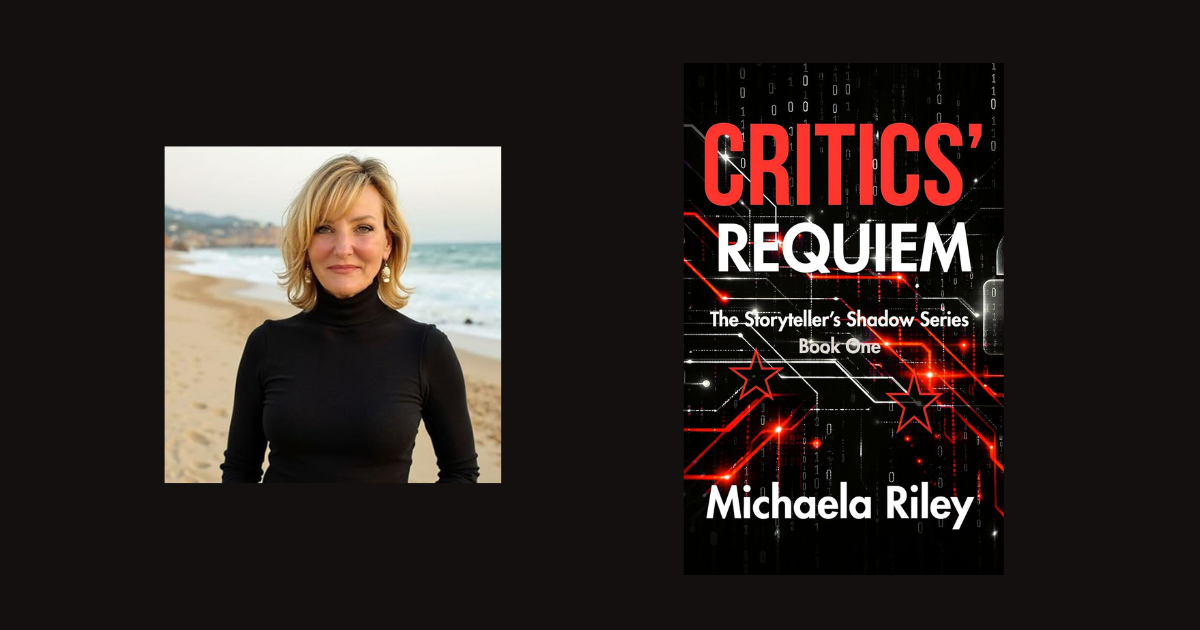
What’s the story behind the story? What inspired you to write this book?
The story behind the story was a collision of two worlds. While I was in the middle of grieving my brother’s passing, I discovered I was being review-bombed by people who had never read my work. I was helpless to stop it; my focus was on my family, and the platform’s “librarians” offered no real protection. It made me realize how easily words can be used as weapons. I began to wonder: What happens when a creator, already pushed to the edge by life, is finally pushed over it by anonymous voices? Arthur Penwright was born from that frustration, but he takes the revenge I couldn’t. Arthur represents the collective heart of every author who pours years of passion into a book, only to see it dismantled by someone with a hidden agenda. While I handled my situation through the proper channels, Arthur is my “dark mirror.” He embodies that primal, unsettling desire to unmask the anonymous and hold them accountable. He’s an unreliable narrator because his perception of reality has been fractured by paranoia—something any creator could feel when they feel under siege.
If you had to pick theme songs for the main characters of your book, what would they be?
1. “Paint It Black” – The Rolling Stones (Arthur’s Anthem)
The vibe: The moment the “celebrated author” decides to stop being a target and starts being a predator.
2. “Every Breath You Take” – The Police
The vibe: Tracking the anonymous. Arthur is always watching, even when the screen is dark.
3. “In the Air Tonight” – Phil Collins
The vibe: The long, cold wait before the “Silent Judge” finally reveals their true identity.
4. “Seven Nation Army” – The White Stripes
The vibe: Arthur taking on the entire syndicate of critics by himself.
5. “Lacrimosa” – Mozart
The vibe: A sophisticated, high-brow requiem for those who used their words as weapons.
6. “Mr. Self Destruct” – Nine Inch Nails
The vibe: The frantic energy of cybersecurity hacks and the breaking point of Arthur’s sanity.
What’s your favorite genre to read? Is it the same as your favorite genre to write?
For me, fantasy and thrillers are the absolute peak of storytelling. I would say it’s actually a tie between the two. While I love to read a wide variety of genres to keep my perspective fresh, my favorites to write are definitely the ones I read the most. There is nothing quite like the creative “sandbox” of fantasy, where you can build entire civilizations from scratch and set your own rules.
What books are on your TBR pile right now?
My TBR is an eclectic blend of classics and modern survivors. I’m revisiting Wuthering Heights for a classic touch, then moving into heavy-hitting memoirs like Gail Brenner Nastasia’s Staying Clean, Living Dirty and Turning Pain Into Her Power. Rounding out the pile is Sandra L. Barone’s suspenseful When Revenge Calls. It’s a list that perfectly reflects my love for deep character studies and high-stakes tension and passion.
What scene in your book was your favorite to write?
My favorite scene to write was the exact moment Arthur Penwright stops being the victim and starts becoming the architect of his own retribution. After six years of “bleeding onto the page” only to have anonymous critics dismantle his life, there is a haunting shift in his psyche. He stops eating, loses his grip on reality, and begins a cold, digital hunt for the “hive” that destroyed him. Writing that transition—where a man who once obsessed over commas begins mapping IP addresses and building dossiers on his enemies—was incredibly cathartic. It captures that dark, fleeting wish every writer has after a one-star review: the desire to pull back the curtain and see who is truly there.
Do you have any quirky writing habits? (lucky mugs, cats on laps, etc.)
I actually have a very specific and adorable writing companion! My Chihuahua-Terrier mix, Carlos, is my unofficial office assistant. He sits right in the chair behind me while I work, serving as my living lumbar support. Once we’re settled in, I absolutely hate to stop. I love that initial rush when the words just pour out; there’s nothing quite like the flow of a first draft where you can see the chapters coming to life in real-time.
Do you have a motto, quote or philosophy you live by?
I live at the intersection of service and history. My motto is to care deeply while looking forward; it combines my Army Nurse foundation of “doing no harm” with my genealogist’s obsession with legacy. I write because I want to ensure that the stories we tell today become a meaningful inheritance for those who come after us.
If you could choose one thing for readers to remember after reading your book, what would it be?
If there’s one takeaway, it’s that our digital words have weight. We often treat the internet like a void where we can vent without consequence, but Critics’ Requiem explores what happens when those words come back to haunt you. I want readers to think twice before they hit “send” and consider the legacy of the footprint they’re leaving behind.