
Close Menu
    Facebook X (Twitter) Instagram Pinterest YouTube LinkedIn TikTok
    TopBuzzMagazine.com
    Facebook X (Twitter) Instagram Pinterest YouTube LinkedIn TikTok
    • Home
    • Movies
    • Television
    • Music
    • Fashion
    • Books
    • Science
    • Technology
    • Cover Story
    • Contact
      • About
      • Amazon Disclaimer
      • Terms and Conditions
      • Privacy Policy
      • DMCA / Copyrights Disclaimer
    TopBuzzMagazine.com
    Home»Science»This self-powered toothbrush makes electricity to kill cavity-causing bacteria
    Science

    This self-powered toothbrush makes electricity to kill cavity-causing bacteria

    By AdminNovember 4, 2026
    Facebook Twitter Pinterest LinkedIn Tumblr Email
    This self-powered toothbrush makes electricity to kill cavity-causing bacteria


    Follow us

    Add us as a preferred source on Google


    Subscribe to our newsletter


    A toothbrush that generates its own electricity with every stroke could offer a new way to fight the microbes behind cavities and gum disease.

    Conventional toothbrushes rely on physical scrubbing to remove plaque from teeth and gums. But even after a thorough brush, some bacteria remain and begin rebuilding plaque. To solve that problem, researchers have developed a self-powered toothbrush that converts the friction of brushing into an electrical charge. That electricity is intended to zap the plaque-promoting bacteria and keep them from colonizing teeth.

    “It’s great to have new approaches that actually enhance the effect of mechanical cleaning,” said Nicholas Jakubovics, an oral microbiologist at Newcastle University in the U.K. who was not involved in the study. “The idea that the toothbrush surface itself is actively doing something is really interesting.”

    Latest Videos FromLive Science

    The experimental brush has bristles made from polyvinylidene fluoride (PVDF), a plastic that generates electricity when bent; these types of energy-producing materials are called piezoelectric. As the bristles flex during brushing, they produce an electrical charge that then triggers chemical reactions in saliva and water. These reactions release reactive oxygen species (ROS), which are highly reactive molecules that can damage bacterial cells.

    Even when the bristles are not being used to brush, they carry a faint surface charge that helps prevent bacteria from clinging to the brush head when the toothbrush isn’t in use, the team reported Wednesday (Nov. 4) in the journal Science Advances.


    You may like

    In laboratory tests where the toothbrush was used on isolated germs, its electrified bristles killed more than half of the Streptococcus mutans bacteria present. These microbes contribute to tooth decay. By comparison, nylon bristles killed just 9% of the bacteria. They also reduced levels of Porphyromonas gingivalis, a bacterium linked to gum disease, by up to 78%, while nylon brushes reduced them by less than 8%.

    When the researchers added an antioxidant — a compound that neutralizes ROS — the new toothbrush’s antibacterial effect largely disappeared, highlighting that the ROS are likely the key to its effects.

    Sign up for the Live Science daily newsletter now

    Get the world’s most fascinating discoveries delivered straight to your inbox.

    The team also found that the activity of certain genes in both S. mutans and P. gingivalis fell after exposure to the electrified bristles. These genes are involved in making ATP-binding cassette (ABC) transporters — molecular pumps that help shuttle essential nutrients across bacterial cell membranes. The researchers suspect that disrupting this machinery makes it harder for these microbes to survive and cling to teeth.

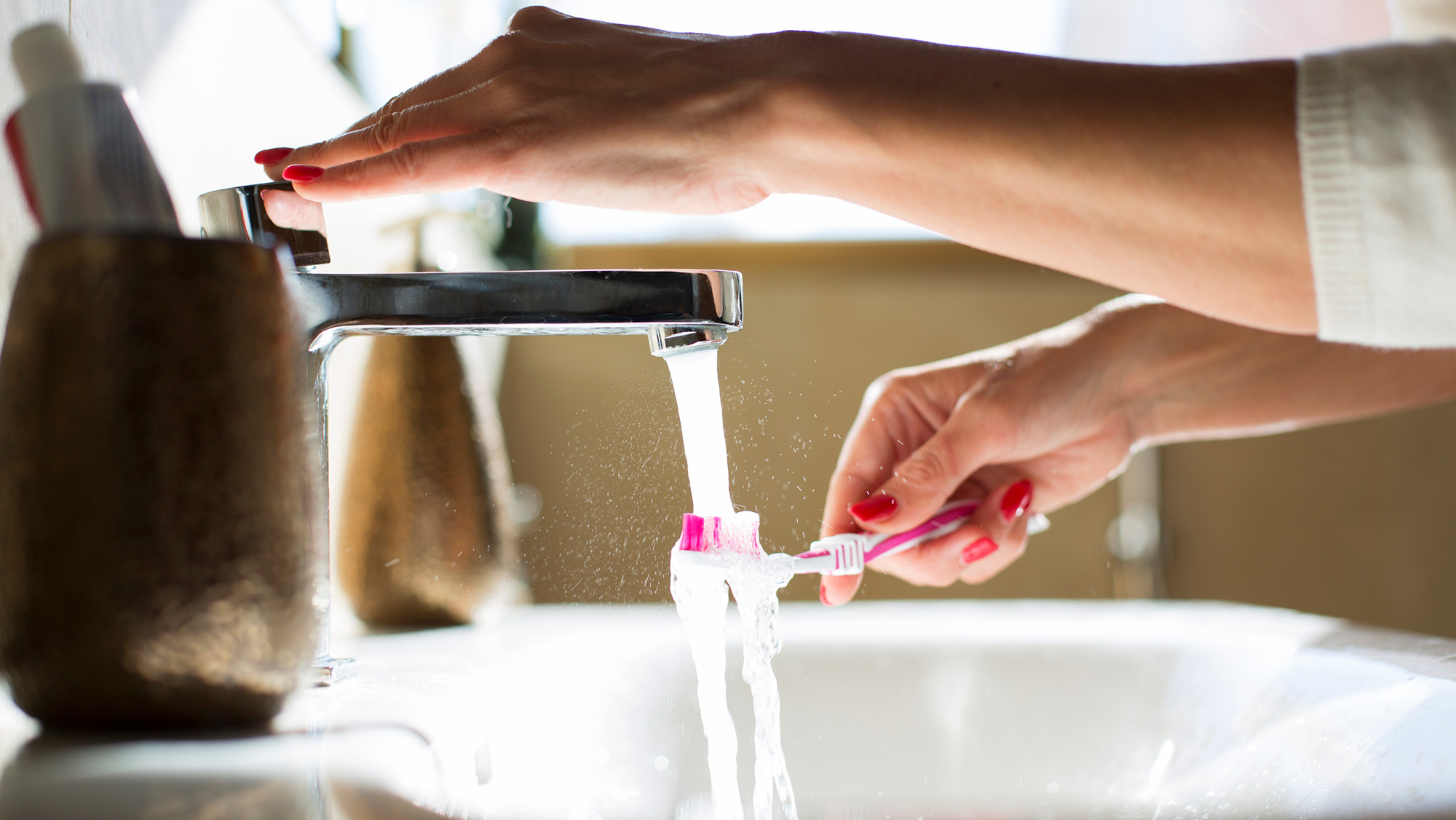
    This self-powered toothbrush makes electricity to kill cavity-causing bacteria

    The new toothbrush still needs to be tested in further safety trials.

    (Image credit: Kathrin Ziegler via Getty Images)

    But Jakubovics was not convinced by that part of the team’s explanation. “ABC transporters transport all sorts of different things,” he said, adding that the findings did not clearly show how changes in these genes affected the bacteria.

    The researchers also tested the new brush against plaque biofilms — hardy communities of bacteria that stick together and cling to tooth surfaces. For the experiment, they grew human dental plaque on cow tooth enamel and found that the brush removed more than 99% of the biofilm, outperforming a regular nylon brush.


    What to read next

    Finally, the team moved to humans, putting the brush to the test in 115 adults with gum inflammation or tooth decay. These study participants were randomly assigned to use either the new toothbrushes or traditional nylon-bristled brushes twice a day for three months. (The study didn’t note whether participants noticed a difference in sensation when using the electrified brushes.)

    By the end of the trial, the participants who used the electrified bristles had less plaque, less gum inflammation and less bleeding than the participants who used ordinary brushes. Plaque samples also showed that the people who used electrified brushes had lower levels of bacteria associated with oral disease and higher levels of beneficial bacteria, which have previously been reported to suppress harmful oral bacteria and support oral health.

    The researchers think that the disease-linked bacteria may have relatively fragile cell membranes, making them more vulnerable to damage from ROS than the beneficial bacteria. That’s a theory that requires further study, though, so it’s not completely clear how selective the brush is against plaque-causing bacteria.

    In a test of the toothbrush’s durability, the PVDF bristles retained their structure and electrical properties over three months of simulated use. Lab-grown mouse cells repeatedly exposed to brush material showed no signs of damage, and brushing on cow tooth enamel did not increase surface roughness. However, these tests cannot establish whether repeated use of these brushes is safe for humans.

    “We would want to make sure that it is safe on the tissues for long-term use,” Jakubovics said. He noted that, in lab tests, bacteria are grown directly on the bristles and exposed to their electricity for hours, “whereas in reality, in the mouth, your bristle is only in contact with the tooth or oral tissue for a very short time.”

    The trial with humans provides some insight into how the brush works in real life, but it was relatively small. Larger studies will be needed to find out whether the toothbrush offers a meaningful advantage over conventional brushes. For now, Jakubovics sees the recent study as just a proof of concept; more information and more convincing clinical data are still needed, he emphasized.

    This article is for informational purposes only and is not meant to offer medical advice.

    Lu, Y., Song, J., Chi, X., Li, W., Wu, L., Guo, Y., Cui, Q., Zheng, X., Bai, Y., Heng, B. C., Han, X., Zhang, X., & Deng, X. (2026). Self-charged toothbrush facilitates tooth healthcare maintenance. Science Advances, 12, Article eaeg5744. https://doi.org/10.1126/sciadv.aeg5744

    Original Source Link

    Share. Facebook Twitter Pinterest LinkedIn Tumblr Email

    Related Posts

    These Weather Photographer of the Year photos blew us away

    November 20, 2026

    Gravity can reconnect like the sun's magnetic field, a fresh look at Einstein's equations reveals

    November 10, 2026

    ZWO Seestar S30 Plus review

    November 10, 2026

    'The first species we might be able to communicate with, interact with vocally, might be a bird': An animal researcher explains how she decoded birdsong

    November 10, 2026

    Highly active Russian volcano plays peek-a-boo with an astronaut

    November 10, 2026

    Iran war helps fuel global drop in fossil fuel emissions — but theres a catch

    November 10, 2026
    popular posts

    How to balance economic development goals with environmental conservation

    Ben Folds Releases Live Album with National Symphony Orchestra

    J Lo’s Latest “Naked” Look Involves a Sheer Blouse and

    The Stranger review – filmed like a laconic,…

    How to Get Married at a Taco Bell Restaurant

    Longevity treatments do not slow aging

    Rosalía and Rauw Alejandro End Engagement

    Categories
    • Books (4,230)
    • Cover Story (27)
    • Events (29)
    • Fashion (2,991)
    • Interviews (65)
    • Movies (3,534)
    • Music (3,833)
    • News (189)
    • Politics (19)
    • Science (5,356)
    • Technology (3,535)
    • Television (4,275)
    • Uncategorized (933)
    Archives
    Facebook X (Twitter) Instagram Pinterest YouTube Reddit TikTok
    © 2026 Top Buzz Magazine. All rights reserved. All articles, images, product names, logos, and brands are property of their respective owners. All company, product and service names used in this website are for identification purposes only. Use of these names, logos, and brands does not imply endorsement unless specified. By using this site, you agree to the Terms of Use and Privacy Policy.

    Type above and press Enter to search. Press Esc to cancel.

    We use cookies on our website to give you the most relevant experience by remembering your preferences and repeat visits. By clicking “Accept”, you consent to the use of ALL the cookies.
    Do not sell my personal information.
    Cookie SettingsAccept
    Manage consent

    Privacy Overview

    This website uses cookies to improve your experience while you navigate through the website. Out of these, the cookies that are categorized as necessary are stored on your browser as they are essential for the working of basic functionalities of the website. We also use third-party cookies that help us analyze and understand how you use this website. These cookies will be stored in your browser only with your consent. You also have the option to opt-out of these cookies. But opting out of some of these cookies may affect your browsing experience.
    Necessary
    Always Enabled
    Necessary cookies are absolutely essential for the website to function properly. These cookies ensure basic functionalities and security features of the website, anonymously.
    CookieDurationDescription
    cookielawinfo-checkbox-analytics11 monthsThis cookie is set by GDPR Cookie Consent plugin. The cookie is used to store the user consent for the cookies in the category "Analytics".
    cookielawinfo-checkbox-functional11 monthsThe cookie is set by GDPR cookie consent to record the user consent for the cookies in the category "Functional".
    cookielawinfo-checkbox-necessary11 monthsThis cookie is set by GDPR Cookie Consent plugin. The cookies is used to store the user consent for the cookies in the category "Necessary".
    cookielawinfo-checkbox-others11 monthsThis cookie is set by GDPR Cookie Consent plugin. The cookie is used to store the user consent for the cookies in the category "Other.
    cookielawinfo-checkbox-performance11 monthsThis cookie is set by GDPR Cookie Consent plugin. The cookie is used to store the user consent for the cookies in the category "Performance".
    viewed_cookie_policy11 monthsThe cookie is set by the GDPR Cookie Consent plugin and is used to store whether or not user has consented to the use of cookies. It does not store any personal data.
    Functional
    Functional cookies help to perform certain functionalities like sharing the content of the website on social media platforms, collect feedbacks, and other third-party features.
    Performance
    Performance cookies are used to understand and analyze the key performance indexes of the website which helps in delivering a better user experience for the visitors.
    Analytics
    Analytical cookies are used to understand how visitors interact with the website. These cookies help provide information on metrics the number of visitors, bounce rate, traffic source, etc.
    Advertisement
    Advertisement cookies are used to provide visitors with relevant ads and marketing campaigns. These cookies track visitors across websites and collect information to provide customized ads.
    Others
    Other uncategorized cookies are those that are being analyzed and have not been classified into a category as yet.
    SAVE & ACCEPT