
Close Menu
    Facebook X (Twitter) Instagram Pinterest YouTube LinkedIn TikTok
    TopBuzzMagazine.com
    Facebook X (Twitter) Instagram Pinterest YouTube LinkedIn TikTok
    • Home
    • Movies
    • Television
    • Music
    • Fashion
    • Books
    • Science
    • Technology
    • Cover Story
    • Contact
      • About
      • Amazon Disclaimer
      • Terms and Conditions
      • Privacy Policy
      • DMCA / Copyrights Disclaimer
    TopBuzzMagazine.com
    Home»Science»Lycurgus Cup — a Roman glass goblet made with ancient color-changing nanotechnology
    Science

    Lycurgus Cup — a Roman glass goblet made with ancient color-changing nanotechnology

    By AdminNovember 2, 2026
    Facebook Twitter Pinterest LinkedIn Tumblr Email
    Lycurgus Cup — a Roman glass goblet made with ancient color-changing nanotechnology


    Follow us

    Add us as a preferred source on Google


    Subscribe to our newsletter


    Lycurgus Cup — a Roman glass goblet made with ancient color-changing nanotechnology

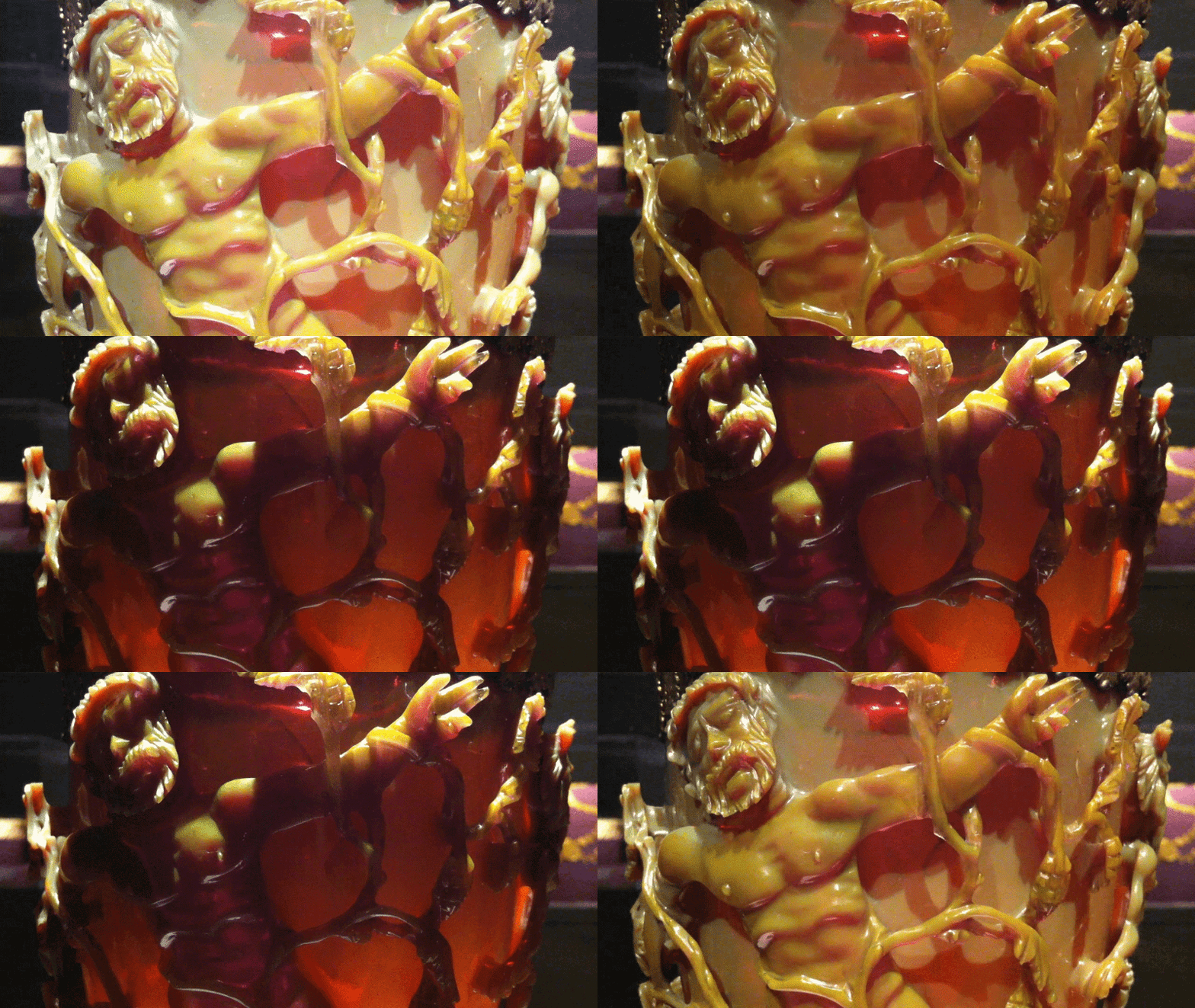
    The Roman-era Lycurgus Cup has a color-changing effect depending on the light source.

    (Image credit: Lucas, ancientartpodcast.org via Flickr / CC BY 2.0)

    QUICK FACTS

    Name: Lycurgus Cup

    What it is: A glass drinking cup

    Where it is from: The Roman Empire

    When it was made: Fourth century A.D.

    The Lycurgus Cup is a Roman-era glass goblet that changes color from jade green to ruby red depending on if a light is shining on its front or back. But experts are unsure where the cup was found, where it was made, or whether the glassblower who made it created the color-changing effect on purpose.

    In 1958, the British Museum acquired the cup from the Rothschild banking family, which had owned the artifact since the mid-19th century. Known colloquially as the Lycurgus Cup for its depiction of the mythical king who angered the god Dionysus, the glass is about 6.3 inches (15.9 centimeters) tall and weighs around 1.6 pounds (700 grams).

    The glass is a remarkably well-preserved example of a Roman “cage-cup,” according to a 1959 study of the artifact by archaeologists D. B. Harden and Jocelyn Toynbee. Only a handful of cage-cups still exist, and experts believe the goblets were made by cutting and grinding decoration into thick glass. Because small bridges were left to ensure the decoration remained on the glass, the overall effect is like a cage. Harden and Toynbee estimated that the Lycurgus Cup was manufactured in the fourth century, likely in Italy, but they noted that the bronze frame that forms the stem and rim of the goblet is probably a 19th-century addition.

    Latest Videos FromLive Science

    Depicted on the cup is the myth of the punishment of Lycurgus, king of the Thracian tribe called the Edoni (also called the Edonians). Lycurgus did not approve of the worship of Dionysus and banished the god into the sea with an ax. But one of Dionysus’ priestesses, Ambrosia, decided to fight Lycurgus. Ambrosia changed herself into a vine and wound herself around Lycurgus, who was unable to escape. The other priestesses thronged around them and tormented Lycurgus. Given that Dionysus was a god of wine and merriment, the depiction of Lycurgus’ punishment may have been particularly appropriate for this goblet. Additionally, the change in color from green to red may have been meant to mimic the ripening of grapes on the vine.

    Color-changing cups, also called dichroic cups, were mentioned in ancient Roman historical records. For example, a second-century letter possibly penned by Emperor Hadrian to his brother-in-law mentions a gift of two dichroic cups to use during banquets. But very few fragments of this mysterious type of glass survive today, a 2007 study noted.


    You may like

    For decades, experts have been working out how ancient Romans produced dichroic cups, and some have even replicated the Lycurgus Cup’s color-changing effect. A 1963 study confirmed that the key seems to be the addition of microscopic nanoparticles of gold and silver during glassblowing that produce the appearance of milky-green glass when lit from the front and nearly translucent red glass when lit from behind. The metal nanoparticles are smaller than grains of sand and interact with light, creating the perception of a color change.

    A replica of dichroic glass made by Corning Glassworks in the 1960s went from green to amethyst in the light, the 2007 study reported, and in 2020, researchers included silver and gold nanoparticles in 3D printing to replicate the color-changing properties of the glass.

    Get the world’s most fascinating discoveries delivered straight to your inbox.

    More recently, experts at the University of Sheffield in the U.K. reproduced the dichroic glass by reverse-engineering the “recipe” from the original Lycurgus Cup. The team then commissioned a glass artist to create a Lycurgus-inspired design from the replica.

    But because so few examples of dichroic glass exist, experts are still unsure whether Roman artisans created the color-changing effect on purpose or whether traces of gold, which would have been available in an ancient craft studio, slipped into the molten glass and made a rare and unusual material that mystified even the most skilled glassblowers.


    For more stunning archaeological discoveries, check out our Astonishing Artifacts archives.


    Can you put together last week’s Astonishing Artifact?

    TOPICS


    astonishing artifacts


    gold

    Original Source Link

    Share. Facebook Twitter Pinterest LinkedIn Tumblr Email

    Related Posts

    Gravity can reconnect like the sun's magnetic field, a fresh look at Einstein's equations reveals

    November 10, 2026

    ZWO Seestar S30 Plus review

    November 10, 2026

    A 3,200-pound NASA spacecraft could fall to Earth any minute now

    November 4, 2026

    When dinosaurs are sold to the highest bidder, we all lose

    November 4, 2026

    Mom experienced extreme unhappiness only when she breastfed — Diagnostic dilemma

    November 4, 2026

    Would you risk your health to visit Mars?

    November 4, 2026
    popular posts

    Survivor 51 Sneak Peek: Its Time to Merge!

    3 Exuberant Audiobooks for a Drab Month

    Quantum entanglement can be endlessly ’embezzled’ from quantum fields

    What Covering Crime In TV News Taught Me About Crafting Thrillers

    ‘The moon looked wrong’: Artemis II mission controller Chris White on taking historic lunar flyby photos from 250,000 miles away

    ‘Archie’ Brings Cary Grant’s Chaotic Offscreen Life Into Focus —

    33 Stylish Picks We’re Currently Eyeing From Abercrombie

    Categories
    • Books (4,199)
    • Cover Story (27)
    • Events (29)
    • Fashion (2,964)
    • Interviews (65)
    • Movies (3,501)
    • Music (3,801)
    • News (188)
    • Politics (18)
    • Science (5,324)
    • Technology (3,502)
    • Television (4,243)
    • Uncategorized (933)
    Archives
    Facebook X (Twitter) Instagram Pinterest YouTube Reddit TikTok
    © 2026 Top Buzz Magazine. All rights reserved. All articles, images, product names, logos, and brands are property of their respective owners. All company, product and service names used in this website are for identification purposes only. Use of these names, logos, and brands does not imply endorsement unless specified. By using this site, you agree to the Terms of Use and Privacy Policy.

    Type above and press Enter to search. Press Esc to cancel.

    We use cookies on our website to give you the most relevant experience by remembering your preferences and repeat visits. By clicking “Accept”, you consent to the use of ALL the cookies.
    Do not sell my personal information.
    Cookie SettingsAccept
    Manage consent

    Privacy Overview

    This website uses cookies to improve your experience while you navigate through the website. Out of these, the cookies that are categorized as necessary are stored on your browser as they are essential for the working of basic functionalities of the website. We also use third-party cookies that help us analyze and understand how you use this website. These cookies will be stored in your browser only with your consent. You also have the option to opt-out of these cookies. But opting out of some of these cookies may affect your browsing experience.
    Necessary
    Always Enabled
    Necessary cookies are absolutely essential for the website to function properly. These cookies ensure basic functionalities and security features of the website, anonymously.
    CookieDurationDescription
    cookielawinfo-checkbox-analytics11 monthsThis cookie is set by GDPR Cookie Consent plugin. The cookie is used to store the user consent for the cookies in the category "Analytics".
    cookielawinfo-checkbox-functional11 monthsThe cookie is set by GDPR cookie consent to record the user consent for the cookies in the category "Functional".
    cookielawinfo-checkbox-necessary11 monthsThis cookie is set by GDPR Cookie Consent plugin. The cookies is used to store the user consent for the cookies in the category "Necessary".
    cookielawinfo-checkbox-others11 monthsThis cookie is set by GDPR Cookie Consent plugin. The cookie is used to store the user consent for the cookies in the category "Other.
    cookielawinfo-checkbox-performance11 monthsThis cookie is set by GDPR Cookie Consent plugin. The cookie is used to store the user consent for the cookies in the category "Performance".
    viewed_cookie_policy11 monthsThe cookie is set by the GDPR Cookie Consent plugin and is used to store whether or not user has consented to the use of cookies. It does not store any personal data.
    Functional
    Functional cookies help to perform certain functionalities like sharing the content of the website on social media platforms, collect feedbacks, and other third-party features.
    Performance
    Performance cookies are used to understand and analyze the key performance indexes of the website which helps in delivering a better user experience for the visitors.
    Analytics
    Analytical cookies are used to understand how visitors interact with the website. These cookies help provide information on metrics the number of visitors, bounce rate, traffic source, etc.
    Advertisement
    Advertisement cookies are used to provide visitors with relevant ads and marketing campaigns. These cookies track visitors across websites and collect information to provide customized ads.
    Others
    Other uncategorized cookies are those that are being analyzed and have not been classified into a category as yet.
    SAVE & ACCEPT