
Close Menu
    Facebook X (Twitter) Instagram Pinterest YouTube LinkedIn TikTok
    TopBuzzMagazine.com
    Facebook X (Twitter) Instagram Pinterest YouTube LinkedIn TikTok
    • Home
    • Movies
    • Television
    • Music
    • Fashion
    • Books
    • Science
    • Technology
    • Cover Story
    • Contact
      • About
      • Amazon Disclaimer
      • Terms and Conditions
      • Privacy Policy
      • DMCA / Copyrights Disclaimer
    TopBuzzMagazine.com
    Home»Science»Orange-lipped monkey that roars and snorts deep in Congo rainforest is new species to science
    Science

    Orange-lipped monkey that roars and snorts deep in Congo rainforest is new species to science

    By AdminJuly 16, 2026
    Facebook Twitter Pinterest LinkedIn Tumblr Email
    Orange-lipped monkey that roars and snorts deep in Congo rainforest is new species to science


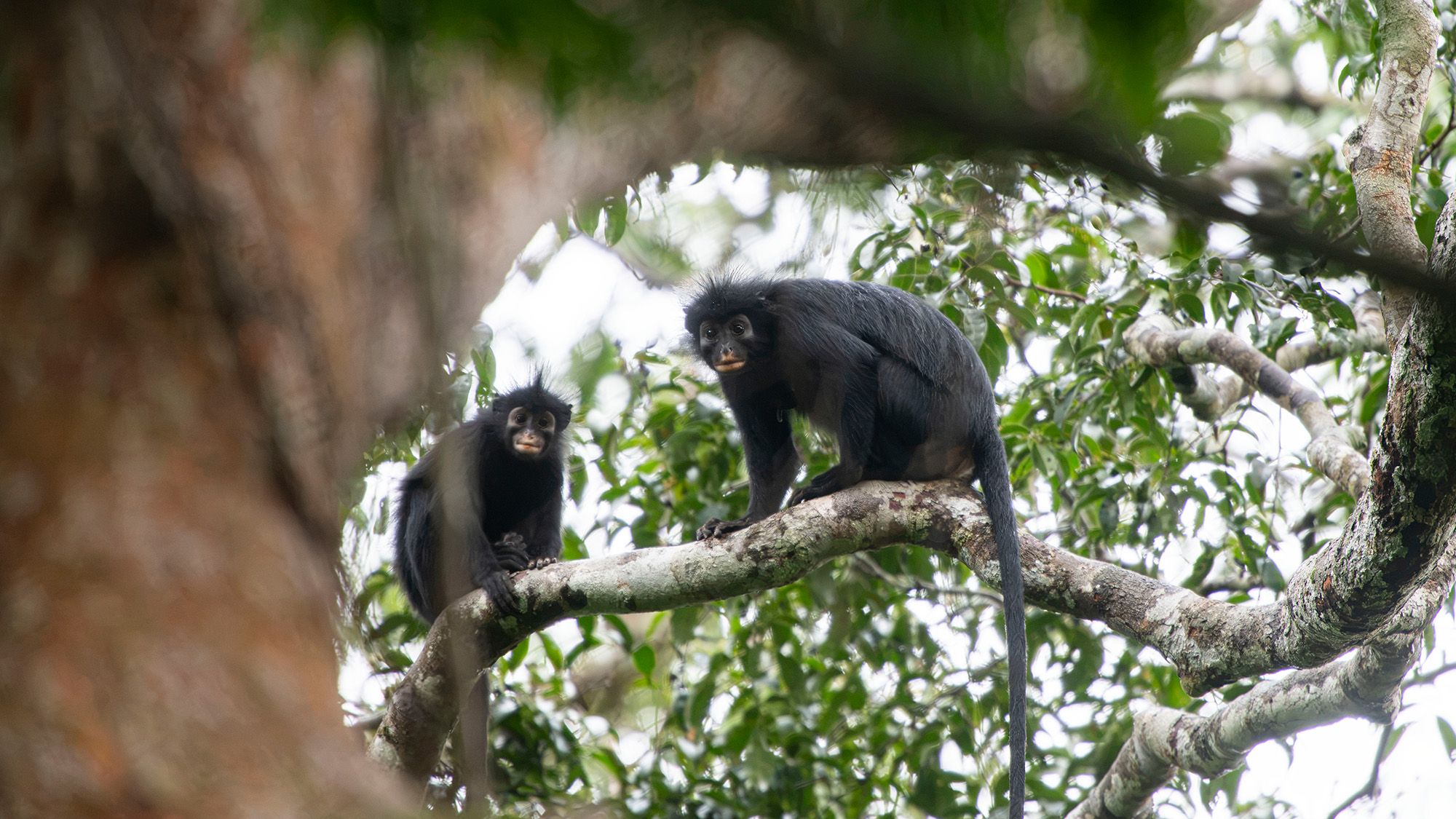
    Scientists have identified a new species of monkey that has orange lips and makes unique roars and snorting sounds. The distinctive monkey lives in a remote region of the Democratic Republic of the Congo (DRC).

    It is only the fifth new monkey species to be identified in Africa in the past 75 years, and there might be more unknown monkey species in the region, scientists behind a new study suggested. Researchers named the newly identified species of monkey Colobus congoensis, after the region, and it is known by the common name “lik­weli” in the local Kilanga language.

    “This is remarkable because it’s not very common these days to find a new, never-before-documented primate species, let alone a relatively large species of monkey,” said Joshua Linder, an anthropologist and president and co-founder of the The Forest Collective, a nonprofit that aims to conserve and restore tropical rainforests.

    In 2008, conservationists in the dense rainforests of Lomami National Park, within the Congo Basin in the DRC, photographed an unidentified monkey, but it was partially obscured. Then, in 2018 a similar-looking animal was captured on camera, prompting study co-author Junior Amboko, a Lomami National Park researcher and a Florida Atlantic University anthropologist, to set out to find the mysterious monkey.

    To see what was already known, Amboko and his colleagues showed the pictures to people from 52 villages around the park.


    You may like

    “These people really know the fauna and flora in the forest,” Amboko told Live Science. “In only eight villages, people knew the monkey ‪—‬ and these were hunters, who know the economic value of animals or how much food each animal can provide, but even they didn’t know much.”

    Two men wearing long sleeves and hats stand in the middle of a dense jungle.

    The researchers worked in the Lomami National Park, within the Congo Basin in the Democratic Republic of Congo.

    (Image credit: Daniel Rosengren, Frankfurt Zoological Society  )

    Hunters of the Balanga ethnic group called the monkey “likweli,” although the meaning of this name isn’t known. Some in the Mituku local communities called the species “kasaba nkoni,” which Amboko said means “the branch shaker.” This refers to the way colobus monkeys leap from branch to branch, Amboko said.

    Get the world’s most fascinating discoveries delivered straight to your inbox.

    In their searches between 2018 and 2022, the researchers recorded 114 sightings of the species across an estimated range of about 660 square miles (1,700 square kilometers) naturally isolated between the Lomami and Lualaba rivers. They reported their findings July 15 in the journal PLOS One.

    The monkeys, seen hanging out in groups of between one and 20 individuals, are mainly glossy black, but they have a conspicuous orange patch around the mouth and nose. Bare gray skin on their cheekbones makes it look as if they’re wearing masks. They also have a patch of white fur around the anus.

    “We’re going with the face and the rump as the two distinctive traits,” said study co-author Kate Detwiler, an anthropologist at Florida Atlantic University. “If you see the face, you see this unique bare skin that’s orange cream. And then if you’re coming from behind, you see this white patch.”


    What to read next

    Images of three black monkeys in trees.

    DNA analysis confirmed C. congoensis was a previously unknown species.

    (Image credit: Daniel Rosengren, Frankfurt Zoological Society  )

    The monkeys, which weigh about 15 pounds (7 kilograms), also make deep, loud roars, punctuated by distinctive snorts. These unique‬ vocalizations distinguish them from other colobus monkeys, Detwiler told Live Science.

    By taking samples, and sequencing DNA, from monkeys killed by hunters and destined for the illegal bushmeat trade, and comparing the results with what’s in museum collections and datasets of genetics, skulls, teeth and pelts for other colobus monkeys, the team confirmed that C. congoensis was a previously unknown species.

    “My lab got the tissue sample and did the genetics, and we were shocked by how divergent the key area of the mitochondrial genome was from other colobus monkeys,” Detwiler said.

    A close up of an orange-lipped monkey in a tree

    Researchers think the new species diverged up to 5.78 million years ago.

    (Image credit: Daniel Rosengren, Frankfurt Zoological Society  )

    The monkeys live in the same forest as the Angola colobus (Colobus angolensis), but their closest relatives are black colobus monkeys (Colobus satanas), which live around 750 miles (1,200 kilometers) to the west, in Cameroon, Gabon and Bioko Island.

    “The fact that the results show that the closest living relative to this new species is the black colobus located 1200 km away in West Africa is equally remarkable,” Linder, who was not involved in the new study, told Live Science via email.

    Detwiler estimates that these close relatives diverged between 5.78 million and 3.44 million years ago ‪—‬ the longest known split between species within the Colobus genus. “The discovery is reshaping our understanding of African monkey evolution,” she said.

    Given the small geographic range, rare sightings and increasing habitat loss, the researchers recommend that C. congoensis be classified as endangered on the IUCN Red List.

    The discovery also emphasizes the importance of Lomami National Park, where another previously undescribed monkey, the lesula (Cercopithecus lomamiensis), was reported in 2012 by a team that included Detwiler.

    The Congolian rainforest ranging across this part of Africa is the world’s second-largest tropical forest, after the Amazon, and about 60% of it is in the DRC. “It is a paradise for biodiversity,” Amboko said, adding that there might be more undescribed primate species there. “If we are able to discover two big new primate species, who knows how many other new mammals, fish, reptiles or plants there could be?”


    What do you know about chimpanzees and great apes? Test your smarts with our primate quiz!

    View Original Source Here

    Share. Facebook Twitter Pinterest LinkedIn Tumblr Email

    Related Posts

    GRS 0917+75 is a giant radio galaxy, observations find

    July 15, 2026

    Scientists show that DNA can last for up to 50,000 years in Africa ‪—‬ much longer than previously thought

    July 15, 2026

    Statistical test helps judge the value of personalization

    July 14, 2026

    ‘Extremely rare’ iron shackles discovered at 2,300-year-old settlement in France may have been used on enslaved women or children

    July 14, 2026

    Random by design: Flickering genes may spend energy to achieve precision

    July 13, 2026

    ‘The moon looked wrong’: Artemis II mission controller Chris White on taking historic lunar flyby photos from 250,000 miles away

    July 13, 2026
    popular posts

    6 New Business Novels for the Financially Savvy

    Margot Robbie’s Pirates of the Caribbean Movie Canceled by Disney

    Megan Fox Opens Up About Lifelong Struggle With Body Dysmorphia

    New Mystery and Thriller Books to Read

    Dyneema’s New Fiber Composite Is Lighter, Stronger, and More Durable Than Ever

    Interview with Ava Roberts, Author of The Vanishing Neighbor

    ‘Exquisitely preserved’ ginormous claws from Mongolia reveal strange evolution in dinosaurs

    Categories
    • Books (3,981)
    • Cover Story (16)
    • Events (24)
    • Fashion (2,834)
    • Interviews (60)
    • Movies (3,277)
    • Music (3,572)
    • News (180)
    • Politics (13)
    • Science (5,132)
    • Technology (3,274)
    • Television (4,003)
    • Uncategorized (932)
    Archives
    Facebook X (Twitter) Instagram Pinterest YouTube Reddit TikTok
    © 2026 Top Buzz Magazine. All rights reserved. All articles, images, product names, logos, and brands are property of their respective owners. All company, product and service names used in this website are for identification purposes only. Use of these names, logos, and brands does not imply endorsement unless specified. By using this site, you agree to the Terms of Use and Privacy Policy.

    Type above and press Enter to search. Press Esc to cancel.

    We use cookies on our website to give you the most relevant experience by remembering your preferences and repeat visits. By clicking “Accept”, you consent to the use of ALL the cookies.
    Do not sell my personal information.
    Cookie SettingsAccept
    Manage consent

    Privacy Overview

    This website uses cookies to improve your experience while you navigate through the website. Out of these, the cookies that are categorized as necessary are stored on your browser as they are essential for the working of basic functionalities of the website. We also use third-party cookies that help us analyze and understand how you use this website. These cookies will be stored in your browser only with your consent. You also have the option to opt-out of these cookies. But opting out of some of these cookies may affect your browsing experience.
    Necessary
    Always Enabled
    Necessary cookies are absolutely essential for the website to function properly. These cookies ensure basic functionalities and security features of the website, anonymously.
    CookieDurationDescription
    cookielawinfo-checkbox-analytics11 monthsThis cookie is set by GDPR Cookie Consent plugin. The cookie is used to store the user consent for the cookies in the category "Analytics".
    cookielawinfo-checkbox-functional11 monthsThe cookie is set by GDPR cookie consent to record the user consent for the cookies in the category "Functional".
    cookielawinfo-checkbox-necessary11 monthsThis cookie is set by GDPR Cookie Consent plugin. The cookies is used to store the user consent for the cookies in the category "Necessary".
    cookielawinfo-checkbox-others11 monthsThis cookie is set by GDPR Cookie Consent plugin. The cookie is used to store the user consent for the cookies in the category "Other.
    cookielawinfo-checkbox-performance11 monthsThis cookie is set by GDPR Cookie Consent plugin. The cookie is used to store the user consent for the cookies in the category "Performance".
    viewed_cookie_policy11 monthsThe cookie is set by the GDPR Cookie Consent plugin and is used to store whether or not user has consented to the use of cookies. It does not store any personal data.
    Functional
    Functional cookies help to perform certain functionalities like sharing the content of the website on social media platforms, collect feedbacks, and other third-party features.
    Performance
    Performance cookies are used to understand and analyze the key performance indexes of the website which helps in delivering a better user experience for the visitors.
    Analytics
    Analytical cookies are used to understand how visitors interact with the website. These cookies help provide information on metrics the number of visitors, bounce rate, traffic source, etc.
    Advertisement
    Advertisement cookies are used to provide visitors with relevant ads and marketing campaigns. These cookies track visitors across websites and collect information to provide customized ads.
    Others
    Other uncategorized cookies are those that are being analyzed and have not been classified into a category as yet.
    SAVE & ACCEPT