
Close Menu
    Facebook X (Twitter) Instagram Pinterest YouTube LinkedIn TikTok
    TopBuzzMagazine.com
    Facebook X (Twitter) Instagram Pinterest YouTube LinkedIn TikTok
    • Home
    • Movies
    • Television
    • Music
    • Fashion
    • Books
    • Science
    • Technology
    • Cover Story
    • Contact
      • About
      • Amazon Disclaimer
      • Terms and Conditions
      • Privacy Policy
      • DMCA / Copyrights Disclaimer
    TopBuzzMagazine.com
    Home»Science»NASA shuts off another Voyager 1 instrument as humanity’s most distant spacecraft prepares for risky ‘Big Bang’ maneuver to save power
    Science

    NASA shuts off another Voyager 1 instrument as humanity’s most distant spacecraft prepares for risky ‘Big Bang’ maneuver to save power

    By AdminApril 21, 2026
    Facebook Twitter Pinterest LinkedIn Tumblr Email
    NASA shuts off another Voyager 1 instrument as humanity’s most distant spacecraft prepares for risky ‘Big Bang’ maneuver to save power


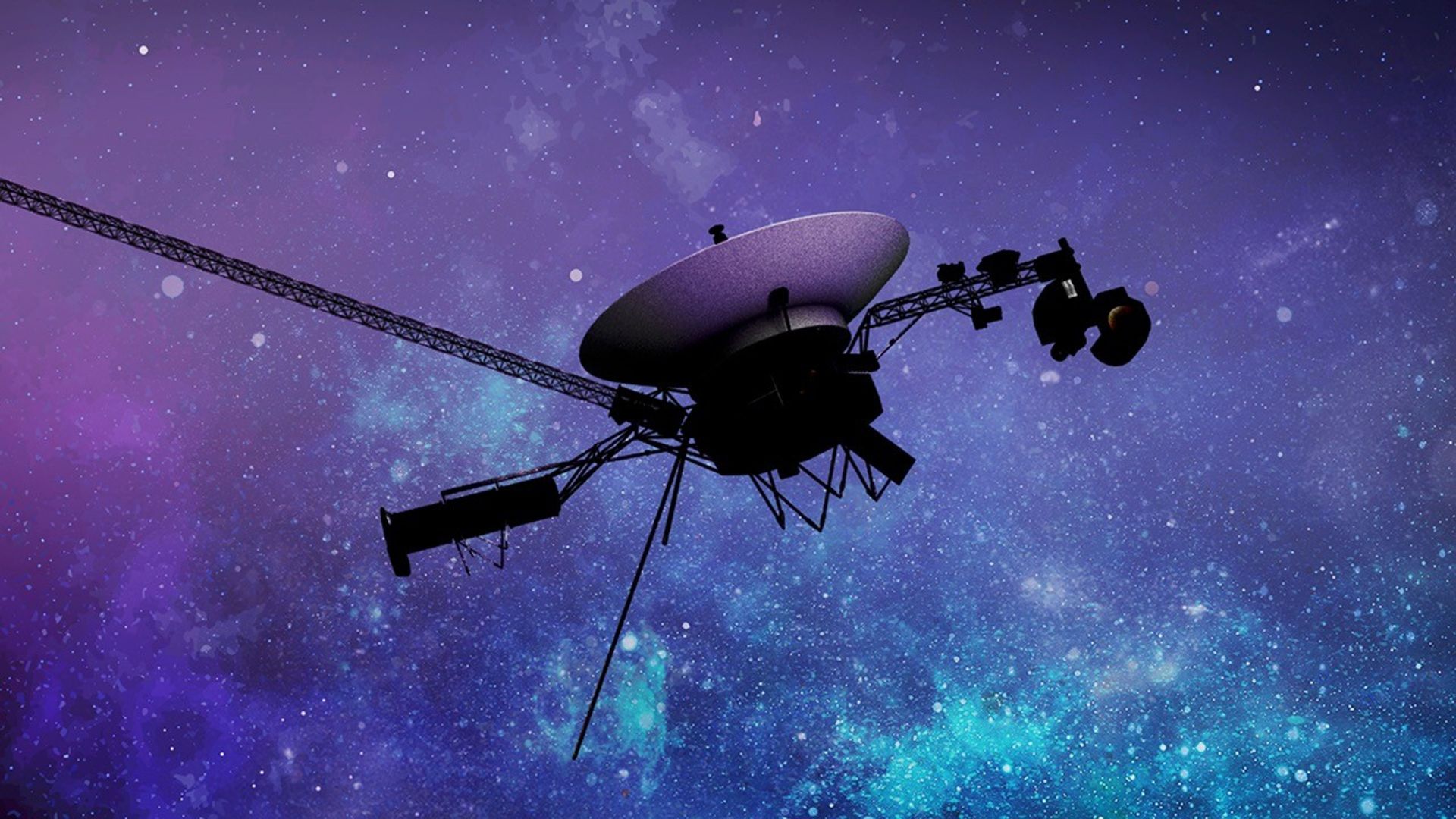
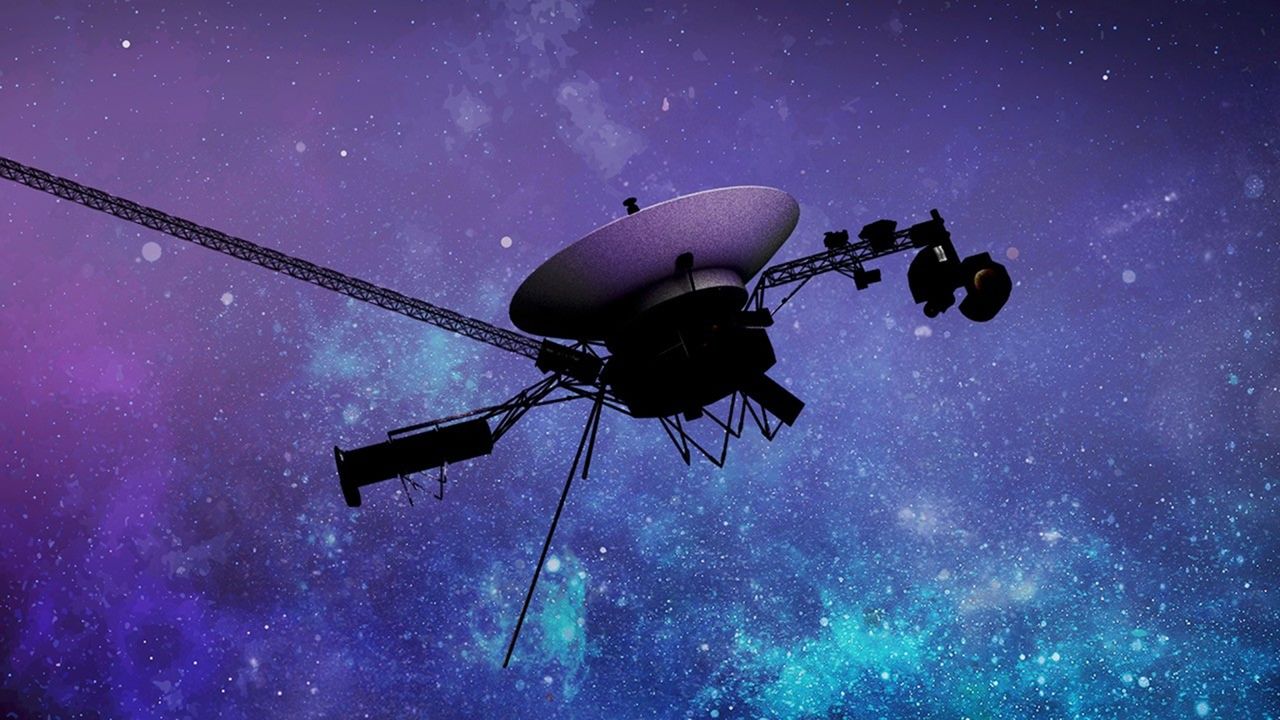
    After nearly half a century in space, the Voyager 1 spacecraft just shut down one of its last remaining science instruments in a desperate attempt to preserve power. NASA‘s decision to turn off the instrument comes just ahead of a last-ditch “Big Bang” moment that mission managers hope will give the two Voyager probes an extra boost of life later this summer.

    On Friday (April 17), Voyager 1 was commanded to shut down the Low-Energy Charged Particle (LECP) experiment, an instrument that has looked at ions, electrons and cosmic rays surrounding the spacecraft for the past 49 years.

    But now, Voyager 1 is running critically low on nuclear power, especially after a planned roll maneuver on Feb. 27 created an unexpected power drop.


    You may like

    The spacecraft launched in 1977, initially to survey Jupiter and Saturn, before its mission was extended again and again. In 2012, Voyager 1 officially crossed into interstellar space, becoming the first spacecraft to send data from outside the solar system. It remains the most distant spacecraft in history.

    The twin probe Voyager 2, which surveyed all of the outer planets from Jupiter to Neptune, entered interstellar space about six years later, and the two spacecraft are still transmitting from the black.

    But their time is running short. Both spacecraft rely on a radioisotope thermoelectric generator, which converts decaying plutonium into power. The spacecraft lose roughly 4 watts of power a year.

    “Power margins have grown razor thin, requiring the team to conserve energy by shutting off heaters and instruments while making sure the spacecraft don’t get so cold that their fuel lines freeze,” representatives from NASA’s Jet Propulsion Laboratory (JPL), which manages the Voyager program, wrote in an April 17 blog post.

    Get the world’s most fascinating discoveries delivered straight to your inbox.

    After the latest shutoff, only two of Voyager 1’s 10 science instruments remain powered, while three instruments are currently running on Voyager 2. These instruments have helped scientists characterize the conditions of space beyond the solar system, as well as the physical properties of the heliopause, the boundary where the solar wind clashes with the interstellar medium.

    A “Big Bang”

    This latest Voyager 1 instrument shutoff will grant the spacecraft only about one year of life, as things stand, but there’s a plan to get more out of the spacecraft: JPL will use a “Big Bang” procedure to try extending the dwindling power reserves of not only Voyager 1 but also Voyager 2.

    “The idea is to swap out a group of powered devices all at once — hence the nickname — turning some things off, and replacing them with lower-power alternatives, to keep the spacecraft warm enough to continue gathering science data,” JPL representatives wrote in the blog post.

    For now, two instruments on Voyager 1 are examining magnetic fields and waves of plasma (superheated gas). But if all goes according to plan, the team hopes to gain back enough power from the Big Bang to turn the LECP back on. In fact, engineers decided to keep a small, half-watt motor for LECP running for now, just in case the instrument can be used again.

    In May and June, JPL will run some Big Bang tests on Voyager 2, which has more power supplies available and is slightly closer to Earth. Assuming all goes well, the riskier Voyager 1 Big Bang moment would happen no earlier than July.

    Sending any commands to Voyager 1 takes 23 hours because it is so far from Earth ‪— ‬15 billion miles (25 billion kilometers) away. After JPL relayed its commands, the LECP shutdown process took a little more than three hours. Starting it up again, especially given the cold and distance, could be a bit trickier.

    View Original Source Here

    Share. Facebook Twitter Pinterest LinkedIn Tumblr Email

    Related Posts

    Diamonds are surprisingly elastic when you make them tiny

    April 21, 2026

    What makes Mars' magnetotail flap? Two spacecraft point to magnetic reconnection

    April 20, 2026

    Altar to Sol: A rare 1,900-year-old monument dedicated to the Roman god of light and used in a secret underground ritual

    April 20, 2026

    Why is it so hard to change your mind?

    April 19, 2026

    HydroGraphNet boosts watershed predictions of daily flow and nitrogen in sparse data regions

    April 19, 2026

    700-year-old mummy from Bolivia contains earliest confirmed evidence of strep throat bacteria in the Americas

    April 18, 2026
    popular posts

    Firearm suicides are rising in the US despite declining globally

    As Key Talent Abandons Apple, Meet the New Generation of Leaders Taking On the Old Guard

    Nine Inch Nails to Score New Tron Movie

    Crude: Ukraine, Oil and Nuclear War by Mike Bond

    These Are the Only Tech Deals Worth Shopping on Amazon

    Florida’s starving manatees reflect troubles in coastal ecosystems around the

    Who What Wear Weddings: Line Dalgaard Olsen and Alexander Dalgaard Olsen

    Categories
    • Books (3,811)
    • Cover Story (14)
    • Events (23)
    • Fashion (2,741)
    • Interviews (58)
    • Movies (3,107)
    • Music (3,398)
    • News (173)
    • Politics (10)
    • Science (4,962)
    • Technology (3,103)
    • Television (3,832)
    • Uncategorized (932)
    Archives
    Facebook X (Twitter) Instagram Pinterest YouTube Reddit TikTok
    © 2026 Top Buzz Magazine. All rights reserved. All articles, images, product names, logos, and brands are property of their respective owners. All company, product and service names used in this website are for identification purposes only. Use of these names, logos, and brands does not imply endorsement unless specified. By using this site, you agree to the Terms of Use and Privacy Policy.

    Type above and press Enter to search. Press Esc to cancel.

    We use cookies on our website to give you the most relevant experience by remembering your preferences and repeat visits. By clicking “Accept”, you consent to the use of ALL the cookies.
    Do not sell my personal information.
    Cookie SettingsAccept
    Manage consent

    Privacy Overview

    This website uses cookies to improve your experience while you navigate through the website. Out of these, the cookies that are categorized as necessary are stored on your browser as they are essential for the working of basic functionalities of the website. We also use third-party cookies that help us analyze and understand how you use this website. These cookies will be stored in your browser only with your consent. You also have the option to opt-out of these cookies. But opting out of some of these cookies may affect your browsing experience.
    Necessary
    Always Enabled
    Necessary cookies are absolutely essential for the website to function properly. These cookies ensure basic functionalities and security features of the website, anonymously.
    CookieDurationDescription
    cookielawinfo-checkbox-analytics11 monthsThis cookie is set by GDPR Cookie Consent plugin. The cookie is used to store the user consent for the cookies in the category "Analytics".
    cookielawinfo-checkbox-functional11 monthsThe cookie is set by GDPR cookie consent to record the user consent for the cookies in the category "Functional".
    cookielawinfo-checkbox-necessary11 monthsThis cookie is set by GDPR Cookie Consent plugin. The cookies is used to store the user consent for the cookies in the category "Necessary".
    cookielawinfo-checkbox-others11 monthsThis cookie is set by GDPR Cookie Consent plugin. The cookie is used to store the user consent for the cookies in the category "Other.
    cookielawinfo-checkbox-performance11 monthsThis cookie is set by GDPR Cookie Consent plugin. The cookie is used to store the user consent for the cookies in the category "Performance".
    viewed_cookie_policy11 monthsThe cookie is set by the GDPR Cookie Consent plugin and is used to store whether or not user has consented to the use of cookies. It does not store any personal data.
    Functional
    Functional cookies help to perform certain functionalities like sharing the content of the website on social media platforms, collect feedbacks, and other third-party features.
    Performance
    Performance cookies are used to understand and analyze the key performance indexes of the website which helps in delivering a better user experience for the visitors.
    Analytics
    Analytical cookies are used to understand how visitors interact with the website. These cookies help provide information on metrics the number of visitors, bounce rate, traffic source, etc.
    Advertisement
    Advertisement cookies are used to provide visitors with relevant ads and marketing campaigns. These cookies track visitors across websites and collect information to provide customized ads.
    Others
    Other uncategorized cookies are those that are being analyzed and have not been classified into a category as yet.
    SAVE & ACCEPT