
Close Menu
    Facebook X (Twitter) Instagram Pinterest YouTube LinkedIn TikTok
    TopBuzzMagazine.com
    Facebook X (Twitter) Instagram Pinterest YouTube LinkedIn TikTok
    • Home
    • Movies
    • Television
    • Music
    • Fashion
    • Books
    • Science
    • Technology
    • Cover Story
    • Contact
      • About
      • Amazon Disclaimer
      • Terms and Conditions
      • Privacy Policy
      • DMCA / Copyrights Disclaimer
    TopBuzzMagazine.com
    Home»Science»New study finds investing in nature improves equity, boosts economy
    Science

    New study finds investing in nature improves equity, boosts economy

    By AdminJuly 20, 2023
    Facebook Twitter Pinterest LinkedIn Tumblr Email
    New study finds investing in nature improves equity, boosts economy

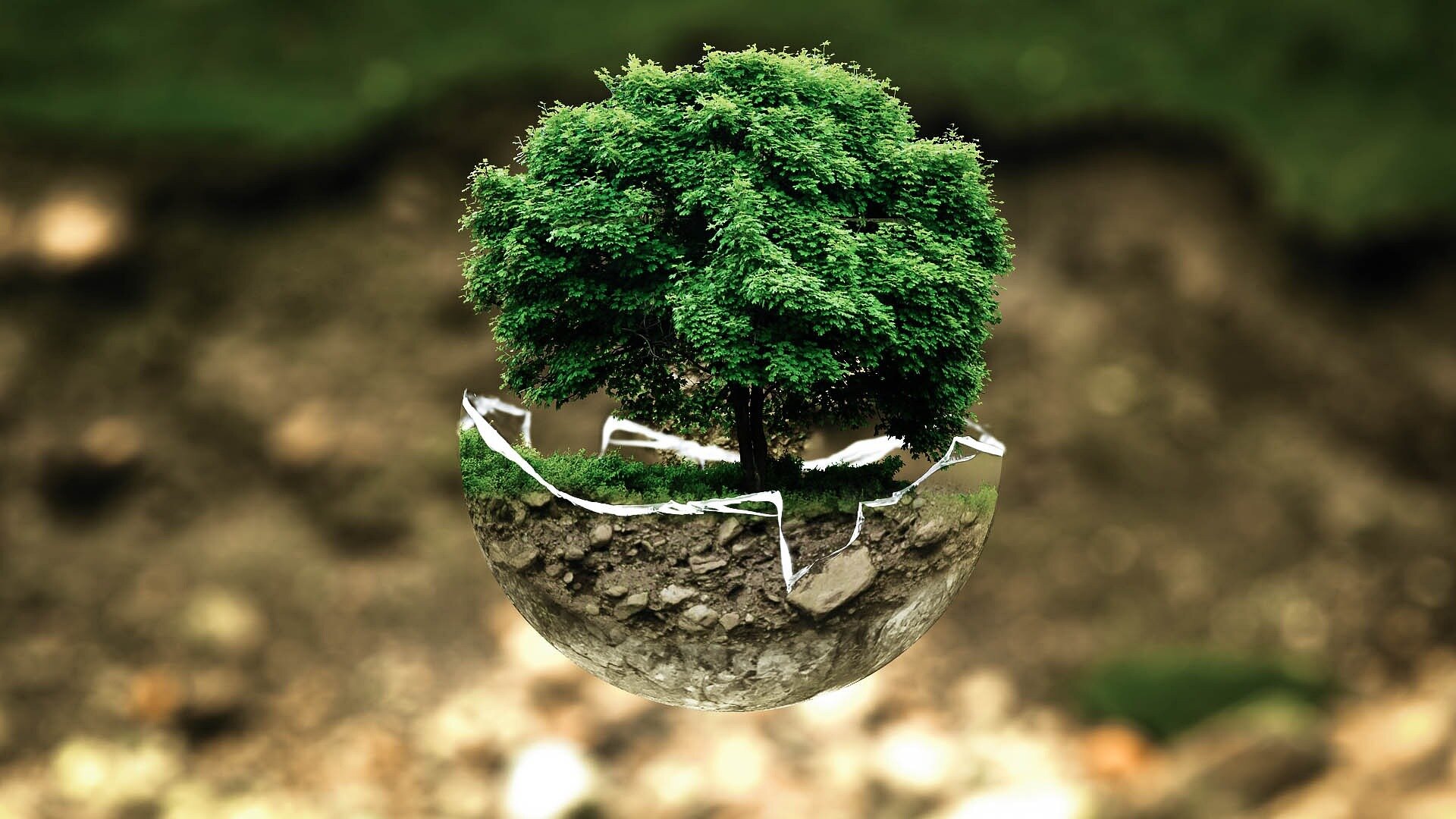
    Credit: Pixabay/CC0 Public Domain

    A new study shows that current trends in environmental degradation will lead to large economic losses in the coming decades, hitting the poorest countries hardest. But there is hope: investing in nature can turn those losses into gains.

    Researchers from the University of Minnesota and Purdue University published their findings in Proceedings of the National Academy of Sciences. The team developed a first-of-its-kind, global earth-economy model to capture interactions between the economy and the environment. Crucially, these interactions include how nature benefits humans by pollinating crops, providing timber, storing carbon, and providing catch for marine fisheries, and how those benefits end up affecting the economy overall.

    “We have long thought of the economy and the environment as working against each other,” said Justin Johnson, an assistant professor of Applied Economics at the University of Minnesota. “Investing in nature does not stifle the economy, it boosts the economy. But it has been difficult to model those interactions until recently.”

    The researchers found:

    • Policy options for investing in nature resulted in annual gains of $100–350 billion (2014 USD), with the largest percentage increases in GDP occurring in low-income countries. The policy options examined in this study include removing agricultural subsidies, financing research into improving crop yields and international payments from wealthy countries to poorer countries to support conservation.
    • Continued trends in environmental degradation, on the other hand, would result in $75 billion losses annually, with the low-income countries suffering from 0.2% losses in GDP year on year.

    The researchers combined a global general equilibrium economic model, GTAP (developed at Purdue University’s Center for Global Trade Analysis), with a suite of ecosystem service models, InVEST (developed at Stanford University’s Natural Capital Project). GTAP and InVEST are both widely used across the world by governments, non-governmental organizations and the private sector, but putting them together was a significant undertaking.

    “Traditional economic models of this kind almost completely neglect the fact that the economy relies on nature,” said Tom Hertel, a distinguished professor of Agricultural Economics at Purdue University. “This new study required a detailed understanding of how and where land use patterns change as a result of economic activity, with enough spatial detail to understand environmental consequences of these changes. It is a huge achievement.”

    The results from this research highlight how public goods and services provided by the environment are often most important for the world’s poorest, who have less access to alternative options when the environment is degraded. Consequently, investing in nature tends to make the world a more equitable place. This research only looks at a small subset of the ways in which the economy and the environment interact, nevertheless finding strikingly large effects.

    “Of course nature provides much more than pollinators, timber, carbon and fish,” said Johnson. “Our future work will incorporate many more ecosystem services, leading to much more informed decision-making. This is just the beginning: we hope to make this kind of analysis a standard tool in a policy-maker’s toolbox.”

    More information: Johnson, Justin Andrew et al, Investing in nature can improve equity and economic returns, Proceedings of the National Academy of Sciences (2023). DOI: 10.1073/pnas.2220401120

    Provided by University of Minnesota

    Citation: New study finds investing in nature improves equity, boosts economy (2023, June 26) retrieved 20 July 2023 from https://phys.org/news/2023-06-investing-nature-equity-boosts-economy.html

    This document is subject to copyright. Apart from any fair dealing for the purpose of private study or research, no part may be reproduced without the written permission. The content is provided for information purposes only.

    Read The Full Article Here

    Share. Facebook Twitter Pinterest LinkedIn Tumblr Email

    Related Posts

    Putting data centres in space isn’t going to happen any time soon

    December 19, 2025

    Populism as a departure from neoliberalism in Hungary and Israel

    December 19, 2025

    Comet 3I/ATLAS reaches its closest point to Earth tonight: How to see it in the sky and online

    December 18, 2025

    Strange lemon-shaped exoplanet defies the rules of planet formation

    December 18, 2025

    What happens when managers don't act? New research reveals the consequences can be severe

    December 17, 2025

    Diagnostic dilemma: An otherwise ‘fit’ man had a stroke after drinking 8 ‘high-potency’ energy drinks a day

    December 17, 2025
    popular posts

    Lars von Trier checks in for another stay in The

    OpenAI warns that its upcoming models could pose a higher risk of enabling the creation of biological weapons and says it is stepping up testing of such models (Ina Fried/Axios)

    Man In Ronald McDonald Costume Allegedly Groped Fest Crowdsurfers

    ENHYPEN Scores Second No

    Mystery fireball spotted plummeting to Earth over the US

    A New Thriller From the ‘Barbarian’ Team

    Europa may have less oxygen to fuel life in its

    Categories
    • Books (3,602)
    • Cover Story (8)
    • Events (20)
    • Fashion (2,630)
    • Interviews (52)
    • Movies (2,902)
    • Music (3,189)
    • News (166)
    • Politics (6)
    • Science (4,755)
    • Technology (2,897)
    • Television (3,627)
    • Uncategorized (932)
    Archives
    Facebook X (Twitter) Instagram Pinterest YouTube Reddit TikTok
    © 2025 Top Buzz Magazine. All rights reserved. All articles, images, product names, logos, and brands are property of their respective owners. All company, product and service names used in this website are for identification purposes only. Use of these names, logos, and brands does not imply endorsement unless specified. By using this site, you agree to the Terms of Use and Privacy Policy.

    Type above and press Enter to search. Press Esc to cancel.

    We use cookies on our website to give you the most relevant experience by remembering your preferences and repeat visits. By clicking “Accept”, you consent to the use of ALL the cookies.
    Do not sell my personal information.
    Cookie SettingsAccept
    Manage consent

    Privacy Overview

    This website uses cookies to improve your experience while you navigate through the website. Out of these, the cookies that are categorized as necessary are stored on your browser as they are essential for the working of basic functionalities of the website. We also use third-party cookies that help us analyze and understand how you use this website. These cookies will be stored in your browser only with your consent. You also have the option to opt-out of these cookies. But opting out of some of these cookies may affect your browsing experience.
    Necessary
    Always Enabled
    Necessary cookies are absolutely essential for the website to function properly. These cookies ensure basic functionalities and security features of the website, anonymously.
    CookieDurationDescription
    cookielawinfo-checkbox-analytics11 monthsThis cookie is set by GDPR Cookie Consent plugin. The cookie is used to store the user consent for the cookies in the category "Analytics".
    cookielawinfo-checkbox-functional11 monthsThe cookie is set by GDPR cookie consent to record the user consent for the cookies in the category "Functional".
    cookielawinfo-checkbox-necessary11 monthsThis cookie is set by GDPR Cookie Consent plugin. The cookies is used to store the user consent for the cookies in the category "Necessary".
    cookielawinfo-checkbox-others11 monthsThis cookie is set by GDPR Cookie Consent plugin. The cookie is used to store the user consent for the cookies in the category "Other.
    cookielawinfo-checkbox-performance11 monthsThis cookie is set by GDPR Cookie Consent plugin. The cookie is used to store the user consent for the cookies in the category "Performance".
    viewed_cookie_policy11 monthsThe cookie is set by the GDPR Cookie Consent plugin and is used to store whether or not user has consented to the use of cookies. It does not store any personal data.
    Functional
    Functional cookies help to perform certain functionalities like sharing the content of the website on social media platforms, collect feedbacks, and other third-party features.
    Performance
    Performance cookies are used to understand and analyze the key performance indexes of the website which helps in delivering a better user experience for the visitors.
    Analytics
    Analytical cookies are used to understand how visitors interact with the website. These cookies help provide information on metrics the number of visitors, bounce rate, traffic source, etc.
    Advertisement
    Advertisement cookies are used to provide visitors with relevant ads and marketing campaigns. These cookies track visitors across websites and collect information to provide customized ads.
    Others
    Other uncategorized cookies are those that are being analyzed and have not been classified into a category as yet.
    SAVE & ACCEPT