
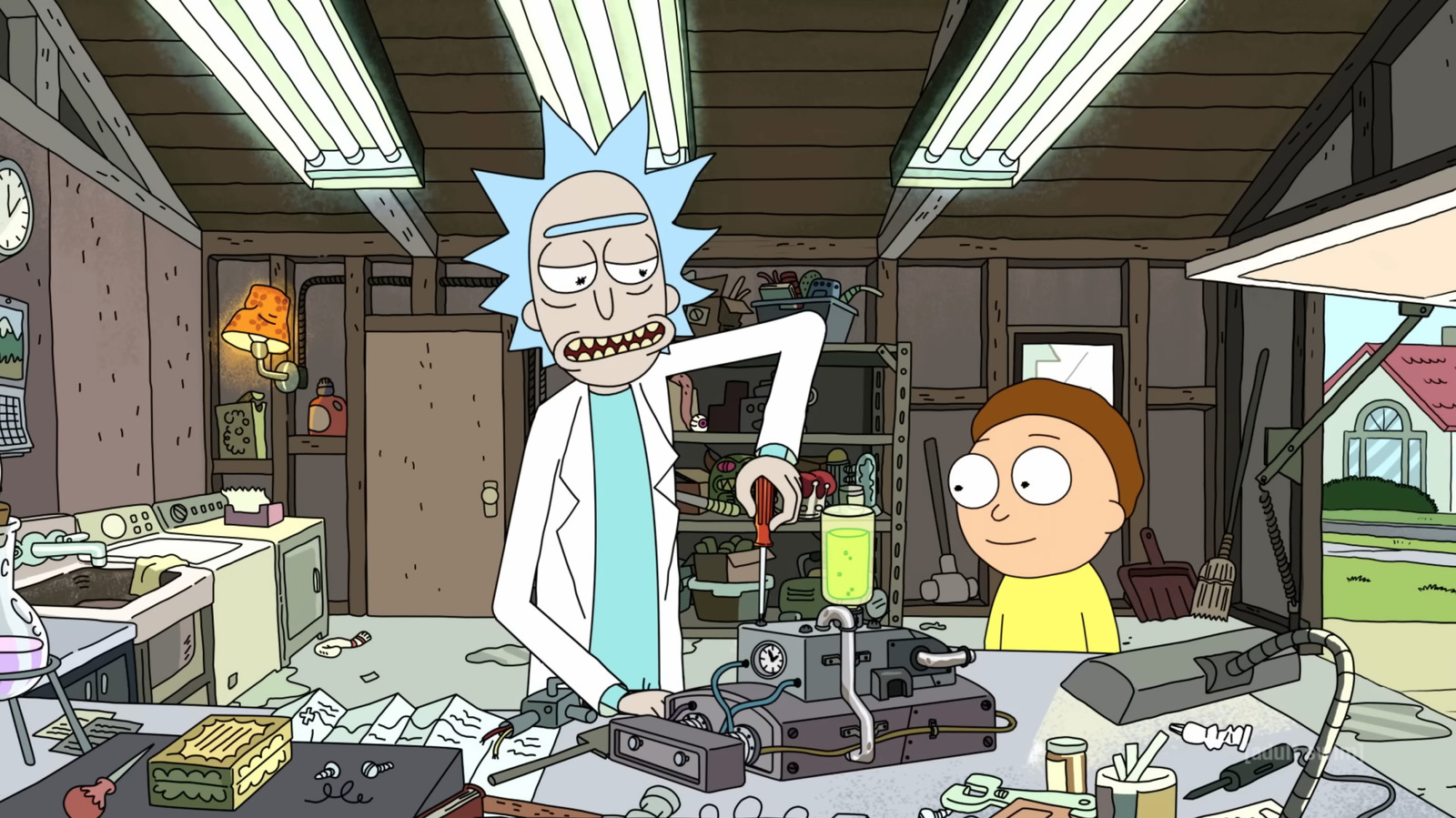
The line between horror and humor on “Rick and Morty” has always been blurred. One of its funniest running gags, for instance, is Rick endowing his machines with sentience only for them to instantly suffer an existential crisis. To be given the thoughts and feelings of a regular person but told your only purpose in life is to pass the butter? It’s an idea so horrifying you have no choice but to laugh.
“I think the darkness is balanced for comedy,” co-creator Dan Harmon told The Washington Post in 2015. “When our show goes really dark, to me, it’s part of a larger joke, a very large joke. The universe is insane and sick and unpredictable and just when you think it’s going to zig it zags cosmically and so that is the thing that we need to be able to laugh at.”
Although “Rick and Morty” regularly ventures into dark territory, this list centers on five episodes that went far darker than viewers bargained for. These episodes are funny, sure, but don’t think about them for too long if you want to get a good night’s sleep.
5. The Ricks Must Be Crazy (Season 2, Episode 6)
The A-plot of this episode revolves around Rick building an entire society of sentient beings who don’t know they exist only to power his car. A Rick-esque genius in that society comes up with the same idea and builds his own microscopic slave community, and the cycle continues ad infinitum. The storyline invites viewers to contemplate the meaninglessness of life and whether they, too, might exist only to help power some giant alien’s car.
Making “The Ricks Must Be Crazy” feel extra twisted is the B-plot with Summer in Rick’s space car. Rick programmed the car to “keep Summer safe,” and it interprets his instruction in the most deranged, grotesque ways possible.
“I realized how really truly wonderful animation was, because there were no limits to the amount of ways you could keep that storyline going,” Summer voice actress Spencer Grammer told “Animation for Adults” about the subplot in 2021. “Nothing that happens to Summer with that ship feels safe at all … I think that’s where Summer’s arc really turned for her.” This is not just one of the darkest outings of the show but one of the funniest, making it an essential “Rick and Morty” episode that everyone should watch at least once.
4. Field of Dreams (Season 9, Episode 10)
The Season 9 finale starts and ends with a family bloodbath, but what happens between those two extremes is even more unsettling. Morty develops the unwise idea to attend his own funeral in alternate realities and accidentally forms a relationship with another version of his family, who have lost their own Morty.
“Field of Dreams” gives Morty a glimpse of a more loving and stable version of his family, only to cruelly take it away from him. Worse still, the episode introduces a seemingly healthier Rick who has stopped drinking and become his best self, only for Morty to accidentally send him spiraling again. Season 9 has explored the idea that Morty is the true source of Rick’s unhappiness, and “Field of Dreams” makes an uncomfortably strong case for that theory.
“I think people are going to think the finale is one of the coolest episodes we’ve ever done,” the show’s executive producer Scott Marder told Nexus Point News. Chris Parnell, who plays Jerry, told The Direct how much he enjoyed portraying the alternate Jerry in this episode, a version of the character who has lost his son and is coping poorly. “It was really about going deeper into the anger of the character, the anguish of the character,” Parnell said.
3. Rick Potion #9 (Season 1, Episode 6)
This early-series episode starts with Morty asking Rick for a love potion to use on his crush Jessica. The potion predictably has unintended side effects, but it’s stunning how quickly the storyline spirals out of control. Rick and Morty accidentally mutate nearly the entire human population into horrific monsters, forcing them to abandon their reality, leave their original family behind and take the places of their newly deceased counterparts in a parallel universe.
This critically acclaimed episode was supposed to air even earlier in the season, but the showrunners decided it would have more impact later on. By the time the episode airs, the audience has grown familiar with this universe’s versions of Beth, Jerry and Summer, so it stings even more to watch Rick and Morty abandon them.
In a 2022 interview with /Film, Dan Harmon explained how “Rick Potion #9” was inspired by the writers’ concern over narrative stakes in a show with infinite realities. If Rick can just hop into a nearly identical reality whenever he wants, why doesn’t he? The writers decided not to avoid that question, but to dive right in and expose all the existential horror that comes with it. “We had that conversation as early as Season 1,” Harmon said. “That was a big ‘Rick and Morty’ birth moment for us, going, ‘Let’s not be afraid of jumping this shark.'”
2. Mortyplicity (Season 5, Episode 2)
The episode begins with the revelation that Rick created a decoy family who don’t know they’re decoys. That Decoy Rick then made a decoy family of his own, and the cycle continued until everything comes crashing down at once.
“I thought it might be cool to try and explore the anthology version of the episode where you could spend the first half solving the mystery, then the second half just exploring the fallout from the question,” episode writer Albro Lundy said in an Adult Swim behind-the-scenes feature. The fallout is predictably bleak, as the members of each Smith family spiral into despair, paranoia, and lethal violence.
Sending the episode into truly depraved territory is its tag scene, which shows one of Jerry’s decoys forced to live forever as a decapitated wooden head. “This is the worst thing that’s ever happened to anyone!” he shouts, and it’s hard to disagree.
1. That’s Amorte (Season 7, Episode 4)
This episode introduces its moral quandary straight away: There’s a type of spaghetti that tastes unbelievably good, but it can only be harvested from a humanoid alien who has recently died by suicide.
Morty attempts to find a moral solution that will let him eat the spaghetti with a clean conscience, but, as always, he only makes the situation worse. It’s a disturbing premise that the episode continues to escalate, although it never feels gratuitous because it explores some genuinely compelling ethical dilemmas. Episode writer Heather Anne Campbell saw the premise as a fascinating way to examine the guilt people in real life feel about eating meat.
“There’s so many different ways in which we are barricaded from the truth of everything that we enjoy, and I think that the puzzle of being alive is how to reconcile that,” she told Variety. “It is a very specific experience to being human, to being conscious of something in a way that nothing else in the animal kingdom seems to have to digest.” It’s high-concept episodes like this one, with their willingness to blend horrific elements with thought-provoking concepts, that help establish “Rick and Morty” as one of the best animated sitcoms ever made.
If you or someone you know is struggling or in crisis, help is available. Call or text 988 or chat 988lifeline.org