
Close Menu
    Facebook X (Twitter) Instagram Pinterest YouTube LinkedIn TikTok
    TopBuzzMagazine.com
    Facebook X (Twitter) Instagram Pinterest YouTube LinkedIn TikTok
    • Home
    • Movies
    • Television
    • Music
    • Fashion
    • Books
    • Science
    • Technology
    • Cover Story
    • Contact
      • About
      • Amazon Disclaimer
      • Terms and Conditions
      • Privacy Policy
      • DMCA / Copyrights Disclaimer
    TopBuzzMagazine.com
    Home»Science»‘The brain consistently moved upward and backward’: Astronauts’ brains physically shift in their heads during spaceflight
    Science

    ‘The brain consistently moved upward and backward’: Astronauts’ brains physically shift in their heads during spaceflight

    By AdminFebruary 15, 2026
    Facebook Twitter Pinterest LinkedIn Tumblr Email
    ‘The brain consistently moved upward and backward’: Astronauts’ brains physically shift in their heads during spaceflight


    Going to space is harsh on the human body, and as a new study from our research team finds, the brain shifts upward and backward and deforms inside the skull after spaceflight.

    The extent of these changes was greater for those who spent longer in space. As NASA plans longer space missions, and space travel expands beyond professional astronauts, these findings will become more relevant.

    Why it matters

    On Earth, gravity constantly pulls fluids in your body and your brain toward the center of the Earth. In space, that force disappears. Body fluids shift toward the head, which gives astronauts a puffy face. Under normal gravity, the brain, cerebrospinal fluid and surrounding tissues reach a stable balance. In microgravity, that balance changes.


    You may like

    Without gravity pulling downward, the brain floats in the skull and experiences various forces from the surrounding soft tissues and the skull itself. Earlier studies showed that the brain appears higher in the skull after spaceflight. But most of those studies focused on average or whole brain measures, which can hide important effects within different areas of the brain.

    Our goal was to look more closely.
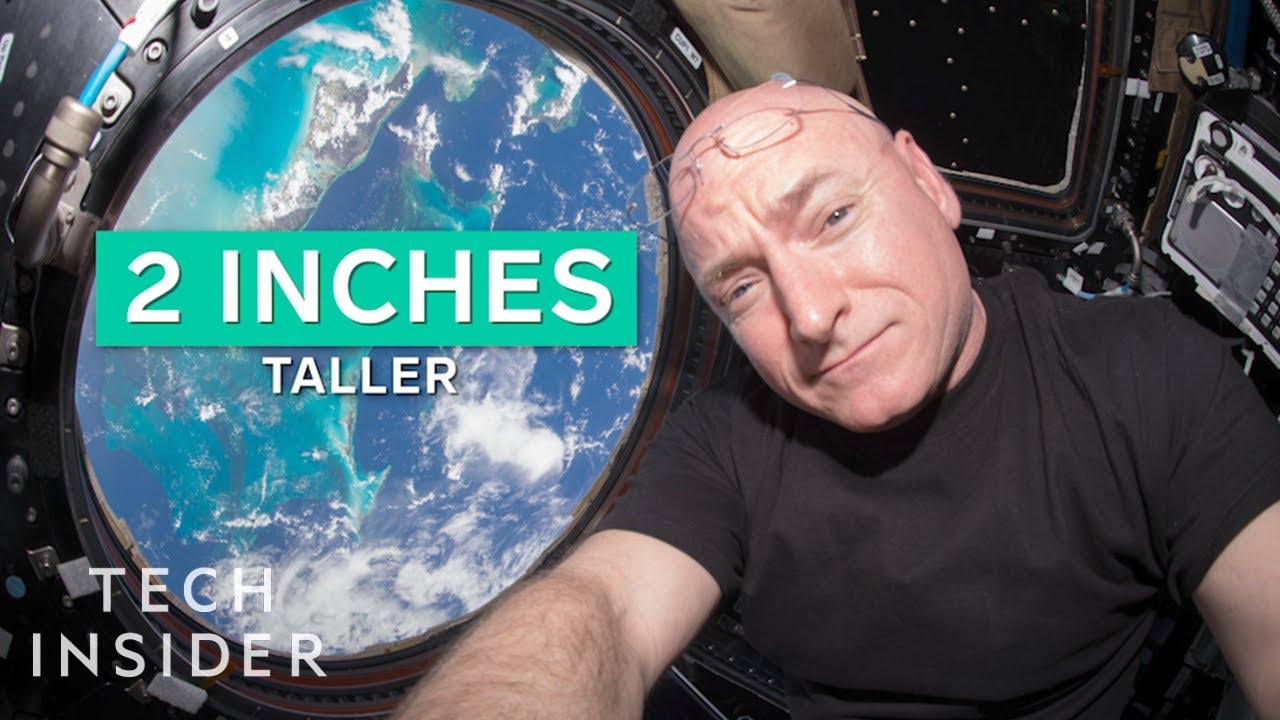
    What Happens To The Human Body In Space – YouTube
    What Happens To The Human Body In Space - YouTube


    Watch On

    How we do our work

    We analyzed brain MRI scans from 26 astronauts who spent different lengths of time in space, from a few weeks to over a year. To focus on the brain’s movement, we aligned each person’s skull across scans taken before and after spaceflight.

    That comparison allowed us to measure how the brain shifted relative to the skull itself. Instead of treating the brain as a single object, we divided it into more than 100 regions and tracked how each one had shifted. This approach enabled us to see patterns that were missed when looking at the whole brain, on average.

    Get the world’s most fascinating discoveries delivered straight to your inbox.

    We found that the brain consistently moved upward and backward when comparing postflight to preflight. The longer someone stayed in space, the larger the shift. One of the more striking findings came from examining individual brain regions.

    In astronauts who spent about a year aboard the International Space Station, some areas near the top of the brain moved upward by more than 2 millimeters, while the rest of the brain barely moved. That distance may sound small, but inside the tightly packed space of the skull, it is meaningful.

    Areas involved in movement and sensation showed the largest shifts. Structures on the two sides of the brain moved toward the midline, which means they moved in the opposite direction for each brain hemisphere. These opposing patterns cancel each other out in whole brain averages, which explains why earlier studies missed them.


    You may like

    Most of the shifts and deformations gradually returned to normal by six months after return to Earth. The backward shift showed less recovery, likely because gravity pulls downward rather than forward, so some effects of spaceflight on brain position may last longer than others.

    What’s next

    NASA’s Artemis program will mark a new era of space exploration. Understanding how the brain responds will help scientists assess long-term risks and develop countermeasures.

    Our findings don’t mean that people should not travel to space. While we found that larger location shifts of a sensory-processing brain region correlated with postflight balance changes, the crew members did not experience overt symptoms — such as headaches or brain fog — related to brain position shifts.

    Our findings do not reveal immediate health risks. Knowing how the brain moves in spaceflight and subsequently recovers allows researchers to understand the effects of microgravity on human physiology. It can help space agencies to design safer missions.

    This edited article is republished from The Conversation under a Creative Commons license. Read the original article.

    View Original Source Here

    Share. Facebook Twitter Pinterest LinkedIn Tumblr Email

    Related Posts

    These 5 diets could add years to your life even if you have bad genes

    February 15, 2026

    A safer, cost-effective solution for large-scale energy storage

    February 14, 2026

    Trump is bringing car pollution and other greenhouse gases back to America’s skies. Here are the health risks we all face from climate change.

    February 14, 2026

    Why self-expansion is the key to long-lasting love and friendship

    February 13, 2026

    Protecting vertebrates from biodiversity loss: Study identifies priority threats

    February 13, 2026

    Medieval gold ring with dazzling blue gemstone discovered in Norway is a ‘fantastically beautiful and rare specimen’

    February 12, 2026
    popular posts

    New Books to Read in Literary Fiction

    6 Best Video Doorbell Cameras (2024): Smart, Battery, AI, Budget, and Subscription-Free

    Here Are This Year’s Nebula Awards Finalists

    BLACKPINK announce new US stadium shows

    Nintendo Announces New The Legend of Zelda: Breath of the Wild Soundtrack Box Set

    The Subversive Verse of Shel Silverstein

    The End of the Age of Inspiration…Or the Beginning?

    Categories
    • Books (3,718)
    • Cover Story (11)
    • Events (22)
    • Fashion (2,691)
    • Interviews (55)
    • Movies (3,017)
    • Music (3,306)
    • News (168)
    • Politics (7)
    • Science (4,870)
    • Technology (3,012)
    • Television (3,742)
    • Uncategorized (932)
    Archives
    Facebook X (Twitter) Instagram Pinterest YouTube Reddit TikTok
    © 2026 Top Buzz Magazine. All rights reserved. All articles, images, product names, logos, and brands are property of their respective owners. All company, product and service names used in this website are for identification purposes only. Use of these names, logos, and brands does not imply endorsement unless specified. By using this site, you agree to the Terms of Use and Privacy Policy.

    Type above and press Enter to search. Press Esc to cancel.

    We use cookies on our website to give you the most relevant experience by remembering your preferences and repeat visits. By clicking “Accept”, you consent to the use of ALL the cookies.
    Do not sell my personal information.
    Cookie SettingsAccept
    Manage consent

    Privacy Overview

    This website uses cookies to improve your experience while you navigate through the website. Out of these, the cookies that are categorized as necessary are stored on your browser as they are essential for the working of basic functionalities of the website. We also use third-party cookies that help us analyze and understand how you use this website. These cookies will be stored in your browser only with your consent. You also have the option to opt-out of these cookies. But opting out of some of these cookies may affect your browsing experience.
    Necessary
    Always Enabled
    Necessary cookies are absolutely essential for the website to function properly. These cookies ensure basic functionalities and security features of the website, anonymously.
    CookieDurationDescription
    cookielawinfo-checkbox-analytics11 monthsThis cookie is set by GDPR Cookie Consent plugin. The cookie is used to store the user consent for the cookies in the category "Analytics".
    cookielawinfo-checkbox-functional11 monthsThe cookie is set by GDPR cookie consent to record the user consent for the cookies in the category "Functional".
    cookielawinfo-checkbox-necessary11 monthsThis cookie is set by GDPR Cookie Consent plugin. The cookies is used to store the user consent for the cookies in the category "Necessary".
    cookielawinfo-checkbox-others11 monthsThis cookie is set by GDPR Cookie Consent plugin. The cookie is used to store the user consent for the cookies in the category "Other.
    cookielawinfo-checkbox-performance11 monthsThis cookie is set by GDPR Cookie Consent plugin. The cookie is used to store the user consent for the cookies in the category "Performance".
    viewed_cookie_policy11 monthsThe cookie is set by the GDPR Cookie Consent plugin and is used to store whether or not user has consented to the use of cookies. It does not store any personal data.
    Functional
    Functional cookies help to perform certain functionalities like sharing the content of the website on social media platforms, collect feedbacks, and other third-party features.
    Performance
    Performance cookies are used to understand and analyze the key performance indexes of the website which helps in delivering a better user experience for the visitors.
    Analytics
    Analytical cookies are used to understand how visitors interact with the website. These cookies help provide information on metrics the number of visitors, bounce rate, traffic source, etc.
    Advertisement
    Advertisement cookies are used to provide visitors with relevant ads and marketing campaigns. These cookies track visitors across websites and collect information to provide customized ads.
    Others
    Other uncategorized cookies are those that are being analyzed and have not been classified into a category as yet.
    SAVE & ACCEPT