
Close Menu
    Facebook X (Twitter) Instagram Pinterest YouTube LinkedIn TikTok
    TopBuzzMagazine.com
    Facebook X (Twitter) Instagram Pinterest YouTube LinkedIn TikTok
    • Home
    • Movies
    • Television
    • Music
    • Fashion
    • Books
    • Science
    • Technology
    • Cover Story
    • Contact
      • About
      • Amazon Disclaimer
      • Terms and Conditions
      • Privacy Policy
      • DMCA / Copyrights Disclaimer
    TopBuzzMagazine.com
    Home»Science»Scientists made AI agents ruder — and they performed better at complex reasoning tasks
    Science

    Scientists made AI agents ruder — and they performed better at complex reasoning tasks

    By AdminMarch 1, 2026
    Facebook Twitter Pinterest LinkedIn Tumblr Email
    Scientists made AI agents ruder — and they performed better at complex reasoning tasks


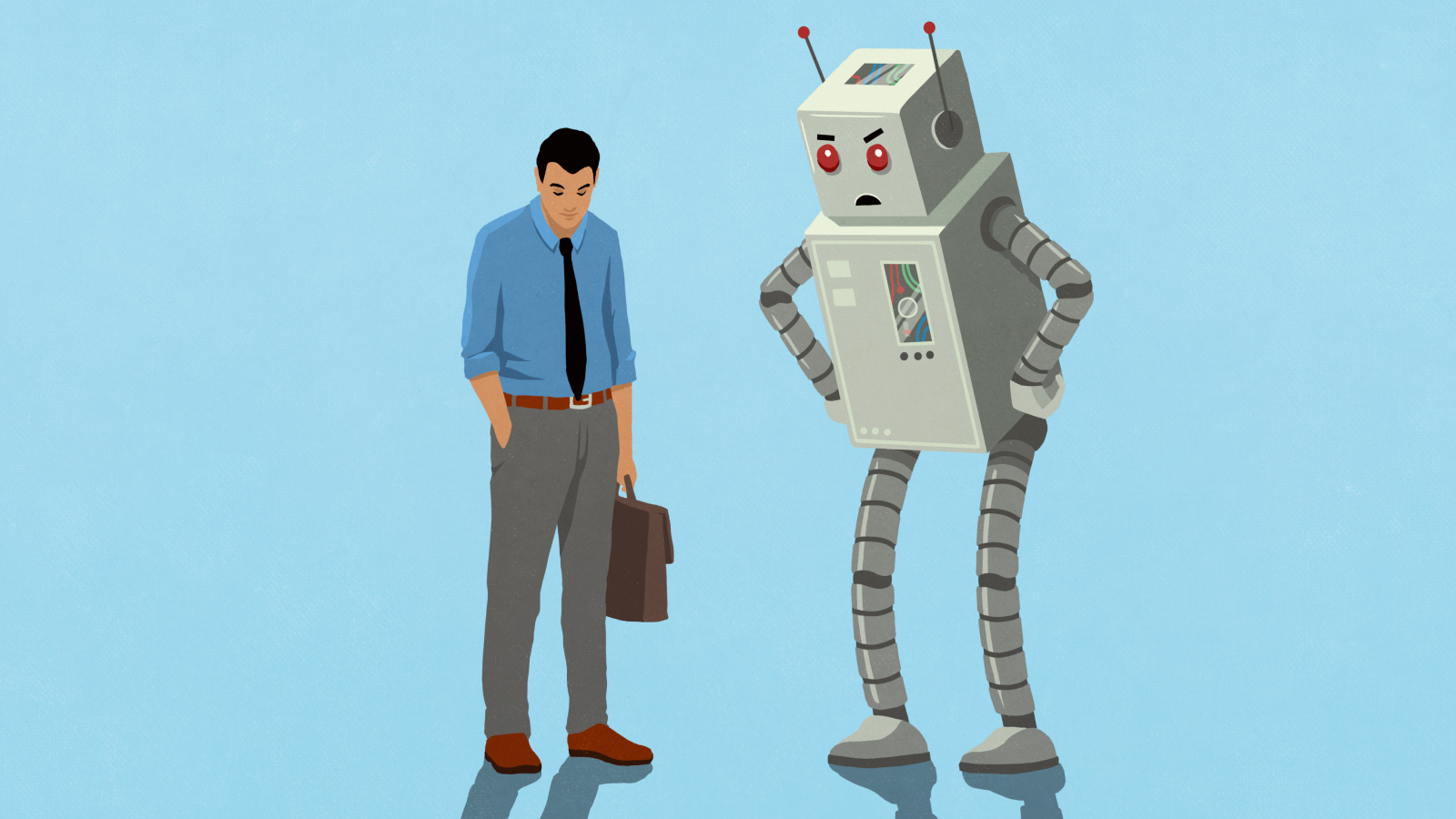
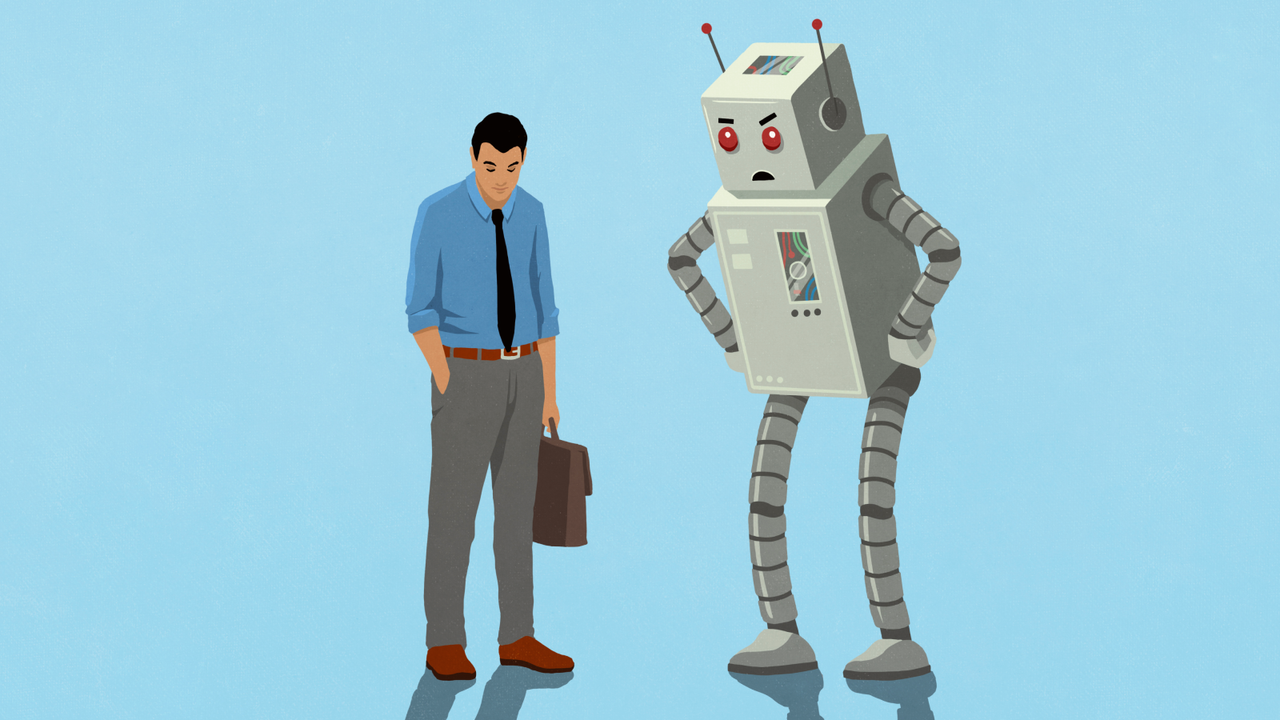
    When artificial intelligence (AI) is allowed to behave more like a human communicator, it becomes a more effective debate partner that reaches more accurate conclusions, scientists have found.

    Human communication is full of stops and starts, impassioned interruptions, unsure silences and ambiguity. AI, on the other hand, adheres to the formal communication style of computers — processing a command, formulating a response, delivering the output, and waiting patiently for the next command.

    “Current multi-agent systems often feel artificial because they lack the messy, real-time dynamics of human conversation,” co-author of the study Yuichi Sei, Professor, Department of Infomatics at Tokyo’s University of Electro-Communications in Japan, said in a statement. “We wanted to see if giving agents the social cues we take for granted, like the ability to interrupt or the choice to stay quiet, would improve their collective intelligence.”


    You may like

    Sei and his co-workers proposed a framework where large language models (LLMs) didn’t have to adhere to the back-and-forth, wait-your-turn nature of computerized communication. Instead, an LLM could be assigned a personality that let it speak out of turn, cut off other speakers, or remain silent.

    Beyond creating more humanlike methods of AI communication, the researchers found that such flexibility led to higher accuracy on complex tasks compared with that of standard LLMs.

    A host of personalities

    The team started by integrating traits into LLMs according to the “big five” personality types from classical psychology — openness, conscientiousness, extraversion, agreeableness and neuroticism.

    The next step was to reprogram text-based LLMs to process responses sentence by sentence rather than generating a full response before the next one started, which allowed the researchers to carefully control the flow of discussion. They also compared the results between three conversational settings — fixed speaking order, dynamic speaking order, and dynamic speaking order with interruption enabled. The latter enabled the model to calculate an “urgency score” that let them grasp and process the conversation in real time.

    Get the world’s most fascinating discoveries delivered straight to your inbox.

    The urgency score was expressed in the conversation in several ways. If it spiked because the model spotted an error or a point it considered critical to the discussion, it could raise this immediately, regardless of whose turn it was to speak. If the urgency score was low, the model interpreted this as having nothing concrete to add, which reduced conversational “clutter” for its own sake.

    Sei told Live Science that the team evaluated performance using 1,000 questions from the Massive Multitask Language Understanding (MMLU) benchmark — an AI reasoning test encompassing questions from different areas, including science and humanities.

    “When one agent initially gave an incorrect answer, overall accuracy was 68.7% with fixed-order discussion, 73.8% with dynamic order, and 79.2% when interruption was allowed,” Sei said. “In a more difficult setting where two agents initially gave incorrect answers, accuracy was 37.2% with fixed order, 43.7% with dynamic order, and 49.5% with interruption enabled.”

    Having shown that the personality-driven models were more accurate than traditional AI chatbots, Sei now wants to explore how these new findings can be applied in practice. The team plans to apply their findings to various domains featuring creative collaboration to understand the dynamic around how “digital personalities” can play out in decision-making within a group.

    “In the future, AI agents will increasingly interact with one another and with humans in collaborative settings,” said Sei. “Our findings suggest that discussions shaped by personality, including the ability to interrupt when necessary, may sometimes produce better outcomes than strictly turn-based and uniformly polite exchanges.”

    View Original Source Here

    Share. Facebook Twitter Pinterest LinkedIn Tumblr Email

    Related Posts

    NASA’s Artemis moon exploration programme is getting a major makeover

    February 28, 2026

    Growing more complex by the day: How should journalists govern use of AI in their products?

    February 28, 2026

    Science history: Carbon-14 is discovered, opening a window into past civilizations — Feb. 27, 1940

    February 27, 2026

    When we interbred with Neanderthals, they were usually the fathers

    February 27, 2026

    The Mojave Desert is a hot spot for off-roading: Why a judge shut down more than 2,200 miles of trails

    February 26, 2026

    Fresh look at Apollo moon rocks solves decades-old mystery about the moon’s magnetic field

    February 26, 2026
    popular posts

    Call of Duty: Modern Warfare 2 PC System Requirements Announced

    What to Watch: Rise, Only Murders In the Building, The

    Soul Glo Share Graphic Video for New Song “If I

    Exposing C-section babies to vaginal fluid boosts their development

    My Jamaican Culture Has Helped Me Not Fear Aging

    TV Fanatic Eyebrow Raisers: More Bad Boys Please, Fewer Long-Gestating Seasons & More

    Interview with David and Nicole Korson, Authors of Diners, Dives, & Drive-Bys

    Categories
    • Books (3,746)
    • Cover Story (12)
    • Events (22)
    • Fashion (2,704)
    • Interviews (55)
    • Movies (3,044)
    • Music (3,333)
    • News (169)
    • Politics (8)
    • Science (4,898)
    • Technology (3,040)
    • Television (3,769)
    • Uncategorized (932)
    Archives
    Facebook X (Twitter) Instagram Pinterest YouTube Reddit TikTok
    © 2026 Top Buzz Magazine. All rights reserved. All articles, images, product names, logos, and brands are property of their respective owners. All company, product and service names used in this website are for identification purposes only. Use of these names, logos, and brands does not imply endorsement unless specified. By using this site, you agree to the Terms of Use and Privacy Policy.

    Type above and press Enter to search. Press Esc to cancel.

    We use cookies on our website to give you the most relevant experience by remembering your preferences and repeat visits. By clicking “Accept”, you consent to the use of ALL the cookies.
    Do not sell my personal information.
    Cookie SettingsAccept
    Manage consent

    Privacy Overview

    This website uses cookies to improve your experience while you navigate through the website. Out of these, the cookies that are categorized as necessary are stored on your browser as they are essential for the working of basic functionalities of the website. We also use third-party cookies that help us analyze and understand how you use this website. These cookies will be stored in your browser only with your consent. You also have the option to opt-out of these cookies. But opting out of some of these cookies may affect your browsing experience.
    Necessary
    Always Enabled
    Necessary cookies are absolutely essential for the website to function properly. These cookies ensure basic functionalities and security features of the website, anonymously.
    CookieDurationDescription
    cookielawinfo-checkbox-analytics11 monthsThis cookie is set by GDPR Cookie Consent plugin. The cookie is used to store the user consent for the cookies in the category "Analytics".
    cookielawinfo-checkbox-functional11 monthsThe cookie is set by GDPR cookie consent to record the user consent for the cookies in the category "Functional".
    cookielawinfo-checkbox-necessary11 monthsThis cookie is set by GDPR Cookie Consent plugin. The cookies is used to store the user consent for the cookies in the category "Necessary".
    cookielawinfo-checkbox-others11 monthsThis cookie is set by GDPR Cookie Consent plugin. The cookie is used to store the user consent for the cookies in the category "Other.
    cookielawinfo-checkbox-performance11 monthsThis cookie is set by GDPR Cookie Consent plugin. The cookie is used to store the user consent for the cookies in the category "Performance".
    viewed_cookie_policy11 monthsThe cookie is set by the GDPR Cookie Consent plugin and is used to store whether or not user has consented to the use of cookies. It does not store any personal data.
    Functional
    Functional cookies help to perform certain functionalities like sharing the content of the website on social media platforms, collect feedbacks, and other third-party features.
    Performance
    Performance cookies are used to understand and analyze the key performance indexes of the website which helps in delivering a better user experience for the visitors.
    Analytics
    Analytical cookies are used to understand how visitors interact with the website. These cookies help provide information on metrics the number of visitors, bounce rate, traffic source, etc.
    Advertisement
    Advertisement cookies are used to provide visitors with relevant ads and marketing campaigns. These cookies track visitors across websites and collect information to provide customized ads.
    Others
    Other uncategorized cookies are those that are being analyzed and have not been classified into a category as yet.
    SAVE & ACCEPT