
Close Menu
    Facebook X (Twitter) Instagram Pinterest YouTube LinkedIn TikTok
    TopBuzzMagazine.com
    Facebook X (Twitter) Instagram Pinterest YouTube LinkedIn TikTok
    • Home
    • Movies
    • Television
    • Music
    • Fashion
    • Books
    • Science
    • Technology
    • Cover Story
    • Contact
      • About
      • Amazon Disclaimer
      • Terms and Conditions
      • Privacy Policy
      • DMCA / Copyrights Disclaimer
    TopBuzzMagazine.com
    Home»Science»Scientists find potential missing link between gum disease and worse heart health
    Science

    Scientists find potential missing link between gum disease and worse heart health

    By AdminJuly 21, 2026
    Facebook Twitter Pinterest LinkedIn Tumblr Email
    Scientists find potential missing link between gum disease and worse heart health


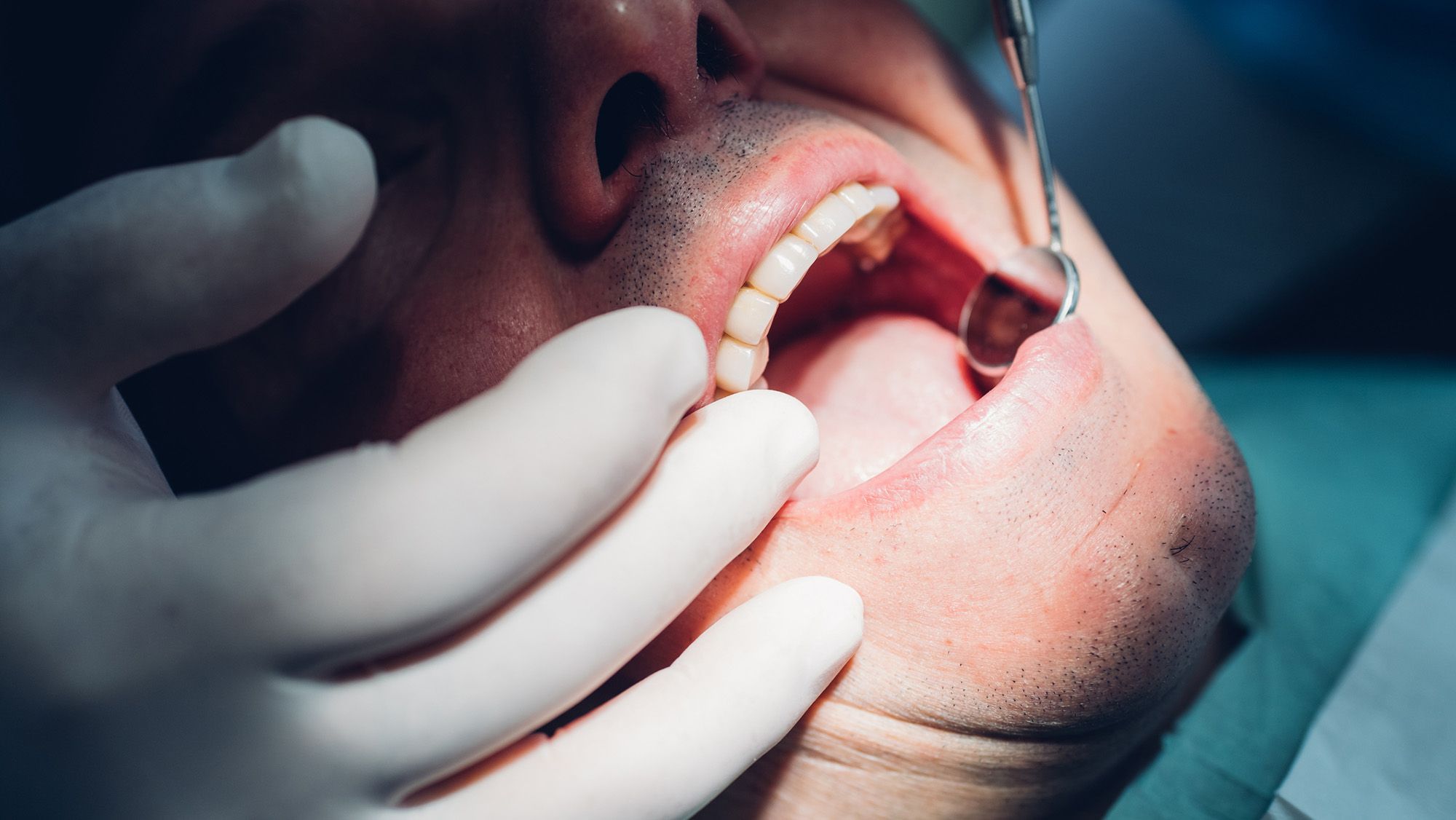
    A common culprit behind severe gum disease may also stiffen and narrow the heart’s aortic valve, preliminary research suggests. This may help explain links between gum problems and poor heart health.

    Scientists have long linked severe gum disease to inflammation throughout the body and a higher risk of heart problems, including coronary artery disease, which can raise the risk of heart attack. Studies have also found that treating gum disease can improve blood-vessel health.

    Now, researchers suggest that Porphyromonas gingivalis, one of the main bacteria involved in severe gum disease, may also contribute to calcific aortic valve disease (CAVD), a condition in which calcium builds up in the heart’s aortic valve. The findings were presented in July at a meeting of the American Heart Association in Boston and have not been peer-reviewed yet.

    Latest Videos From

    Dr. Elena Aikawa, a professor of medicine at Harvard Medical School who was not involved in the study, said the findings “fit well with our current understanding of calcific aortic valve disease as an active, inflammation-driven disease rather than simply wear and tear of the valve.”

    Periodontal disease is likely just one contributor among many, rather than the sole cause of CAVD, she added. But the study does identify a biologically plausible pathway linking oral health to heart health that could open new opportunities for prevention and treatment.


    You may like

    How mouth bacteria harm the heart

    CAVD affects millions of people worldwide, and there are no approved drugs that slow or stop its progression. As the disease worsens, people may develop fatigue, shortness of breath and chest pain, and in severe cases, they often require valve-replacement surgery.

    Meanwhile, prior to the new research, it was known that bacteria and inflammatory signals from the mouth can sometimes enter the bloodstream and affect distant tissues, said Richard Lamont, chair of oral immunology and infectious diseases at the University of Louisville School of Dentistry, who was not involved in the study. Over time, these effects can accrue and gradually reshape how the immune system behaves, he said.

    Get the world’s most fascinating discoveries delivered straight to your inbox.

    An illustration of a human heart

    In CAVD, calcium builds up in the aortic valve, which connects the left side of the heart to the large artery that carries oxygen-rich blood to the body.

    (Image credit: Noctiluxx via Getty Images)

    P. gingivalis is known to be particularly destructive to gum tissue, causing lots of inflammation, and it’s been tied to cardiovascular disease in the past. To see if the bacterium might be directly impacting heart health, researchers at Fuwai Hospital in Beijing looked for P. gingivalis in aortic valve tissue removed during valve-replacement surgery. They compared this diseased tissue to valves that weren’t calcified.

    The calcified valves contained much higher levels of P. gingivalis DNA and proteins made by the bacterium. “P. gingivalis was about 30 times more abundant in calcified valves than in non-calcified valves,” study first author Dr. Chenyang Li, a doctoral candidate at Fuwai Hospital, told Live Science in an email.

    To test whether the bacteria might directly contribute to valve damage, Li and colleagues injected live P. gingivalis into the bloodstreams of healthy lab mice. The bacteria reached the animals’ aortic valves, triggering inflammation, calcium buildup and narrowing of the valve.


    What to read next

    “We were surprised to see valve calcification even in mice without high cholesterol,” Li said. “This suggests P. gingivalis may directly contribute to valve disease, beyond traditional cardiovascular risk factors.”

    A comparison group of mice was given antibiotics before the injection and had less bacteria in their aortic valves and slower disease progression. Meanwhile, mice injected with dead P. gingivalis bacteria did not show any changes in their aortic valves.

    The researchers traced the changes in the mice’s hearts to interleukin-1 beta, a signalling molecule that normally helps the body fight infections. Exposure to P. gingivalis ramped up the production of this molecule, and in turn, the immune signal switched on genes that pushed healthy valve cells to behave more like bone-building cells, which is a hallmark of CAVD. This switch causes the cells to lay down calcium in the surrounding valve tissue.

    When the scientists blocked interleukin-1 beta in some mice, the animals developed much less valve calcification even when the bacteria reached the valve. Lamont said that the mouse experiments strengthen the case that there’s a biological mechanism directly linking gum and heart diseases. However, he cautioned that mice have very different oral microbiomes than humans, making it difficult to know whether the exact same process occurs in people.

    That said, the team also saw the same pattern in human valve cells grown in the lab. Exposure to P. gingivalis increased inflammation and calcium buildup among the cells, while blocking interleukin-1 beta blunted those effects.

    Both Aikawa and Lamont said more research is needed to confirm the relationship in humans. The findings give researchers a new pathway to explore for future treatments, raising questions of whether targeting inflammatory signals like interleukin-1 beta could help slow the progression of this widespread heart disease.

    This article is for informational purposes only and is not meant to offer medical advice.


    What do you know about the body’s hardest-working muscle? Find out with our heart quiz!

    View Original Source Here

    Share. Facebook Twitter Pinterest LinkedIn Tumblr Email

    Related Posts

    Giving bees a probiotic diet could help protect them from extreme temperatures

    July 20, 2026

    Can Ozempic prevent or treat cancer? It’s way too soon to say, an expert cautions

    July 20, 2026

    Researchers develop methods for breaking down forever chemicals

    July 19, 2026

    Not a housekeeper, but a ‘vilica’: The many responsibilities of Roman-era female farm managers were overlooked by historians

    July 19, 2026

    Half a century of sightings reveals Ireland remains a haven for endangered basking sharks

    July 18, 2026

    RNA can form large 3D structures, suggesting a new role for the molecule in the origin of life on Earth

    July 18, 2026
    popular posts

    The 60-Second Podcast Takes a Short Break—But Wait, There’s More

    These Are the Best Fragrances of 2022, According to Beauty

    Why Is It So Hard to Make Vegan Fish?

    The first 3D-printed rocket is about to launch into space

    Chris Rock sets release date for Netflix’s first live comedy

    Interview with Bonnie Traymore, Author of The Bluff

    It’s What’s Inside Cast on the Netflix Film: Podcast

    Categories
    • Books (3,991)
    • Cover Story (18)
    • Events (25)
    • Fashion (2,839)
    • Interviews (61)
    • Movies (3,287)
    • Music (3,583)
    • News (181)
    • Politics (13)
    • Science (5,142)
    • Technology (3,284)
    • Television (4,015)
    • Uncategorized (932)
    Archives
    Facebook X (Twitter) Instagram Pinterest YouTube Reddit TikTok
    © 2026 Top Buzz Magazine. All rights reserved. All articles, images, product names, logos, and brands are property of their respective owners. All company, product and service names used in this website are for identification purposes only. Use of these names, logos, and brands does not imply endorsement unless specified. By using this site, you agree to the Terms of Use and Privacy Policy.

    Type above and press Enter to search. Press Esc to cancel.

    We use cookies on our website to give you the most relevant experience by remembering your preferences and repeat visits. By clicking “Accept”, you consent to the use of ALL the cookies.
    Do not sell my personal information.
    Cookie SettingsAccept
    Manage consent

    Privacy Overview

    This website uses cookies to improve your experience while you navigate through the website. Out of these, the cookies that are categorized as necessary are stored on your browser as they are essential for the working of basic functionalities of the website. We also use third-party cookies that help us analyze and understand how you use this website. These cookies will be stored in your browser only with your consent. You also have the option to opt-out of these cookies. But opting out of some of these cookies may affect your browsing experience.
    Necessary
    Always Enabled
    Necessary cookies are absolutely essential for the website to function properly. These cookies ensure basic functionalities and security features of the website, anonymously.
    CookieDurationDescription
    cookielawinfo-checkbox-analytics11 monthsThis cookie is set by GDPR Cookie Consent plugin. The cookie is used to store the user consent for the cookies in the category "Analytics".
    cookielawinfo-checkbox-functional11 monthsThe cookie is set by GDPR cookie consent to record the user consent for the cookies in the category "Functional".
    cookielawinfo-checkbox-necessary11 monthsThis cookie is set by GDPR Cookie Consent plugin. The cookies is used to store the user consent for the cookies in the category "Necessary".
    cookielawinfo-checkbox-others11 monthsThis cookie is set by GDPR Cookie Consent plugin. The cookie is used to store the user consent for the cookies in the category "Other.
    cookielawinfo-checkbox-performance11 monthsThis cookie is set by GDPR Cookie Consent plugin. The cookie is used to store the user consent for the cookies in the category "Performance".
    viewed_cookie_policy11 monthsThe cookie is set by the GDPR Cookie Consent plugin and is used to store whether or not user has consented to the use of cookies. It does not store any personal data.
    Functional
    Functional cookies help to perform certain functionalities like sharing the content of the website on social media platforms, collect feedbacks, and other third-party features.
    Performance
    Performance cookies are used to understand and analyze the key performance indexes of the website which helps in delivering a better user experience for the visitors.
    Analytics
    Analytical cookies are used to understand how visitors interact with the website. These cookies help provide information on metrics the number of visitors, bounce rate, traffic source, etc.
    Advertisement
    Advertisement cookies are used to provide visitors with relevant ads and marketing campaigns. These cookies track visitors across websites and collect information to provide customized ads.
    Others
    Other uncategorized cookies are those that are being analyzed and have not been classified into a category as yet.
    SAVE & ACCEPT