
Close Menu
    Facebook X (Twitter) Instagram Pinterest YouTube LinkedIn TikTok
    TopBuzzMagazine.com
    Facebook X (Twitter) Instagram Pinterest YouTube LinkedIn TikTok
    • Home
    • Movies
    • Television
    • Music
    • Fashion
    • Books
    • Science
    • Technology
    • Cover Story
    • Contact
      • About
      • Amazon Disclaimer
      • Terms and Conditions
      • Privacy Policy
      • DMCA / Copyrights Disclaimer
    TopBuzzMagazine.com
    Home»Science»How do summers differ between Earth’s hemispheres?
    Science

    How do summers differ between Earth’s hemispheres?

    By AdminNovember 2, 2026
    Facebook Twitter Pinterest LinkedIn Tumblr Email
    How do summers differ between Earth’s hemispheres?


    Follow us

    Add us as a preferred source on Google


    Subscribe to our newsletter


    Each year, Earth’s Northern and Southern hemispheres cycle through four seasons, including summer.

    Given that the hemispheres are symmetric about the equator, you may think that, on both sides of the world, summers should be similar – both in terms of their climate and factors like their length. But are Northern and Southern hemisphere summers really the same?

    Climate experts tell Live Science that they differ quite a bit — and that comes with a clear recommendation for sun enthusiasts.

    Latest Videos FromLive Science

    The most obvious difference is that Northern and Southern summers happen at different times. According to NASA, this arises because Earth’s axis is tilted 23.4 degrees relative to the plane of our planet’s orbit around the sun.

    This tilt causes the Northern and Southern hemispheres to be oriented toward the sun at different times throughout the year. Between the Northern Hemisphere’s summer solstice and autumnal equinox, the Northern Hemisphere is oriented toward the sun, resulting in summer, and vice versa in the Southern Hemisphere.


    You may like

    This means that summers between the Northern and Southern hemispheres sit six months out of sync with each other — with Northern summers spanning late June to late September and Southern ones going from late December to late March. (Summers are also defined meteorologically, or relative to changes in weather phenomena, as being the hottest months of the year. Under this definition, Northern summers run from June to August, and Southern ones go from December to February.)
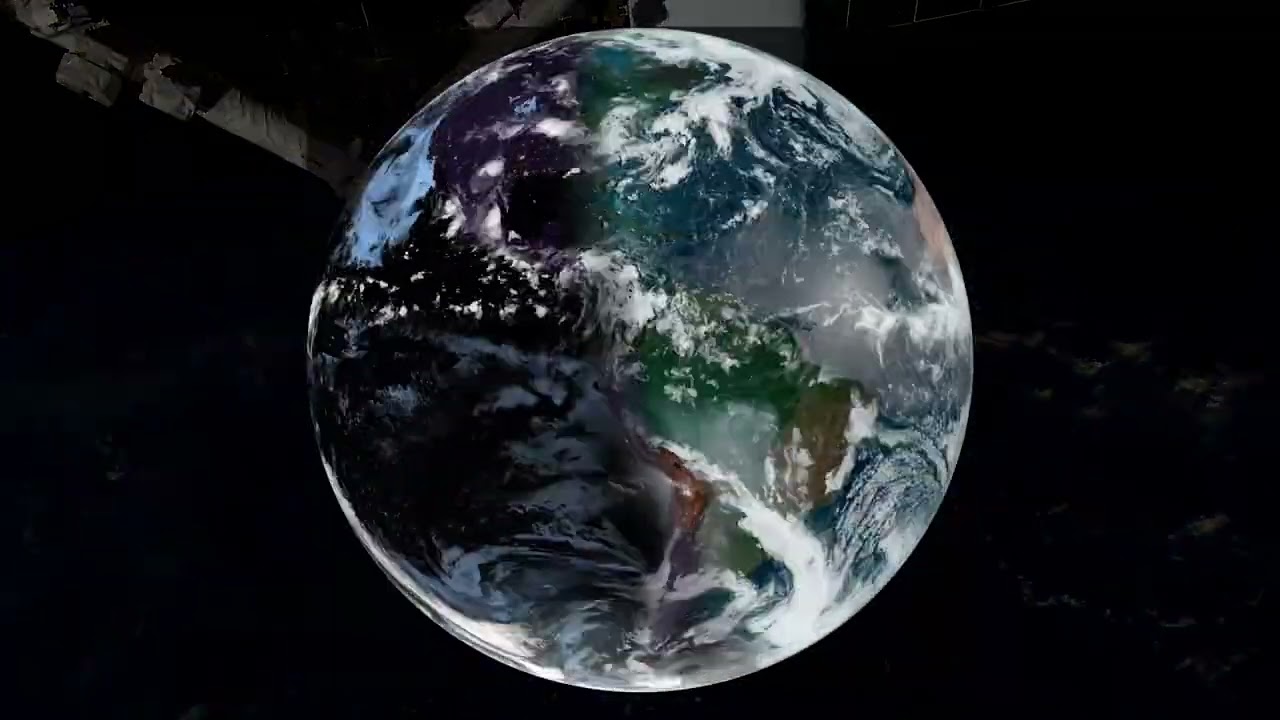
    NOAA Satellites View 2023 Summer and Winter Solstices – YouTube
    NOAA Satellites View 2023 Summer and Winter Solstices - YouTube


    Watch On

    Northern summers are longer

    Another difference between Northern and Southern summers is their duration. According to NASA, Northern Hemisphere summers are, on average, 4.5 days longer than Southern Hemisphere summers. (This is with respect to the astronomical definition; meteorologically, Northern summers are longer than Southern ones by two days in non-leap years, but this is due to February being the calendar’s shortest month.)

    Feed your curiosity with an exclusive mystery every week, solved with science and delivered direct to your inbox before it’s seen anywhere else.

    The 4.5-day difference occurs because Earth’s orbit around the sun is slightly elliptical instead of perfectly circular, according to NASA. Consequently, Earth’s orbital velocity (the speed at which our planet hurtles around the sun) isn’t constant.

    A view of Mars from deep space.

    Earth isn’t the only planet that experiences such a dichotomy in the duration of seasons. According to NASA, Mars does too: Northern summers on the Red Planet are 24 Martian days — 24.66 Earth days — longer than the planet’s Southern Hemisphere’s summers. This greater difference is because Mars’s orbit is much more oval-shaped than Earth’s.

    (Image credit: NASA/ESA)

    During the Northern Hemisphere’s summer, Earth is farther away from the sun and thus moving more slowly, said Georg Feulner, a senior researcher at the Potsdam Institute for Climate Impact Research in Germany. This is due to Kepler’s second law of planetary motion, he added.

    This means that at aphelion ‪(the point at which our planet is farthest from the sun)‬ Earth is traveling at 18.2 miles per second (29.3 kilometers per second). This jumps to 18.82 miles per second (30.29 km/s) at perihelion ‪(the point when Earth is closest to the sun ) which occurs during Southern summers.


    What to read next

    While this may seem like a tiny difference in speed, it causes our planet’s path around the sun to be 53,686 miles (86,400 kilometers) shorter in a 24-hour-interval at aphelion compared with at perihelion. In other words, Earth covers more “ground” at aphelion than at perihelion over a 24-hour-interval. “Therefore, the time between the Northern Hemisphere spring and autumn equinoxes is longer than the time between the Southern Hemisphere spring and autumn equinoxes, Feulner told Live Science in an email.

    Northern summers are hotter

    A third point of difference is that Northern summers are typically hotter than Southern ones. A 2015 study in the journal Climate Dynamics showed the precise value of this depends on whether temperatures are measured on the surface air, land or ocean, and the latitude at which they’re taken. Nonetheless, when averaged over all domains and latitudes, Northern summers are 7.83 degrees Fahrenheit (4.35 degrees Celsius) hotter than Southern ones.

    So what’s behind this? Earth’s changing distance from the sun isn’t important. If it were, Earth’s aphelion crossing during Northern summers should make them cooler than Southern summers during the perihelion crossing. Instead, several other factors are responsible.

    One is the Northern Hemisphere’s bigger fraction of land compared to its large water bodies like oceans. “Land has a lower heat capacity than water and so increases temperature more for a given heating than water does,” Richard Seager, a professor at Columbia University’s Lamont-Doherty Earth Observatory, told Live Science in an email. As a result, the many inland sites in the Northern Hemisphere heat up rapidly and have higher summer temperatures, according to the UCAR Center for Science Education.

    Additionally, Seager said, another difference lies in the way heat is distributed through air and water. The solar heat that land receives warms only the first few feet of the atmosphere, while the heat water absorbs gets mixed throughout its depths. This makes the Southern Hemisphere — with its larger fraction of water — cooler over summer.

    The second factor for the North Hemisphere’s higher summer temperatures are cross-equatorial ocean currents. Such currents cross the equator, transferring water and heat between the hemispheres. The primary current is the Atlantic Meridional Overturning Current (AMOC). “The AMOC transports heat from the SH [Southern Hemisphere] to the NH in the Atlantic,” Feulner said. This warms Northern oceans and seas, which, in turn, heats up adjacent land-masses.

    So, Northern Hemisphere summers are longer and hotter than Southern ones. If you want to stretch out your summer, you now know where to go.


    How much do you know about our blue planet? Test your terran knowledge with our Earth quiz!

    TOPICS


    Life’s Little Mysteries

    View Original Source Here

    Share. Facebook Twitter Pinterest LinkedIn Tumblr Email

    Related Posts

    Gravity can reconnect like the sun's magnetic field, a fresh look at Einstein's equations reveals

    November 10, 2026

    ZWO Seestar S30 Plus review

    November 10, 2026

    'The first species we might be able to communicate with, interact with vocally, might be a bird': An animal researcher explains how she decoded birdsong

    November 10, 2026

    Highly active Russian volcano plays peek-a-boo with an astronaut

    November 10, 2026

    Iran war helps fuel global drop in fossil fuel emissions — but theres a catch

    November 10, 2026

    Nazca infant had rare, fatal birth defect that left her with one central eye 1,600 years ago

    November 9, 2026
    popular posts

    Europe’s JUICE Jupiter Probe Successfully Completes Historic Lunar Flyby

    Yeast cells can produce drugs for treatment of psychotic disorders

    Astronomers identify 116,000 new variable stars

    Dealing With a Pet’s Diagnosis? You Don’t Have to Face

    The unexpected ways your skin impacts your health and longevity

    Machine Head Cancel Spring 2023 US Tour

    Pee-wee Herman Actor Paul Reubens’ Cause of Death Revealed

    Categories
    • Books (4,212)
    • Cover Story (27)
    • Events (29)
    • Fashion (2,976)
    • Interviews (65)
    • Movies (3,515)
    • Music (3,815)
    • News (189)
    • Politics (19)
    • Science (5,338)
    • Technology (3,516)
    • Television (4,257)
    • Uncategorized (933)
    Archives
    Facebook X (Twitter) Instagram Pinterest YouTube Reddit TikTok
    © 2026 Top Buzz Magazine. All rights reserved. All articles, images, product names, logos, and brands are property of their respective owners. All company, product and service names used in this website are for identification purposes only. Use of these names, logos, and brands does not imply endorsement unless specified. By using this site, you agree to the Terms of Use and Privacy Policy.

    Type above and press Enter to search. Press Esc to cancel.

    We use cookies on our website to give you the most relevant experience by remembering your preferences and repeat visits. By clicking “Accept”, you consent to the use of ALL the cookies.
    Do not sell my personal information.
    Cookie SettingsAccept
    Manage consent

    Privacy Overview

    This website uses cookies to improve your experience while you navigate through the website. Out of these, the cookies that are categorized as necessary are stored on your browser as they are essential for the working of basic functionalities of the website. We also use third-party cookies that help us analyze and understand how you use this website. These cookies will be stored in your browser only with your consent. You also have the option to opt-out of these cookies. But opting out of some of these cookies may affect your browsing experience.
    Necessary
    Always Enabled
    Necessary cookies are absolutely essential for the website to function properly. These cookies ensure basic functionalities and security features of the website, anonymously.
    CookieDurationDescription
    cookielawinfo-checkbox-analytics11 monthsThis cookie is set by GDPR Cookie Consent plugin. The cookie is used to store the user consent for the cookies in the category "Analytics".
    cookielawinfo-checkbox-functional11 monthsThe cookie is set by GDPR cookie consent to record the user consent for the cookies in the category "Functional".
    cookielawinfo-checkbox-necessary11 monthsThis cookie is set by GDPR Cookie Consent plugin. The cookies is used to store the user consent for the cookies in the category "Necessary".
    cookielawinfo-checkbox-others11 monthsThis cookie is set by GDPR Cookie Consent plugin. The cookie is used to store the user consent for the cookies in the category "Other.
    cookielawinfo-checkbox-performance11 monthsThis cookie is set by GDPR Cookie Consent plugin. The cookie is used to store the user consent for the cookies in the category "Performance".
    viewed_cookie_policy11 monthsThe cookie is set by the GDPR Cookie Consent plugin and is used to store whether or not user has consented to the use of cookies. It does not store any personal data.
    Functional
    Functional cookies help to perform certain functionalities like sharing the content of the website on social media platforms, collect feedbacks, and other third-party features.
    Performance
    Performance cookies are used to understand and analyze the key performance indexes of the website which helps in delivering a better user experience for the visitors.
    Analytics
    Analytical cookies are used to understand how visitors interact with the website. These cookies help provide information on metrics the number of visitors, bounce rate, traffic source, etc.
    Advertisement
    Advertisement cookies are used to provide visitors with relevant ads and marketing campaigns. These cookies track visitors across websites and collect information to provide customized ads.
    Others
    Other uncategorized cookies are those that are being analyzed and have not been classified into a category as yet.
    SAVE & ACCEPT