
Close Menu
    Facebook X (Twitter) Instagram Pinterest YouTube LinkedIn TikTok
    TopBuzzMagazine.com
    Facebook X (Twitter) Instagram Pinterest YouTube LinkedIn TikTok
    • Home
    • Movies
    • Television
    • Music
    • Fashion
    • Books
    • Science
    • Technology
    • Cover Story
    • Contact
      • About
      • Amazon Disclaimer
      • Terms and Conditions
      • Privacy Policy
      • DMCA / Copyrights Disclaimer
    TopBuzzMagazine.com
    Home»Science»How did the Concorde fly so fast?
    Science

    How did the Concorde fly so fast?

    By AdminNovember 10, 2024
    Facebook Twitter Pinterest LinkedIn Tumblr Email
    How did the Concorde fly so fast?


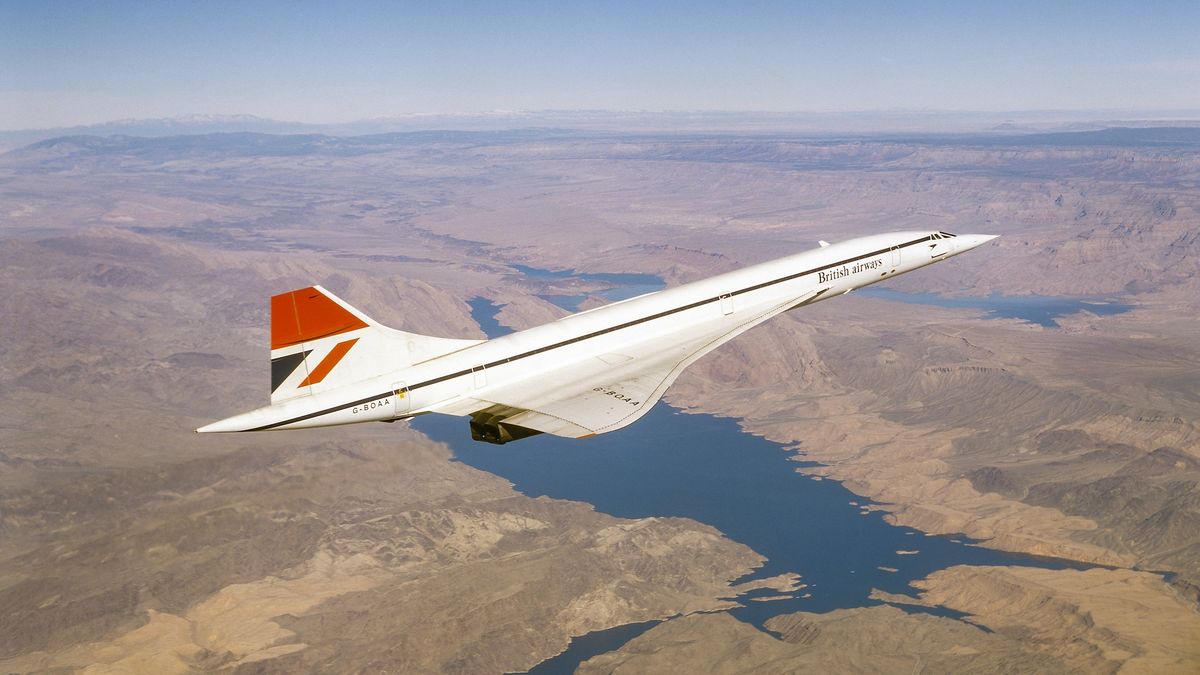
    The Concorde passenger jet set a record when it flew between New York City and London in 2 hours, 52 minutes, 59 seconds. The supersonic plane could fly at more than twice the speed of sound. But just how fast was this aircraft, and what made it so speedy?

    The jet, which flew from 1976 to 2003, had a takeoff speed of 250 mph (402 km/h) and an average cruising speed of 1,350 mph (2,173 km/h). In comparison, a Boeing 737-700, one of the most common airplane models flown nowadays, has a takeoff speed of 173 mph (278 km/h) and a cruising speed of 514 mph (828 km/h).

    To achieve high speeds, Concorde engineers needed to design a craft that could handle both low-speed scenarios, such as takeoff and landing, as well as supersonic cruising speeds, Tony Farina, an adjunct assistant professor of aviation engineering at Embry‑Riddle Aeronautical University in Florida, told Live Science in an email.

    “A wing designed for efficient performance supersonically is typically very poor at providing the lift needed at slow speeds when taking off and landing,” Farina said. To reduce drag, supersonic wings are typically thinner and more swept back, Farina said, compared to standard wings which are thicker to more easily provide lift.

    Providing lift was especially important because the faster an aircraft goes, the more drag force it experiences, said Bob van der Linden, an aeronautics curator at the Smithsonian’s National Air and Space Museum in Washington, D.C. Essentially, faster aircraft experience more forces that oppose lift.

    Related: Can a commercial airplane do a barrel roll?

    One way Concorde engineers solved this problem was by designing an aircraft with a sleek body, Farina said, including a narrow passenger cabin and extended tail cone. Engineers also used a delta wing, a wing profile that’s typically reserved for fighter jets, van der Linden said.

    Get the world’s most fascinating discoveries delivered straight to your inbox.

    “The delta wing had very good high-speed characteristics, as well as very fine low-speed characteristics,” he told Live Science.
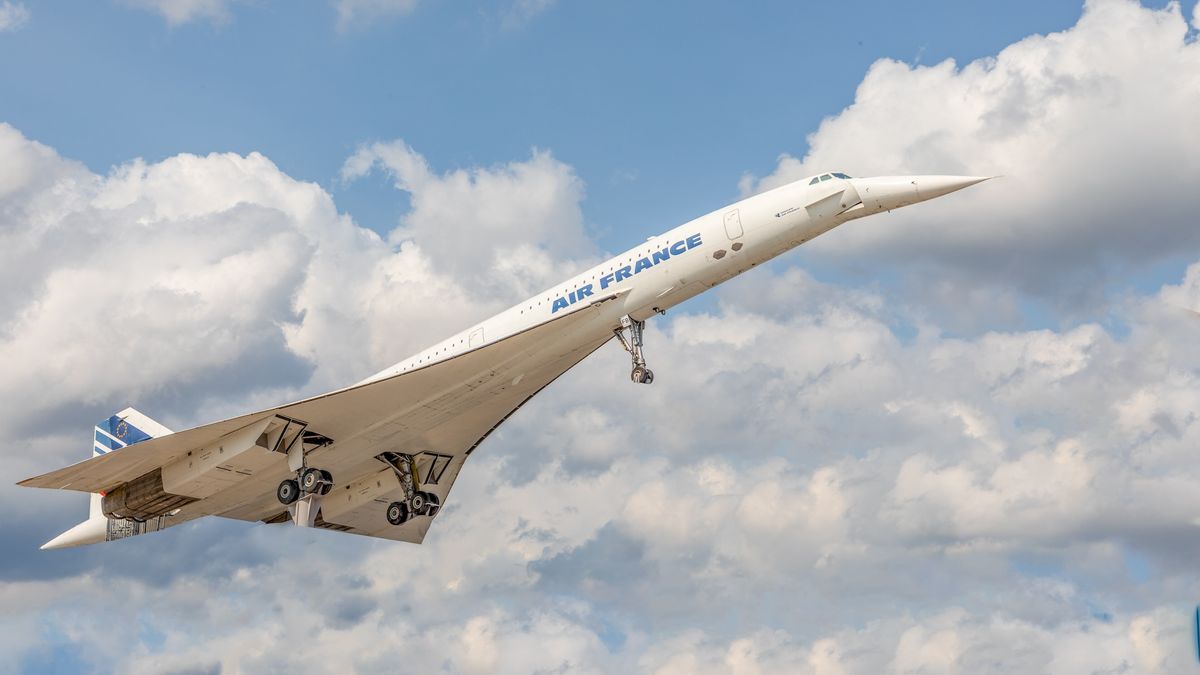
    The Concorde had a “droop nose,” nicknamed the “droop snoot,” which helped the pilot see their surroundings during takeoff and landing. (Image credit: travelview via Getty Images)

    This triangle-shaped wing design worked to reduce drag on the aircraft, but it did introduce an interesting design quirk. Because of the aircraft’s body shape, Concorde jets needed to land with their nose angled higher into the air than a traditional commercial airliner. This made it very difficult for pilots to see where they were going, van der Linden said.

    “They actually had to devise a way for the nose to go down [mechanically],” he said. “In the business, we call this a ‘droop snoot.'”

    Supersonic aircraft designed today are now circumventing this issue using technology that the Concorde didn’t have access to when it was designed in the 1960s, Farina said.

    “Under development now, the Boom Supersonic XB-1 aircraft uses an augmented vision system (cameras and screens) to avoid the need for drooping the nose,” Farina said.

    In addition to having a sleek design, Concorde jets were powered by four turbo jet engines that individually generated 18.7 tons of thrust and burned nearly 7,000 gallons (26,000 liters) of jet fuel per hour. In comparison, the Boeing 737-800 uses 850 gallons (3,200 liters) of jet fuel per hour.

    The Concorde also increased the thrust created by its engines, using a device called an afterburner, van der Linden said.

    “Afterburners are really used on fighter jets or very-high-speed bombers, and what it does is simply dump raw fuel into the exhaust flame,” he said. “It pushes the aircraft forward even faster, but your fuel consumption rate goes through the roof.”

    Ultimately, it was the fuel cost associated with the Concorde that made it a commercial failure, van der Linden said. Other incidents, including the fatal Air France Flight 4590 crash in 2000, made matters worse.

    “It is a gorgeous airplane,” van der Linden said. “But to keep it that fast, you need a lot of power. Power means a lot of fuel, and a lot of fuel means a bigger price.”

    View Original Source Here

    Share. Facebook Twitter Pinterest LinkedIn Tumblr Email

    Related Posts

    New fear unlocked: Runaway black holes

    January 29, 2026

    Renpho Lynx smart ring review: Too expensive for what it has to offer

    January 28, 2026

    Amazon is getting drier as deforestation shuts down atmospheric rivers

    January 28, 2026

    After switch from ULA, SpaceX set for speedy national security launch

    January 27, 2026

    1,400-year-old Zapotec tomb discovered in Mexico features enormous owl sculpture symbolizing death

    January 27, 2026

    Mars’s gravity may help control Earth’s cycle of ice ages

    January 26, 2026
    popular posts

    Apex Legends Mobile Soft Launch Set for Next Week

    Alabama Shakes Share First New Song in 10 Years: Listen

    A Plan to Rebuild Gaza Lists Nearly 30 Companies. Many Say They’re Not Involved

    American Horror Stories Casts Alicia Silverstone, Bella Thorne, and Damn

    Motorola Edge+ (2022) With Snapdragon 8 Gen 1 SoC, Smart

    Kendall Jenner Paired an Ab-Baring Green Sports Bra and Leggings

    Donald Trump’s Social Media Firm Said to Receive Subpoenas From

    Categories
    • Books (3,683)
    • Cover Story (10)
    • Events (21)
    • Fashion (2,670)
    • Interviews (55)
    • Movies (2,982)
    • Music (3,270)
    • News (168)
    • Politics (7)
    • Science (4,835)
    • Technology (2,977)
    • Television (3,707)
    • Uncategorized (932)
    Archives
    Facebook X (Twitter) Instagram Pinterest YouTube Reddit TikTok
    © 2026 Top Buzz Magazine. All rights reserved. All articles, images, product names, logos, and brands are property of their respective owners. All company, product and service names used in this website are for identification purposes only. Use of these names, logos, and brands does not imply endorsement unless specified. By using this site, you agree to the Terms of Use and Privacy Policy.

    Type above and press Enter to search. Press Esc to cancel.

    We use cookies on our website to give you the most relevant experience by remembering your preferences and repeat visits. By clicking “Accept”, you consent to the use of ALL the cookies.
    Do not sell my personal information.
    Cookie SettingsAccept
    Manage consent

    Privacy Overview

    This website uses cookies to improve your experience while you navigate through the website. Out of these, the cookies that are categorized as necessary are stored on your browser as they are essential for the working of basic functionalities of the website. We also use third-party cookies that help us analyze and understand how you use this website. These cookies will be stored in your browser only with your consent. You also have the option to opt-out of these cookies. But opting out of some of these cookies may affect your browsing experience.
    Necessary
    Always Enabled
    Necessary cookies are absolutely essential for the website to function properly. These cookies ensure basic functionalities and security features of the website, anonymously.
    CookieDurationDescription
    cookielawinfo-checkbox-analytics11 monthsThis cookie is set by GDPR Cookie Consent plugin. The cookie is used to store the user consent for the cookies in the category "Analytics".
    cookielawinfo-checkbox-functional11 monthsThe cookie is set by GDPR cookie consent to record the user consent for the cookies in the category "Functional".
    cookielawinfo-checkbox-necessary11 monthsThis cookie is set by GDPR Cookie Consent plugin. The cookies is used to store the user consent for the cookies in the category "Necessary".
    cookielawinfo-checkbox-others11 monthsThis cookie is set by GDPR Cookie Consent plugin. The cookie is used to store the user consent for the cookies in the category "Other.
    cookielawinfo-checkbox-performance11 monthsThis cookie is set by GDPR Cookie Consent plugin. The cookie is used to store the user consent for the cookies in the category "Performance".
    viewed_cookie_policy11 monthsThe cookie is set by the GDPR Cookie Consent plugin and is used to store whether or not user has consented to the use of cookies. It does not store any personal data.
    Functional
    Functional cookies help to perform certain functionalities like sharing the content of the website on social media platforms, collect feedbacks, and other third-party features.
    Performance
    Performance cookies are used to understand and analyze the key performance indexes of the website which helps in delivering a better user experience for the visitors.
    Analytics
    Analytical cookies are used to understand how visitors interact with the website. These cookies help provide information on metrics the number of visitors, bounce rate, traffic source, etc.
    Advertisement
    Advertisement cookies are used to provide visitors with relevant ads and marketing campaigns. These cookies track visitors across websites and collect information to provide customized ads.
    Others
    Other uncategorized cookies are those that are being analyzed and have not been classified into a category as yet.
    SAVE & ACCEPT