
Close Menu
    Facebook X (Twitter) Instagram Pinterest YouTube LinkedIn TikTok
    TopBuzzMagazine.com
    Facebook X (Twitter) Instagram Pinterest YouTube LinkedIn TikTok
    • Home
    • Movies
    • Television
    • Music
    • Fashion
    • Books
    • Science
    • Technology
    • Cover Story
    • Contact
      • About
      • Amazon Disclaimer
      • Terms and Conditions
      • Privacy Policy
      • DMCA / Copyrights Disclaimer
    TopBuzzMagazine.com
    Home»Science»Chemotherapy hurts nerve cells — but psilocybin might help protect them, mouse study hints
    Science

    Chemotherapy hurts nerve cells — but psilocybin might help protect them, mouse study hints

    By AdminSeptember 4, 2026
    Facebook Twitter Pinterest LinkedIn Tumblr Email
    Chemotherapy hurts nerve cells — but psilocybin might help protect them, mouse study hints


    Chemotherapy can save lives, but for many cancer patients, it leaves behind a painful legacy: damaged nerves that burn, tingle or go numb. Now, researchers report that a psychedelic compound may protect those nerves — not through its mind-bending effects, but by helping neurons keep their internal power supplies moving.

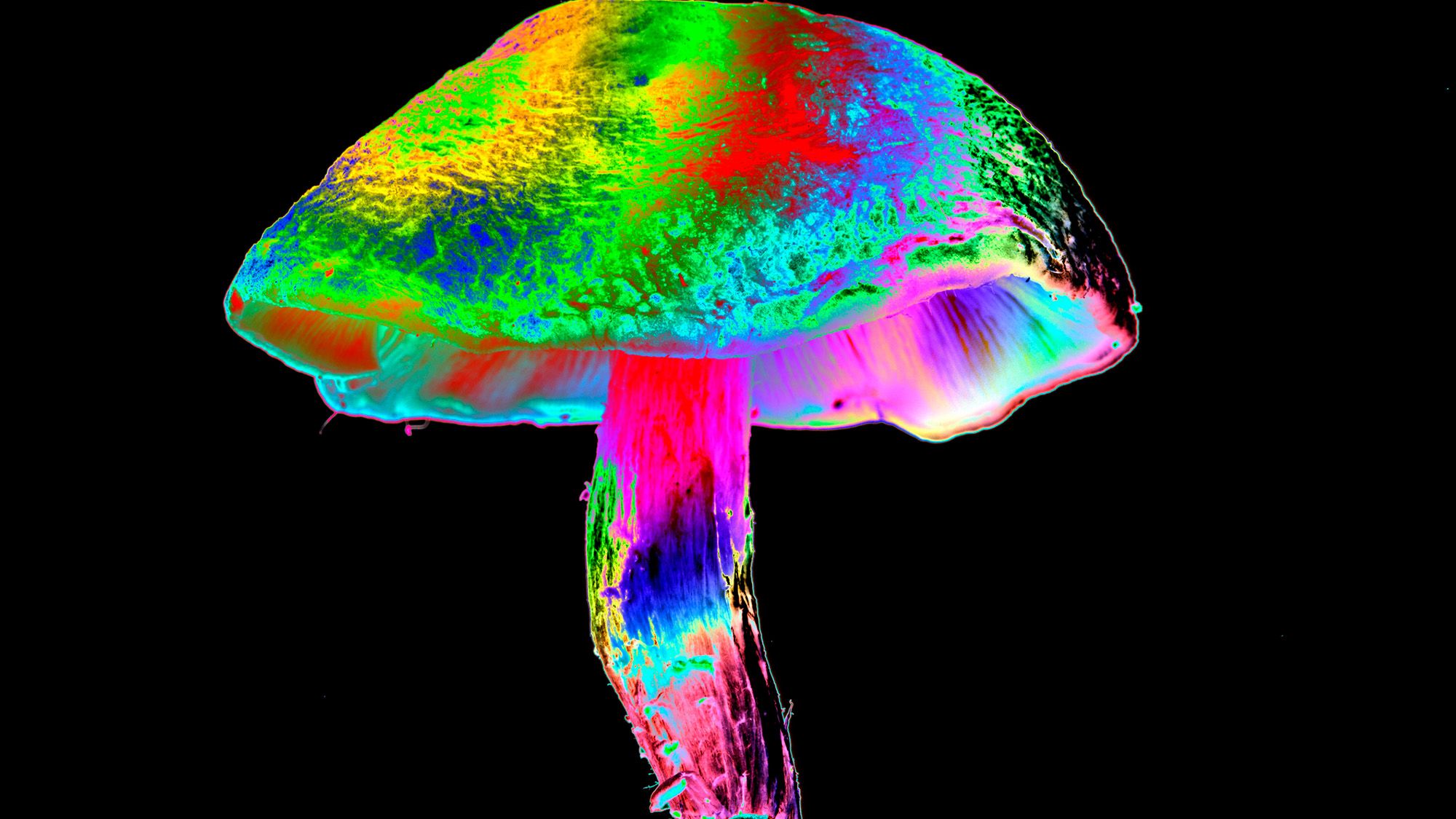
    A new mouse study, published Thursday (Sept. 3) in the journal Science, suggests that psilocybin, the psychedelic compound in “magic mushrooms,” may help prevent this painful and sometimes permanent side effect of chemotherapy, known as chemotherapy-induced peripheral neuropathy (CIPN).

    In experiments in mice, psilocybin prevented nerve damage from CIPN that can cause pain, numbness and heightened sensitivity to cold and touch. Two doses of the drug given prior to chemotherapy garnered protection that persisted through as many as six rounds of the cancer treatment, according to the study.

    Latest Videos FromLive Science

    CIPN affects roughly one-third to one-half of people receiving certain chemotherapies, said Dr. Thomas Strouse, a professor of clinical psychiatry and a neuropathy researcher at UCLA who was not involved in the study. In severe cases, the neuropathy can force doctors to reduce or stop chemotherapy. It can also contribute to mobility problems, which raise the risk of falls and fractures.

    “It’s a big deal, big problem,” Strouse said. Researchers have been searching for a way to prevent it for a long time, he added.


    You may like

    Keeping nerve cells fueled

    Initially, the researchers weren’t looking for a neuropathy treatment, said study co-author Dr. Moran Amit, a cancer surgeon and researcher at The University of Texas MD Anderson Cancer Center. His team was investigating whether compounds that promote neuroplasticity — the nervous system’s ability to change and adapt — might protect nerves and improve existing cancer treatments.

    After testing several psychedelic compounds, they “very early on focused on psilocybin because this was the most effective one” for relieving neuropathy symptoms, Amit told Live Science. The psychedelic has been explored as a treatment for psychiatric disorders such as depression, in which it might promote “hyperconnectivity” between certain brain regions.

    Get the world’s most fascinating discoveries delivered straight to your inbox.

    In the new study, protection against CIPN emerged as an unexpected effect of the drug.

    To investigate how that protection worked, the researchers studied mice treated with cisplatin, a chemotherapy drug known to frequently cause neuropathy. Two doses of psilocybin — given nine days and two days before the first chemotherapy session, respectively — completely prevented the mice from developing hypersensitivity, and it also reduced cold sensitivity and preserved nerve endings in the skin.

    The team then ran experiments using human sensory neurons and peripheral nerves that had been removed during surgery. These analyses pointed to a possible explanation: a process called mitochondrial trafficking.


    What to read next

    Mitochondria generate the energy that cells need, but neurons present an unusual logistical challenge. Some peripheral nerves extend over enormous distances, so their mitochondria must be transported along structural tracks, called microtubules, to reach far-flung nerve endings. That in itself is an energy-intensive process.

    Amit compared those microtubules to a railroad system: Chemotherapy can damage both the mitochondria themselves and the tracks they travel along.

    In further experiments with human neurons, the team found that cisplatin depleted mitochondria and ATP (adenosine triphosphate) — cells’ main energy currency — from the wires that extend from nerves. Psilocybin didn’t restore the mitochondria’s overall energy-producing capacity. Instead, it preserved their ability to travel and maintained their normal levels of ATP production, specifically within the nerve projections. That suggests the drug may help keep energy supplies where they’re needed most.

    The effect depended on the serotonin receptor 5-HT2A, which is responsible for many of psilocybin’s psychedelic effects as well. Intriguingly, a compound called TBG — designed to activate 5-HT2A without causing hallucinations — also protected mice from neuropathy.

    However, Amit cautioned that psilocybin’s psychedelic effects may also be playing a neuroprotective role that we have yet to understand, so it’s unclear if the effect should be avoided in humans.

    A woman sitting in a medical chair receives an IV.

    Chemotherapy can have a wide range of side effects, including nerve damage.

    (Image credit: Fly View Productions via Getty Images)

    A long way from patients

    Strouse noted that mitochondrial damage in CIPN isn’t a new idea. “What’s novel is looking at psilocybin as a protectant,” he said.

    He also cautioned that different chemotherapy drugs may cause neuropathy through distinct mechanisms, so the protection demonstrated against one chemotherapy drug may not translate broadly.

    Most importantly, the researchers have not shown that psilocybin prevents neuropathy in humans yet.

    “The main thing is that it was never tested for this indication specifically in a systematic way in humans,” Amit said. His team is now preparing a clinical trial at MD Anderson to test the approach. The research is part of MD Anderson’s Cancer Neuroscience Program, a multidisciplinary effort that studies interactions between cancer and the nervous system, with an emphasis on improving patients’ quality of life.

    Human trials will need to establish both the effectiveness and safety of using psilocybin for this purpose, Strouse said, particularly before oncologists would consider giving a psychedelic drug alongside cancer treatment.

    This article is for informational purposes only and is not meant to offer medical advice.

    Heles, M., Pasvolsky, L., Sathishkumar, H., Naara, S., Vu, Y., Stewart, C. L., Xie, T., Gleber-Netto, F. O., McCarthy, W., Yaniv, D., Kamal, S. S., Elahi, H., Zhu, P., Uhelski, M. L., Chatwin, J., Lara, A., Stolley, D. L., Migden, M. R., Lee, Z.-H., … Amit, M. (2026). Psilocybin prevents chemotherapy-induced peripheral neuropathy through mitochondrial trafficking preservation. Science, 393(6815). https://doi.org/10.1126/science.aec6116

    View Original Source Here

    Share. Facebook Twitter Pinterest LinkedIn Tumblr Email

    Related Posts

    New map of a male fly central nervous system includes all 166,000 neurons — and enables direct comparisons to female fly brain

    September 3, 2026

    Diagnostic dilemma: A woman got a lung transplant — and ended up with a peanut allergy, too

    September 3, 2026

    1,600-year-old skeleton found in a giant jar in Bulgaria may belong to Roman who hid there to escape enemy attack

    September 2, 2026

    ‘Biggest surprise of my life’: Homeowner discovers Denmark’s largest Viking Age silver hoard in their backyard

    September 2, 2026

    Man rummaging in Polish junkyard finds a 1,800-year-old shield holding the cremated remains of a Vandal warrior

    September 1, 2026

    ‘This is probably the safest time to be playing the sport of football’: Concussion expert explains why viral CTE study may not be as scary as it sounds

    September 1, 2026
    popular posts

    Food from urban agriculture has carbon footprint 6 times larger

    SHINY HAPPY PEOPLE Is a Must-Watch to Understand Today’s Book

    A Samsung researcher introduces the Tiny Recursion Model, a 7M-parameter model that was able to outperform LLMs 10,000x larger like o3-mini on specific problems (Carl Franzen/VentureBeat)

    From embryo to evolution: Insights from the head of lizards

    Disasters Displaced More Than 3 Million Americans in 2022

    New research turns what we know about bird window strikes

    A view to killing off stereotypes

    Categories
    • Books (4,081)
    • Cover Story (21)
    • Events (28)
    • Fashion (2,884)
    • Interviews (63)
    • Movies (3,377)
    • Music (3,674)
    • News (184)
    • Politics (17)
    • Science (5,193)
    • Technology (3,374)
    • Television (4,108)
    • Uncategorized (932)
    Archives
    Facebook X (Twitter) Instagram Pinterest YouTube Reddit TikTok
    © 2026 Top Buzz Magazine. All rights reserved. All articles, images, product names, logos, and brands are property of their respective owners. All company, product and service names used in this website are for identification purposes only. Use of these names, logos, and brands does not imply endorsement unless specified. By using this site, you agree to the Terms of Use and Privacy Policy.

    Type above and press Enter to search. Press Esc to cancel.

    We use cookies on our website to give you the most relevant experience by remembering your preferences and repeat visits. By clicking “Accept”, you consent to the use of ALL the cookies.
    Do not sell my personal information.
    Cookie SettingsAccept
    Manage consent

    Privacy Overview

    This website uses cookies to improve your experience while you navigate through the website. Out of these, the cookies that are categorized as necessary are stored on your browser as they are essential for the working of basic functionalities of the website. We also use third-party cookies that help us analyze and understand how you use this website. These cookies will be stored in your browser only with your consent. You also have the option to opt-out of these cookies. But opting out of some of these cookies may affect your browsing experience.
    Necessary
    Always Enabled
    Necessary cookies are absolutely essential for the website to function properly. These cookies ensure basic functionalities and security features of the website, anonymously.
    CookieDurationDescription
    cookielawinfo-checkbox-analytics11 monthsThis cookie is set by GDPR Cookie Consent plugin. The cookie is used to store the user consent for the cookies in the category "Analytics".
    cookielawinfo-checkbox-functional11 monthsThe cookie is set by GDPR cookie consent to record the user consent for the cookies in the category "Functional".
    cookielawinfo-checkbox-necessary11 monthsThis cookie is set by GDPR Cookie Consent plugin. The cookies is used to store the user consent for the cookies in the category "Necessary".
    cookielawinfo-checkbox-others11 monthsThis cookie is set by GDPR Cookie Consent plugin. The cookie is used to store the user consent for the cookies in the category "Other.
    cookielawinfo-checkbox-performance11 monthsThis cookie is set by GDPR Cookie Consent plugin. The cookie is used to store the user consent for the cookies in the category "Performance".
    viewed_cookie_policy11 monthsThe cookie is set by the GDPR Cookie Consent plugin and is used to store whether or not user has consented to the use of cookies. It does not store any personal data.
    Functional
    Functional cookies help to perform certain functionalities like sharing the content of the website on social media platforms, collect feedbacks, and other third-party features.
    Performance
    Performance cookies are used to understand and analyze the key performance indexes of the website which helps in delivering a better user experience for the visitors.
    Analytics
    Analytical cookies are used to understand how visitors interact with the website. These cookies help provide information on metrics the number of visitors, bounce rate, traffic source, etc.
    Advertisement
    Advertisement cookies are used to provide visitors with relevant ads and marketing campaigns. These cookies track visitors across websites and collect information to provide customized ads.
    Others
    Other uncategorized cookies are those that are being analyzed and have not been classified into a category as yet.
    SAVE & ACCEPT