

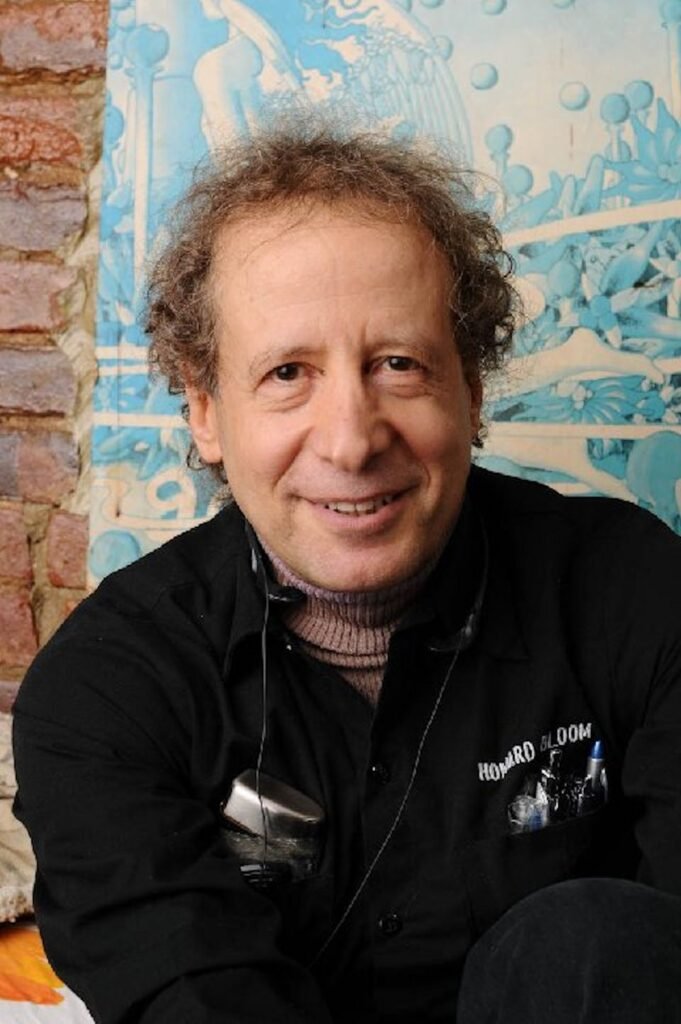
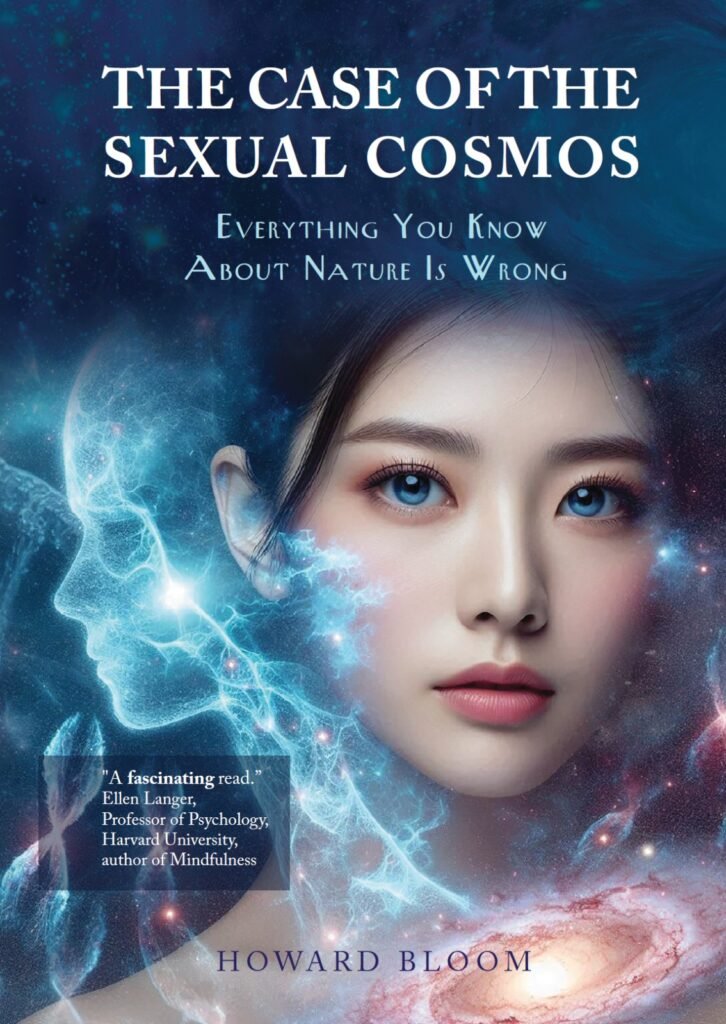
Howard Bloom has built a career on asking big, unsettling questions about how the world works. In The Case of the Sexual Cosmos, he delivers one of his most expansive visions yet—an argument that challenges conventional ideas about evolution, physics, and the very direction of the universe.
This is not just a book about science. It is an attempt to redefine how we understand life, creativity, and cosmic purpose.
A Universe Driven by More Than Survival
At the heart of Bloom’s argument is a powerful shift in perspective. Traditional interpretations of evolution emphasize survival—organisms adapting to stay alive in competitive environments. Bloom builds on the work of Charles Darwin but places special emphasis on sexual selection, the force behind traits meant to attract attention rather than ensure survival.
In this framework:
- Life is not only about endurance
- It is also about expression, display, and attraction
Bloom extends this idea far beyond biology. He suggests that the same forces shaping courtship and competition in nature also drive:
- Human creativity
- Cultural innovation
- Technological progress
The Meaning of a “Sexual Cosmos”
The phrase “sexual cosmos” is Bloom’s way of describing a universe energized by:
- The push to stand out
- The drive to create novelty
- The urge to connect and compete
“Sexual” here is not limited to reproduction. It represents a broader principle: the generation of difference, beauty, and complexity through interaction and selection.
Under this lens:
- Art becomes a signal
- Ideas become displays
- Civilizations become arenas of creative competition
The cosmos itself becomes a stage where complexity continually emerges and evolves.
Life as an Engine of Complexity
One of the book’s central themes is that life doesn’t simply cope with the universe—it transforms it.
Bloom traces a sweeping narrative:
- Early life forms reshaping Earth’s atmosphere
- Organisms turning environmental stress into opportunity
- Increasing layers of complexity building over time
Rather than viewing nature as a system winding down, he presents it as one that generates structure, innovation, and surprise.
In this view, living systems are not passive inhabitants of the universe. They are active participants in its ongoing development.
Humanity’s Place in the Story
Bloom places human beings within this larger cosmic process. Our defining traits—language, art, ambition, and technology—are seen as natural extensions of the same forces that shaped life from the beginning.
Human culture, in this sense, becomes:
- A continuation of evolutionary display
- A driver of new forms of complexity
- A contributor to the universe’s creative expansion
Rather than separating humanity from nature, Bloom integrates us deeply into it.
An Interdisciplinary Vision
Like Bloom’s earlier works, including The Lucifer Principle and Global Brain, this book moves across multiple fields:
- Evolutionary biology
- Physics
- Psychology
- Cultural history
The result is a unified narrative that connects:
- Microbial life and human societies
- Natural selection and artistic creation
- Physical laws and social dynamics
A New Way to See Nature
The Case of the Sexual Cosmos invites readers to reconsider familiar assumptions:
- That evolution is only about survival
- That complexity is accidental
- That human creativity is separate from natural processes
Instead, Bloom presents a world where:
- Creativity is fundamental
- Competition fuels innovation
- The universe itself encourages growth, diversity, and expression
Conclusion
In The Case of the Sexual Cosmos, Howard Bloom offers a vision of reality that is dynamic, creative, and deeply interconnected. It is a perspective in which life, culture, and the cosmos are all part of the same unfolding story—a story driven not just by necessity, but by the desire to create, to compete, and to shine.
The result is a bold and expansive way of seeing the universe:
not as a system winding down, but as one continually generating new forms of complexity and possibility.
The official website for Howard Bloom may be found at https://www.howardbloom.net