
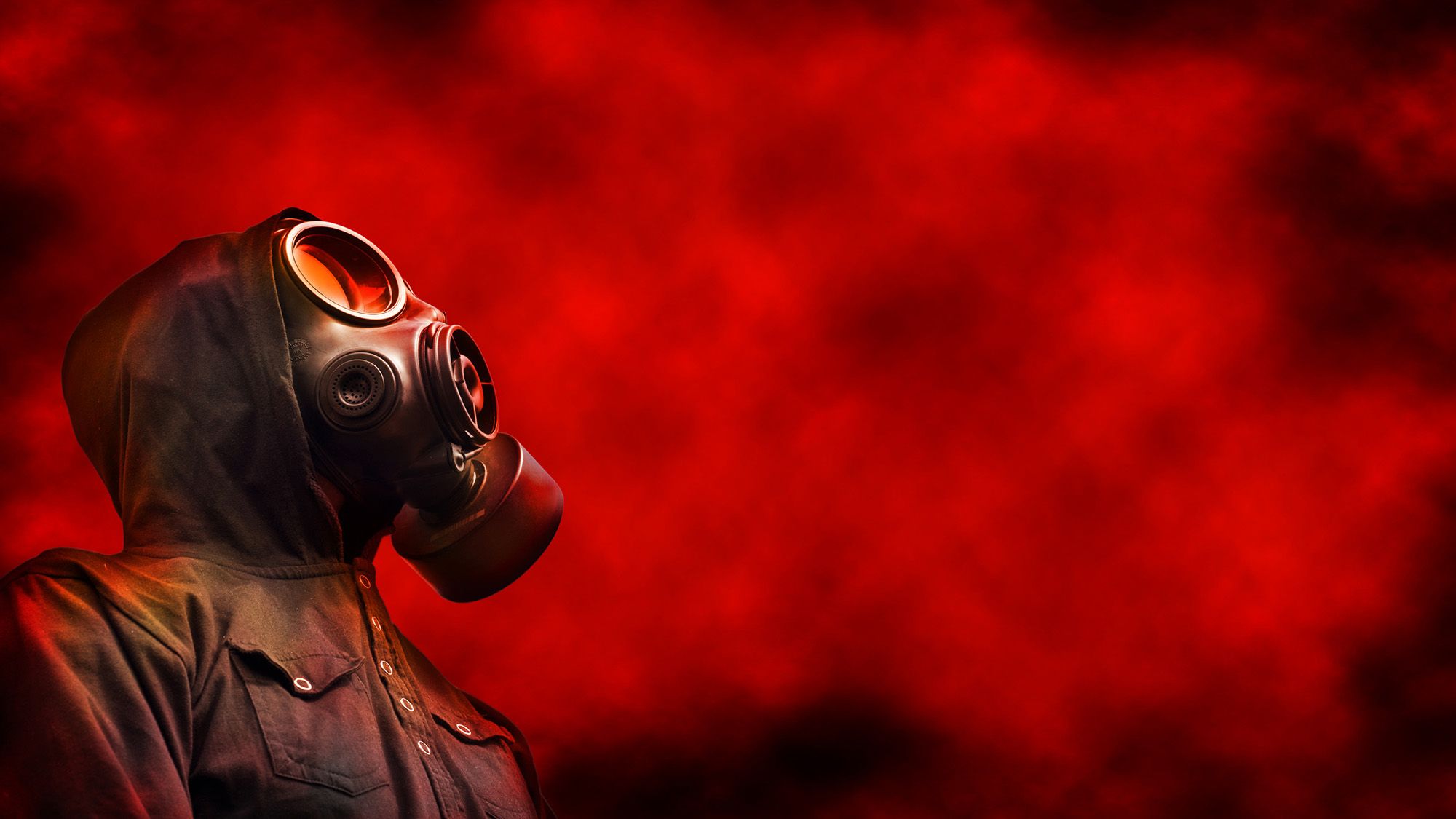
In the event of a global catastrophe, such as a nuclear war, an enormous volcanic eruption or large asteroid strike, the best place to be is Australia, according to a new study.
Researchers looked at the places that were most resilient to global catastrophic risks, which are events that would kill more than 10% of the global population over several months or years.
“These kinds of catastrophes are under-researched” because they are not very likely, study first author Florian Ulrich Jehn, a researcher at FernUniversität in Hagen, Germany, told Live Science. “That makes them easy to ignore.”
Latest Videos FromLive Science
But they are still possible — and no country would be unaffected if they occurred, he said. And some places are more vulnerable than others.
In the new study, published Aug. 23 in the journal Global Challenges, researchers analyzed studies across a variety of disciplines such as food security, biological weapons, and volcanism, to identify potential global catastrophic risks and the factors that helped communities to endure them in the past or on a smaller scale. They also brought in subject experts to add discipline-specific papers to their database.
The team identified three broad types of risk: events that would block out sunlight, such as nuclear war or a huge volcano explosion); events that destroy global infrastructure, such as a geomagnetic storm or massive cyber attack; and biological hazards, such as natural or human-caused infectious diseases that would kill much of the population.
These events, the authors wrote, would have significant and long-lasting global consequences. Many would result in global famine from crops failing and trade networks falling apart. “The food system is often the thing that gets you,” Jehn said.
Get the world’s most fascinating discoveries delivered straight to your inbox.
A trade-off of risks
The team identified characteristics that made countries more resilient to catastrophe and better able to feed their inhabitants. And while “no single place on Earth” would be resilient against all catastrophic risks, the authors wrote, some would fare better than others.
The team found that wealthier countries and regions with a strong industrial base that are not highly reliant on global trade are better able to weather global disasters.
With a strong industrial base, countries are able to manufacture goods that they cannot import, making them more resilient.
Geography also plays a role. Large islands have an advantage over continents because they can easily isolate, but they also need to have an economy that can at least partially support itself, the researchers said. If an island is highly reliant on international trade, like Japan, it will struggle if global trade networks are disrupted, the study found.
Certain countries and regions are less resilient in the face of some types of catastrophes, even if they are wealthy. For example, countries with nuclear capabilities, such as the U.S., the U.K., France, Israel, Russia, Pakistan, and India, are more at risk of being involved in nuclear war. This makes the Northern Hemisphere, where NATO countries are situated, more vulnerable to nuclear attack than places in the Southern Hemisphere.
There are also fewer volcanoes in the southern half of the globe, while the Southern Hemisphere has more ocean to act as a climate buffer, making countries there more resilient to a huge volcanic eruption, the study found.

Findings showed Australia is the best place to survive an apocalyptic event.
(Image credit: omersukrugoksu via Getty Images)
Global resilience
There are some factors that make all countries better able to endure disasters in general, such as democratic processes and equality, Jehn said.
“When these catastrophes happen, you have to make the right decisions, and this depends on whether your country has functional governance,” Jehn said. “Inequality makes governance worse, because it leads to things like elite rivalries, or less state capacity.”
Australia came out as the best location to weather a catastrophic event that decimated global populations. It is in the Southern Hemisphere, so far away from the most likely location of a nuclear conflict (although the authors warn that it is allied with the U.S., which might increase its risk exposure). It is a major food producer, with diverse climatic zones, and has significant energy infrastructure.
Next best spots are Argentina, Brazil and New Zealand. New Zealand ranks lower than Australia because it has active volcanoes, a small industrial base, and is surrounded by water and vulnerable to tsunamis. Meanwhile, Brazil and Argentina have high levels of inequality and historical political instability, the authors wrote.
They also note that Iceland was a contender for a safe refuge, but its location in the far north makes it vulnerable to temperature shocks if a major incident were to block out sunshine.
The U.S. is not particularly well-placed to weather a global catastrophe, the study found. The country is exposed to the threat of geomagnetic storms because of its location and to nuclear war. The authors also pointed to the country’s poor COVID-19 outcomes, which appeared to be due to “a lack of political will and poor social cohesion.”
David Denkenberger, director at Alliance to Feed the Earth in Disasters (ALLFED) and a researcher at the University of Canterbury in New Zealand, told Live Science that the new study aids our understanding of future risks by considering a wider range of catastrophes.
“No country is resilient to every catastrophe, and this is an important central finding,” he said. “A useful next step would be to quantify the relative likelihood and severity of different catastrophes, and the importance of different resilience factors, because these factors can involve significant trade-offs,” said Denkenberger, who has previously collaborated with Jehn but is not an author on the paper.
How to be more resilient
Even though these global catastrophes are unlikely, it is important to include them on national risk registers and have international trade agreements in place in case they come to pass, Jehn said. “When global catastrophes happen, then you would likely have to restructure the food system — where it is produced, where it is traded,” he said. “The chance to find a good compromise after the catastrophe has happened seems slim.”
Denkenberger echoed his comments. The study, he said, “makes it clear that regional resilience to global catastrophic risk requires investment in practical preparedness, including food-system resilience, critical infrastructure, coordinated trade and governance.”
Jehn, F. U., Rössler, M., Kemp, L., Cassidy, M., Kallenborn, Z., Martínez, J. B. G., Mani, L., & Boyd, M. (2026). No place to hide? Regional resilience and vulnerability to global catastrophic risk. Global Challenges, 10(8), e70146. https://doi.org/10.1002/gch2.70146