
Scientists have finally gotten to the bottom of why astronauts struggle to poop in space, thanks to a new blood test. The findings also reveal an unexpected side effect of this cosmic constipation that may need to be addressed before humans take long-haul trips to Mars and beyond, the study authors say.
As soon as people started living in space, it became apparent that it was harder to go “number two” among the stars than down on Earth — and not just because of how complicated it is to use a space toilet. For most astronauts, this gastrointestinal change is just an inconvenience, but some have to take laxatives to overcome the problem. The drugs are routinely stocked on most space missions, including the recent Artemis II mission.
Constipation is one of several digestive issues astronauts contend with, including bloating, indigestion and acid reflux, according to NASA. And like most other health problems that can affect astronauts, researchers have long suspected that microgravity is the leading cause. However, it has been very hard to prove that hypothesis or understand the other effects that chronic constipation may have on astronauts’ general health.
Latest Videos FromLive Science
In a new NASA-backed study, published June 29 in the journal Nature Communications, researchers analyzed more than 400 blood samples from 52 astronauts who each spent more than two months at a time living on board the International Space Station (ISS). Their stays took place between 2006 and 2018.
In the blood samples, the team looked for specific metabolites — the byproducts of metabolic processes that break down food, drugs and tissue in the body. They identified 40 such compounds, but the most instructive were those that were produced by gut bacteria that help break down proteins in the intestines.

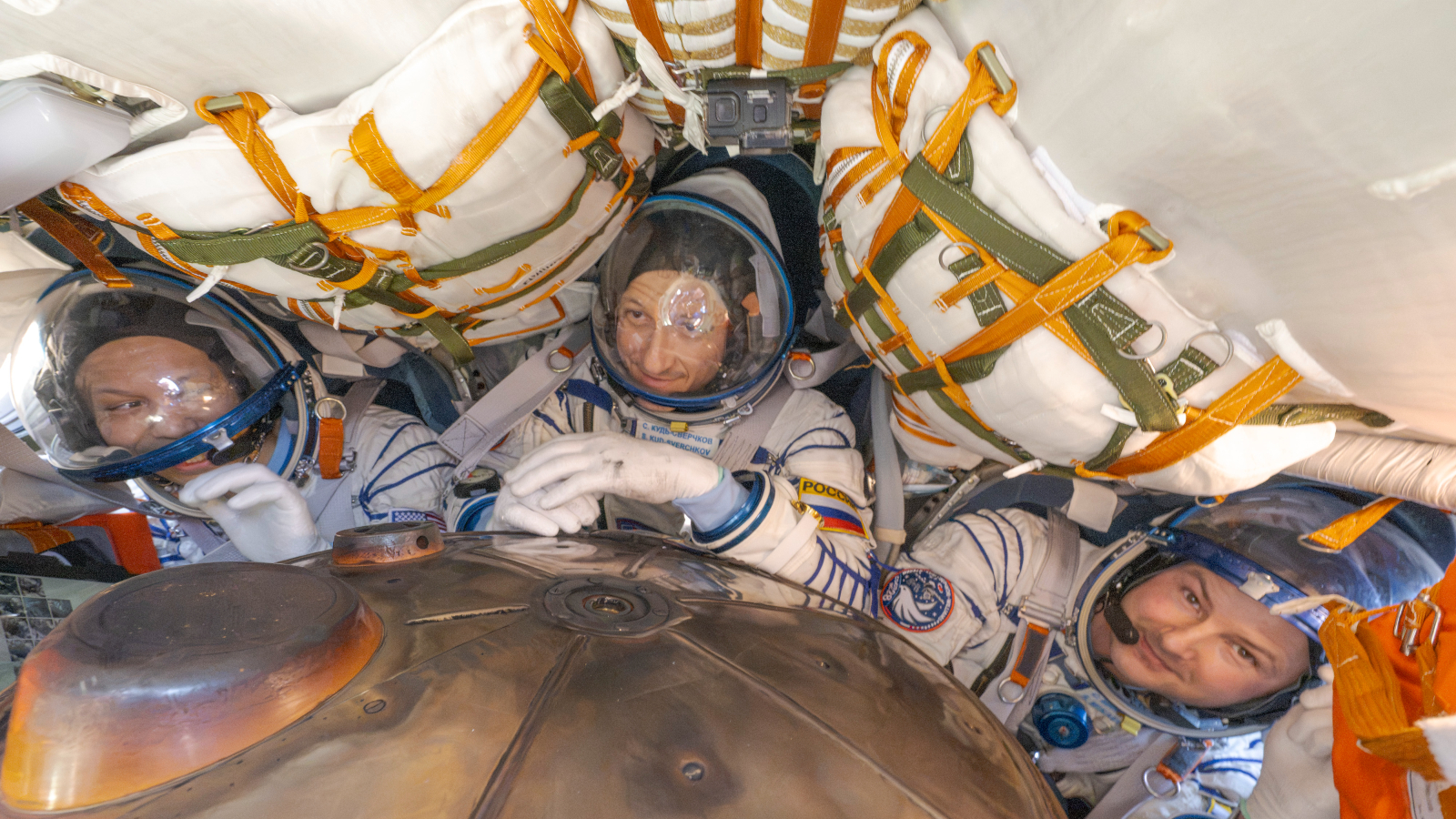
NASA astronauts can experience constipation from the first week of the mission until they return to Earth. This photo shows astronauts Chris Williams (left), Sergey Kud-Sverchkov (center) and Sergei Mikaev (right) shortly after returning from a 241-day stay on the ISS in July 2026.
(Image credit: Bill Ingalls/NASA via Getty Images)
“We see changes in astronauts’ blood samples that indicate that the gut bacteria begin to ferment protein to a greater extent than usual,” study first author Giorgia La Barbera, an associate professor in the University of Copenhagen’s Department of Nutrition, Exercise and Sports, said in a statement. This happens “within weeks after the astronauts arrive in space” and can persist “until they are back on Earth,” she added.
Protein fermentation occurs when gut bacteria begin to break down proteins instead of their usual food group of choice, complex carbohydrates such as fiber. This switch to protein can happen on Earth too, either due to a poor diet or digestive issues, such as lazy bowel syndrome. But in space, it is a sign of something else.
Get the world’s most fascinating discoveries delivered straight to your inbox.
“The lack of gravity in space probably causes food to move more slowly through the intestine,” study co-author Henrik Roager, head of the University of Copenhagen’s Microbiome & Metabolomics research group, said in the statement. That means fiber has more of a chance to be thoroughly broken down, and gut bacteria eventually turn to protein instead.
This slower intestinal movement can “help explain constipation in astronauts,” Roager added.

Going to the bathroom in space is already more complicated than it is on Earth. This photo shows the toilet, or Waste and Hygiene Compartment (WHC), on the ISS.
(Image credit: NASA)
The researchers also found that changes to astronauts’ diets — including altered caffeine, fish and fat intake — may influence constipation, Live Science’s sister site Space.com reported. However, this dietary factor accounts for less than one-third of the observed metabolite changes, leaving microgravity as the primary cause, the researchers noted.
While it is unsurprising that microgravity is the main cause of astronauts’ constipation, the discovery of increased protein fermentation raises some new concerns that may need to be addressed.
“We know that products of protein fermentation [are] often associated with negative health consequences, such as kidney damage, potential effects on mood or reduced ability to focus, among others,” study co-author Lars Ove Dragsted, head of preventive and clinical nutrition at the University of Copenhagen, said in the statement. When it comes to intestinal health, products of protein fermentation have also been linked to inflammation and weakening of the gut’s lining.
Over short periods, these potentially harmful metabolites, including ammonia and hydrogen sulfide, likely pose limited risks to astronauts’ overall health. However, long-duration spaceflights — like those that may one day carry astronauts farther into the solar system — could cause these compounds to rise to harmful levels, the study authors said.

Researchers are concerned that long-haul spaceflights could cause metabolites from protein fermentation to rise to dangerous levels. This photo shows a Russian Soyuz rocket carrying the most recent crew members to the ISS on July 14, 2026.
(Image credit: Bill Ingalls/NASA via Getty Images)
It is also unclear how prolonged periods of reduced gravity, like those experienced by future residents of NASA’s upcoming moon base, could affect protein fermentation in the gut. (The current study covered only brief stints on the ISS.)
“When we plan for longer journeys in space — for example to Mars — countermeasures may be needed to mitigate negative effects of space travel on the intestines,” La Barbera said.
Such countermeasures could include a more fiber-rich diet, probiotic supplements or the promotion of peristalsis — the wave-like muscle contractions that move food, fluids and waste through the digestive tract — either via massage or medication.
“This would help reduce protein fermentation and thus provide a healthy gut environment and avoid negative health consequences,” Roager said.
The researchers think further study of cosmic constipation could shed light on increased protein fermentation in people on Earth, including patients on extended bed rest, who often have constipation as well.
This article is for informational purposes only and is not meant to offer medical advice.
La Barbera, G., Stanstrup, J., Zwart, S. R., Smith, S. M., Roager, H. M., & Dragsted, L. O. (2026). Longitudinal metabolomics profiles reveal increased gut microbial protein fermentation during Spaceflight. Nature Communications, 17(1). https://doi.org/10.1038/s41467-026-74979-w