
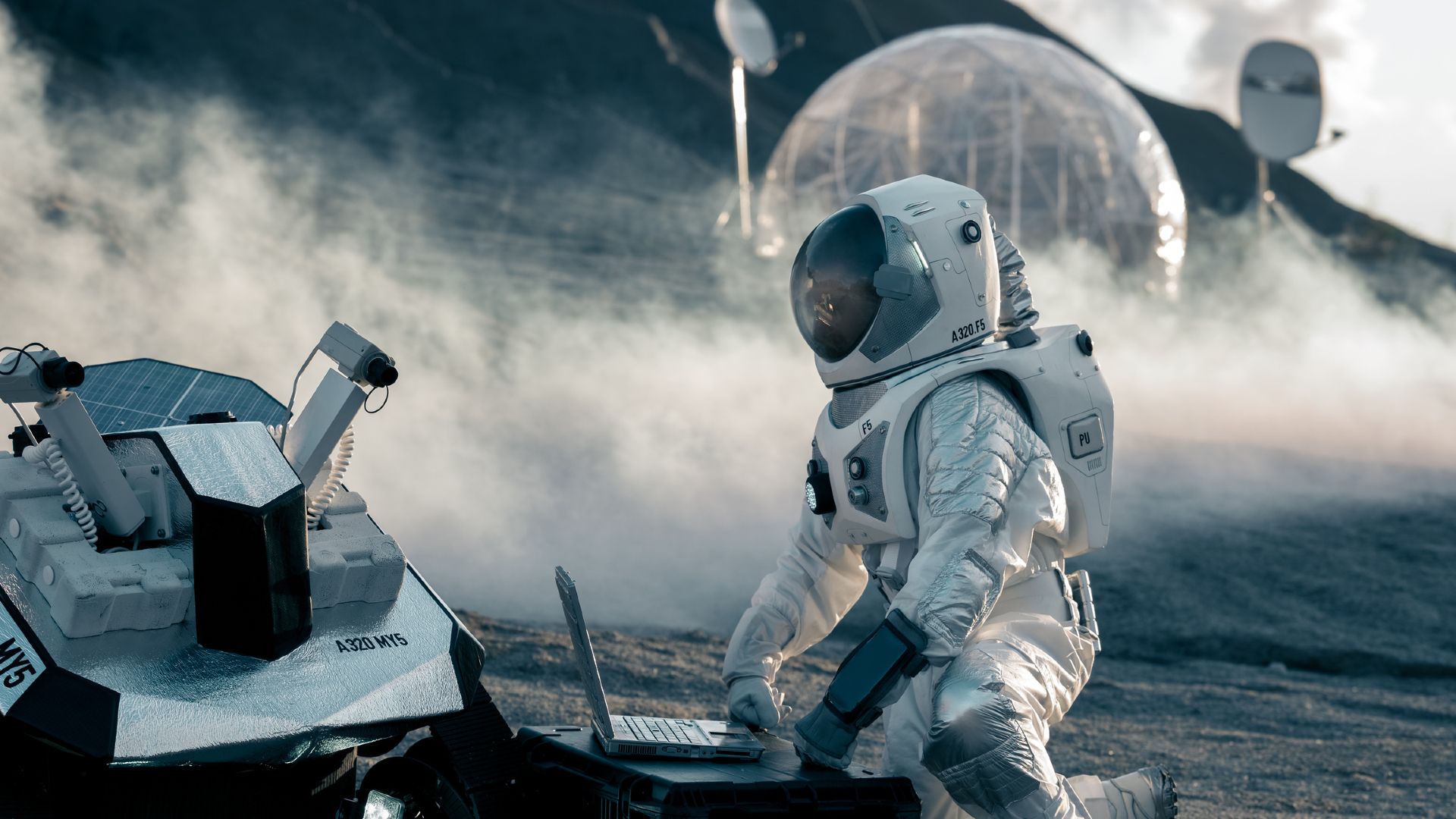
Close Menu
    Facebook X (Twitter) Instagram Pinterest YouTube LinkedIn TikTok
    TopBuzzMagazine.com
    Facebook X (Twitter) Instagram Pinterest YouTube LinkedIn TikTok
    • Home
    • Movies
    • Television
    • Music
    • Fashion
    • Books
    • Science
    • Technology
    • Cover Story
    • Contact
      • About
      • Amazon Disclaimer
      • Terms and Conditions
      • Privacy Policy
      • DMCA / Copyrights Disclaimer
    TopBuzzMagazine.com
    Home»Science»Astronauts will ‘absolutely be test subjects’: NASA’s moon plans pose big questions — and big risks
    Science

    Astronauts will ‘absolutely be test subjects’: NASA’s moon plans pose big questions — and big risks

    By AdminMarch 27, 2026
    Facebook Twitter Pinterest LinkedIn Tumblr Email
    Astronauts will ‘absolutely be test subjects’: NASA’s moon plans pose big questions — and big risks


    Mars is out; the moon is in. And this time, we may be going there to stay.

    On Tuesday (March 24), NASA administrator Jared Isaacman announced new plans to build a “sustained human presence” on the moon, complete with a permanent lunar base. Construction of humanity’s new home away from Earth could begin as soon as 2027, Isaacman said.

    The announcement came just a month after SpaceX CEO Elon Musk similarly ditched his company’s plans to visit Mars in favor of establishing a “lunar self-growing city” within the next 10 years.

    Article continues below


    You may like

    It’s an exciting prospect — but scientists say lunar colonization won’t be as simple as packing up and lifting off. The moon’s environment is harsh: think razor-sharp, electrified dust and a constant stream of radioactive particles travelling at light speed. Scientists still aren’t sure how this increased dose of cosmic radiation, coupled with the moon’s weaker gravitational pull, relative to Earth, will affect the human body in the medium- to long-term.

    And then there’s technological feasibility: Where will astronauts live, and with what resources? At the moment, these big questions are still awaiting answers that may not arrive in time for NASA and Musk’s proposed plans.

    “I don’t think we’re quite ready,” Caitlin Ahrens, a researcher at University of Maryland and NASA’s Goddard Space Flight Center who studies the lunar environment, told Live Science. “A decade may seem far away to some people. To a scientist, it’s the blink of an eye.”

    An illustration showing various circular moon bases on the gray lunar surface.

    3D-printed launch pads and living quarters, as shown in this concept art, could be a possibility for long-term lunar colonization, NASA says. (Image credit: SEArch+)

    Satellite of horrors

    Moondust is rather different from what we call dust on Earth. Without wind and liquid water, the moon’s dust doesn’t soften over time. “We’re talking very, very sharp little pollen[-size] shards here,” Ahrens said.

    Get the world’s most fascinating discoveries delivered straight to your inbox.

    It’s also easily electrified. Simply walking on the moon kicks up dust clouds, and rovers traversing the lunar landscape shoot up “rooster tails” of electrically charged, levitating dust, which sticks to anything in its path, Ahrens said. Energized dust can clog breathing vents in potential living quarters, scratch up spacesuits and coat solar panels, potentially overheating and breaking them. (Dust clogs have already spelled doom for several Mars rovers).

    Without the soft blankets of Earth’s atmosphere and magnetic shield, moon inhabitants would also be constantly blasted by radiation. Cosmic radiation is “pretty much omnipresent anywhere you go into space,” including on the moon, Dr. Emmanuel Urquieta, an aerospace medicine researcher at the University of Central Florida, told Live Science. “It’s incredibly difficult to shield.”

    Cancer is a potential risk, but because health effects of radiation take time to develop, we wouldn’t know for certain if this is a major risk factor until potentially decades after landing human settlers on the moon. “Every person that goes to space… will absolutely be test subjects,” Urquieta said.


    What to read next

    We’re not ready for self-defense

    We have to be very careful not to sell something which [we] don’t have

    Giuseppe Reibaldi, president of the Moon Village Association

    Humans on the moon would need hefty building materials to protect lunar habitats against these hazards. Metal or glass domes, subterranean habitats and housing made of 3D-printed moon soil are all potential options being investigated.

    But Ahrens, who also works on lunar risk assessment, doesn’t think we’re ready to plan construction. For example, if NASA decides to invest in an underground habitat — perhaps the most surefire way to avoid radiation — scientists still have no idea how to dig on the moon, she said.

    Even with sufficiently protective living quarters, the moon’s weaker gravitational pull — just one-sixth that of Earth — may pose health risks. From previous space travel we know that, without the gravitational force humans evolved with, our bones and muscles need significant amounts of exercise to prevent them from withering away. But it wouldn’t be practical to lug heavy treadmills, like those used on the International Space Station, to the moon, Urquieta said.

    A lack of gravity may also redistribute the body’s natural balance of fluids, with potentially disastrous effects. Normally, due to the downward tug of gravity, up to 80% of our blood is in our legs at any given time, Urquieta said. But on the moon, more fluids would flow to the body’s upper half, causing loss of blood as the body attempts to rebalance itself, as well as potential swelling at the back of the eye and jugular vein thrombosis, a condition that causes potentially fatal blood clots in the neck. Compared to zero gravity, lunar partial gravity may or may not pose similar health risks. Urquieta said researchers won’t know until people spend some time there.

    The future of lunar settlement

    Ultimately, Ahrens said, these challenges boil down to the need for more data, which scientists are hoping to gather with missions like NASA’s Artemis campaign to return humans to the lunar surface as soon as 2028. But she envisions a much slower timeline than Musk’s and Isaacman’s plans; scientists haven’t even taken a sample of the moon’s ice yet — a resource lunar settlement planners are banking on.

    Depending on its depth and composition, lunar ice could provide water, rocket fuel and rare earth metals. But until scientists get a physical sample of ice, they can’t rely on its usefulness or economic prospects. For now, scientific knowledge of the ice’s actual chemical composition is very limited: “We know it’s cold, and we kind of know where it is,” Ahrens said.

    When it comes to the moon and its offerings, “we have to be very careful not to sell something which [we] don’t have,” said Giuseppe Reibaldi, president of the Moon Village Association, a non-profit group focused on international collaboration in lunar activities.
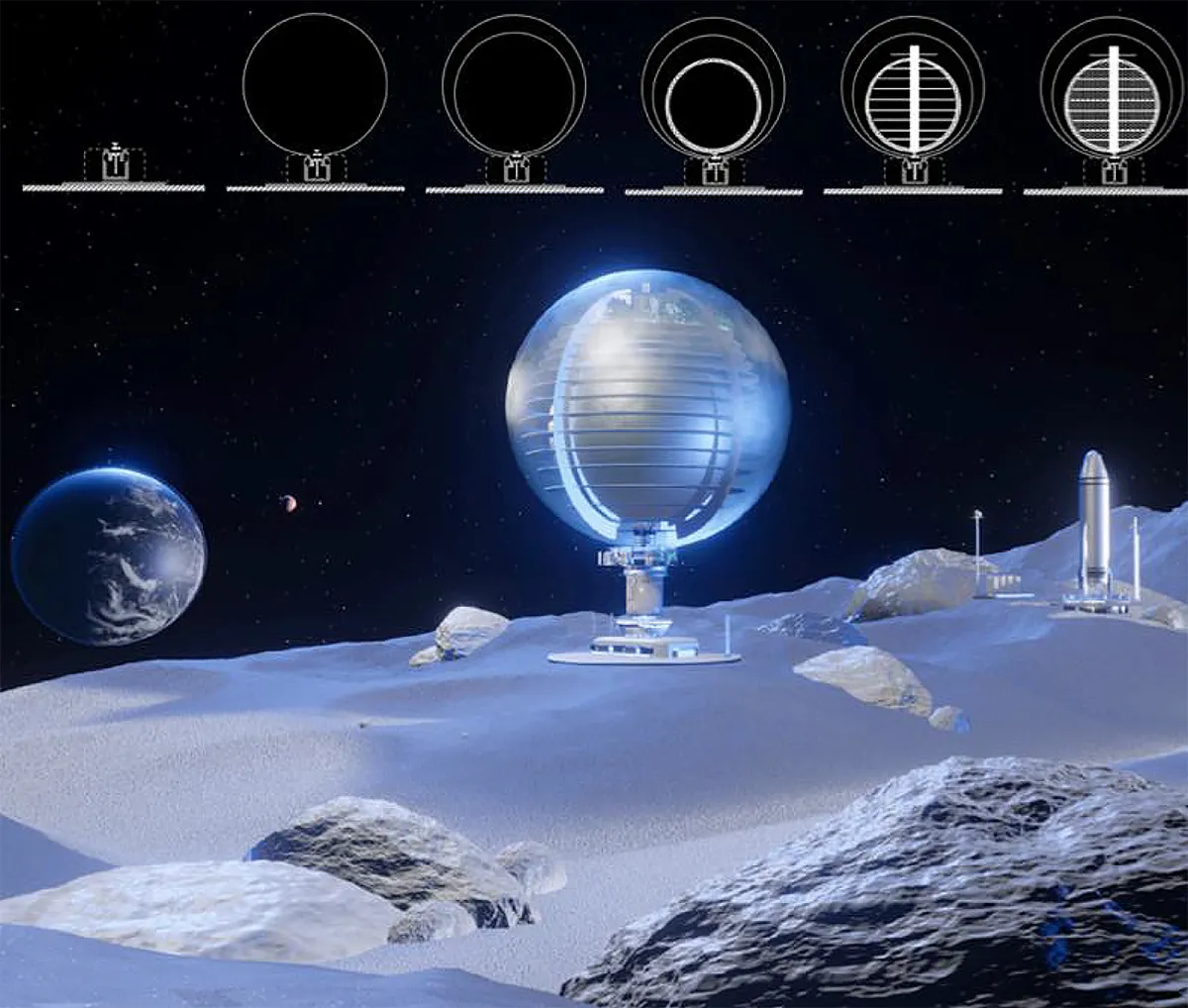
    An illustration of a circular lunar base sitting on the moon's surface with the Earth in the background.

    NASA concept art showing a possible lunar living structure made of glass. The logistics of large-scale construction on the moon remain one of many open questions. (Image credit: NASA/Martin Bermudez)

    Reibaldi told Live Science that what we find in the moon’s ice could be the difference between the lunar equivalent of California’s gold rush boomtowns — where settlements sprang up in response to mining opportunities — and Antarctica, where a small number of scientists come and go for solely research purposes.

    But even if permanent settlement doesn’t happen as soon as hoped, Ahrens said she is optimistic about the forecast for lunar development. “I think it’s not all sunshine and rainbows, but it’s also not dark rainy clouds either,” she said.


    Moon landing quiz: How quickly can you name all 12 Apollo astronauts that walked on the moon?

    View Original Source Here

    Share. Facebook Twitter Pinterest LinkedIn Tumblr Email

    Related Posts

    Largest ever octopus was great white shark of invertebrate predators

    April 24, 2026

    Milky Way's 'little cousins' may hold clues about infant universe

    April 23, 2026

    Meet AGI CPU — a specialist processor that engineers believe will power the next wave of AI

    April 23, 2026

    98 per cent of meat and dairy sustainability pledges are greenwashing

    April 22, 2026

    Researchers develop dynamic framework to monitor tillage practices from space

    April 22, 2026

    NASA shuts off another Voyager 1 instrument as humanity’s most distant spacecraft prepares for risky ‘Big Bang’ maneuver to save power

    April 21, 2026
    popular posts

    Did plate tectonics give rise to life? Groundbreaking new research could crack Earth’s deepest mystery.

    Facebook is revamping its classic Poke feature to be easier to use and include gamification elements similar to Snapchat and TikTok as it courts younger users (Sarah Perez/TechCrunch)

    Rumor: Three New ‘Star Wars’ Movies Will Be Announced Soon

    Johnny Hardwick, King of the Hill’s Dale Gribble, Dead at

    NASA is performing an unprecedented medical evacuation from the ISS

    Samsung Galaxy A04e Specifications Revealed via Official Website Listing

    5 Things We Love About Dream Theater’s New Album, ‘Parasomnia’

    Categories
    • Books (3,816)
    • Cover Story (14)
    • Events (23)
    • Fashion (2,743)
    • Interviews (58)
    • Movies (3,112)
    • Music (3,403)
    • News (173)
    • Politics (10)
    • Science (4,967)
    • Technology (3,108)
    • Television (3,837)
    • Uncategorized (932)
    Archives
    Facebook X (Twitter) Instagram Pinterest YouTube Reddit TikTok
    © 2026 Top Buzz Magazine. All rights reserved. All articles, images, product names, logos, and brands are property of their respective owners. All company, product and service names used in this website are for identification purposes only. Use of these names, logos, and brands does not imply endorsement unless specified. By using this site, you agree to the Terms of Use and Privacy Policy.

    Type above and press Enter to search. Press Esc to cancel.

    We use cookies on our website to give you the most relevant experience by remembering your preferences and repeat visits. By clicking “Accept”, you consent to the use of ALL the cookies.
    Do not sell my personal information.
    Cookie SettingsAccept
    Manage consent

    Privacy Overview

    This website uses cookies to improve your experience while you navigate through the website. Out of these, the cookies that are categorized as necessary are stored on your browser as they are essential for the working of basic functionalities of the website. We also use third-party cookies that help us analyze and understand how you use this website. These cookies will be stored in your browser only with your consent. You also have the option to opt-out of these cookies. But opting out of some of these cookies may affect your browsing experience.
    Necessary
    Always Enabled
    Necessary cookies are absolutely essential for the website to function properly. These cookies ensure basic functionalities and security features of the website, anonymously.
    CookieDurationDescription
    cookielawinfo-checkbox-analytics11 monthsThis cookie is set by GDPR Cookie Consent plugin. The cookie is used to store the user consent for the cookies in the category "Analytics".
    cookielawinfo-checkbox-functional11 monthsThe cookie is set by GDPR cookie consent to record the user consent for the cookies in the category "Functional".
    cookielawinfo-checkbox-necessary11 monthsThis cookie is set by GDPR Cookie Consent plugin. The cookies is used to store the user consent for the cookies in the category "Necessary".
    cookielawinfo-checkbox-others11 monthsThis cookie is set by GDPR Cookie Consent plugin. The cookie is used to store the user consent for the cookies in the category "Other.
    cookielawinfo-checkbox-performance11 monthsThis cookie is set by GDPR Cookie Consent plugin. The cookie is used to store the user consent for the cookies in the category "Performance".
    viewed_cookie_policy11 monthsThe cookie is set by the GDPR Cookie Consent plugin and is used to store whether or not user has consented to the use of cookies. It does not store any personal data.
    Functional
    Functional cookies help to perform certain functionalities like sharing the content of the website on social media platforms, collect feedbacks, and other third-party features.
    Performance
    Performance cookies are used to understand and analyze the key performance indexes of the website which helps in delivering a better user experience for the visitors.
    Analytics
    Analytical cookies are used to understand how visitors interact with the website. These cookies help provide information on metrics the number of visitors, bounce rate, traffic source, etc.
    Advertisement
    Advertisement cookies are used to provide visitors with relevant ads and marketing campaigns. These cookies track visitors across websites and collect information to provide customized ads.
    Others
    Other uncategorized cookies are those that are being analyzed and have not been classified into a category as yet.
    SAVE & ACCEPT