
Close Menu
    Facebook X (Twitter) Instagram Pinterest YouTube LinkedIn TikTok
    TopBuzzMagazine.com
    Facebook X (Twitter) Instagram Pinterest YouTube LinkedIn TikTok
    • Home
    • Movies
    • Television
    • Music
    • Fashion
    • Books
    • Science
    • Technology
    • Cover Story
    • Contact
      • About
      • Amazon Disclaimer
      • Terms and Conditions
      • Privacy Policy
      • DMCA / Copyrights Disclaimer
    TopBuzzMagazine.com
    Home»Science»Google Glass has found yet another lease of life — but is it too little too late for smart glasses?
    Science

    Google Glass has found yet another lease of life — but is it too little too late for smart glasses?

    By AdminJanuary 25, 2026
    Facebook Twitter Pinterest LinkedIn Tumblr Email
    Google Glass has found yet another lease of life — but is it too little too late for smart glasses?


    It has been over a decade since Google Glass smart glasses were announced in 2013, followed by their swift withdrawal — in part because of low adoption. Their subsequent (and lesser known) second iteration was released in 2017 and aimed at the workplace. They were withdrawn in 2023.

    In December 2025, Google made a new promise for smart glasses — with two new products to be released in 2026. But why have Google smart glasses struggled where others are succeeding? And will Google see success the third time around?

    What is clear from developments in wearable tech over the last decade, is that successful products are being built into things that people already like to wear: watches, rings, bracelets and glasses.


    You may like

    These are the types of accessories that have emerged over centuries and currently adopted as normal in society.

    Some of the most recent academic research is taking this approach, building sensors into jewellery that people would actually want to wear. Research has developed a scale to measure the social acceptability of wearable technology (the WEAR scale, or Wearable Acceptability Range), which includes questions like: “I think my peers would find this device acceptable to wear.”

    Noreen Kelly, from Iowa State University, and colleagues showed that at its core, this scale measured two things: that the device helped people reach a goal (that made it worth wearing), and that it did not create social anxiety about privacy and being seen as rude.

    This latter issue was highlighted most prominently by the term that emerged for Google Glass users: Glassholes. Although many studies have considered the potential benefits of smart glasses, from mental health to use in surgery, privacy concerns and other issues are ongoing for newer smart glasses.

    Get the world’s most fascinating discoveries delivered straight to your inbox.

    All that said, “look-and-feel” keeps coming up the most common concern for potential buyers. The most successful products have been designed to be desirable as accessories first, and with smart technologies second. Typically, in fact, by designer brands.

    A fine spectacle

    After Google Glass, Snapchat released smart glasses called “spectacles”, which had cameras built in, focused on fashion and were more easily accepted into society. The now most prominent smart glasses were released by Meta (Facebook’s parent company), in collaboration with designer brands like Ray-Ban and Oakley. Most of these products include front facing cameras and conversational voice agent support from Meta AI.

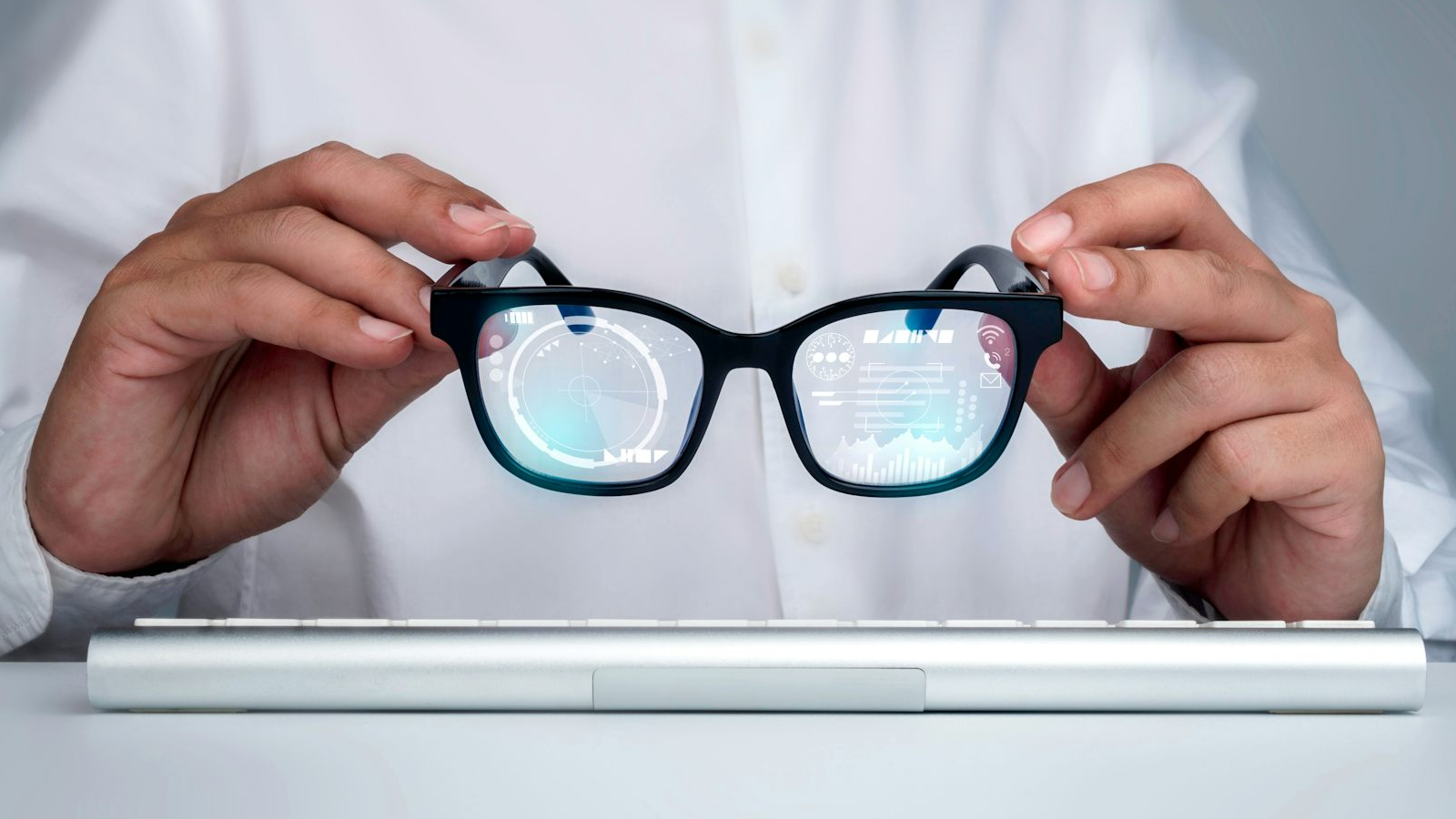
    So what do we expect to see from Google Smart Glasses in 2026? Google has promised two products: one that is audio only, and one that has “screens” shown on the lenses (like Google Glass).


    You may like

    Photograph of the google glass that was released in 2014 on a black surface.

    The original version of Google Glass was released in 2014. (Image credit: Hattanas / Shutterstock)

    The biggest assumption (based on the promo videos) is that these will see a significant change in form factor, from the futuristic if not scary and unfamiliar design of Google Glass, to something that is more normally seen as glasses.

    Google’s announcement also focused on the addition of AI (in fact, they announced them as “AI Glasses” rather than smart glasses). The two types of product (audio only AI Glasses, and AI Glasses with projections in the field of view), however, are not especially novel, even when combined with AI.

    Meta’s Ray-Ban products are available in both modes, and include voice interaction with their own AI. These have been more successful than the recent Humane AI Pin, for example, which included front-facing cameras, other sensors, and voice support from an AI agent. This was the closest thing we’ve had so far to the Star Trek lapel communicators.

    Direction of travel

    Chances are, the main directions of innovation in this are, first, reducing the chonkyness of smart glasses, which have necessarily been bulky to include electronics and still look like that are normally proportioned.

    “Building glasses you’ll want to wear” is how Google phrases it, and so we may see innovation from the company that just improves the aesthetic of smart glasses. They are also working with popular brand partners. Google also advertised the release of wired XR (Mixed Reality) glasses, which are significantly reduced in form factor compared to Virtual Reality headsets on the market.

    Second, we could expect more integration with other Google products and services, where Google has many more commonly used products than Meta including Google Search, Google Maps, and GMail. Their promotional material shows examples of seeing Google Maps information in view in the AI Glasses, while walking through the streets.

    Finally, and perhaps the biggest area of opportunity, is to innovate on the inclusion of additional sensors, perhaps integrating with other Google wearable health products, where we are seeing many of their current ventures, including introducing their own smart rings.

    Much research has focused on things that can be sensed from common touchpoints on the head, which has included heart rate, body temperature and galvanic skin response (skin moistness, which changes with, for example, stress), and even brain activation through EEG for example. With the current advances in consumer neurotechnology, we could easily see Smart Glasses that use EEG to track brain data in the next few years.

    This edited article is republished from The Conversation under a Creative Commons license. Read the original article.

    View Original Source Here

    Share. Facebook Twitter Pinterest LinkedIn Tumblr Email

    Related Posts

    Bone cancer therapy unexpectedly makes tumours less painful

    January 25, 2026

    Icy storm threatens Americans with power outages, extreme cold

    January 24, 2026

    People, not glaciers, transported rocks to Stonehenge, study confirms

    January 24, 2026

    SpaceX’s Starlink dodged 300,000 satellite collisions in 2025

    January 23, 2026

    NASA head Isaacman tempers Artemis praise with ideas on the program's future

    January 23, 2026

    6 science-backed tips to kickstart your exercise routine and actually stick to it

    January 22, 2026
    popular posts

    Vikings in Norway were much more likely to die violent deaths than those in Denmark

    7 Easy-to-Copy, Minimalistic Summer Outfits That Will Always Look Chic

    Mistletoe Murders Holiday Series Coming to Hallmark+. When Does it Premiere?

    Surprise! Asteroid wider than 2 football fields is barreling toward

    Bradley Whitford Teases His Reunion With Allison Janney, Playing An ‘Openly Grumpy’ Husband — Watch

    Watching water droplets merge on the International Space Station

    When the UK’s Timing Systems Fail, This Service Will Save

    Categories
    • Books (3,676)
    • Cover Story (10)
    • Events (21)
    • Fashion (2,667)
    • Interviews (55)
    • Movies (2,975)
    • Music (3,263)
    • News (168)
    • Politics (7)
    • Science (4,828)
    • Technology (2,970)
    • Television (3,700)
    • Uncategorized (932)
    Archives
    Facebook X (Twitter) Instagram Pinterest YouTube Reddit TikTok
    © 2026 Top Buzz Magazine. All rights reserved. All articles, images, product names, logos, and brands are property of their respective owners. All company, product and service names used in this website are for identification purposes only. Use of these names, logos, and brands does not imply endorsement unless specified. By using this site, you agree to the Terms of Use and Privacy Policy.

    Type above and press Enter to search. Press Esc to cancel.

    We use cookies on our website to give you the most relevant experience by remembering your preferences and repeat visits. By clicking “Accept”, you consent to the use of ALL the cookies.
    Do not sell my personal information.
    Cookie SettingsAccept
    Manage consent

    Privacy Overview

    This website uses cookies to improve your experience while you navigate through the website. Out of these, the cookies that are categorized as necessary are stored on your browser as they are essential for the working of basic functionalities of the website. We also use third-party cookies that help us analyze and understand how you use this website. These cookies will be stored in your browser only with your consent. You also have the option to opt-out of these cookies. But opting out of some of these cookies may affect your browsing experience.
    Necessary
    Always Enabled
    Necessary cookies are absolutely essential for the website to function properly. These cookies ensure basic functionalities and security features of the website, anonymously.
    CookieDurationDescription
    cookielawinfo-checkbox-analytics11 monthsThis cookie is set by GDPR Cookie Consent plugin. The cookie is used to store the user consent for the cookies in the category "Analytics".
    cookielawinfo-checkbox-functional11 monthsThe cookie is set by GDPR cookie consent to record the user consent for the cookies in the category "Functional".
    cookielawinfo-checkbox-necessary11 monthsThis cookie is set by GDPR Cookie Consent plugin. The cookies is used to store the user consent for the cookies in the category "Necessary".
    cookielawinfo-checkbox-others11 monthsThis cookie is set by GDPR Cookie Consent plugin. The cookie is used to store the user consent for the cookies in the category "Other.
    cookielawinfo-checkbox-performance11 monthsThis cookie is set by GDPR Cookie Consent plugin. The cookie is used to store the user consent for the cookies in the category "Performance".
    viewed_cookie_policy11 monthsThe cookie is set by the GDPR Cookie Consent plugin and is used to store whether or not user has consented to the use of cookies. It does not store any personal data.
    Functional
    Functional cookies help to perform certain functionalities like sharing the content of the website on social media platforms, collect feedbacks, and other third-party features.
    Performance
    Performance cookies are used to understand and analyze the key performance indexes of the website which helps in delivering a better user experience for the visitors.
    Analytics
    Analytical cookies are used to understand how visitors interact with the website. These cookies help provide information on metrics the number of visitors, bounce rate, traffic source, etc.
    Advertisement
    Advertisement cookies are used to provide visitors with relevant ads and marketing campaigns. These cookies track visitors across websites and collect information to provide customized ads.
    Others
    Other uncategorized cookies are those that are being analyzed and have not been classified into a category as yet.
    SAVE & ACCEPT